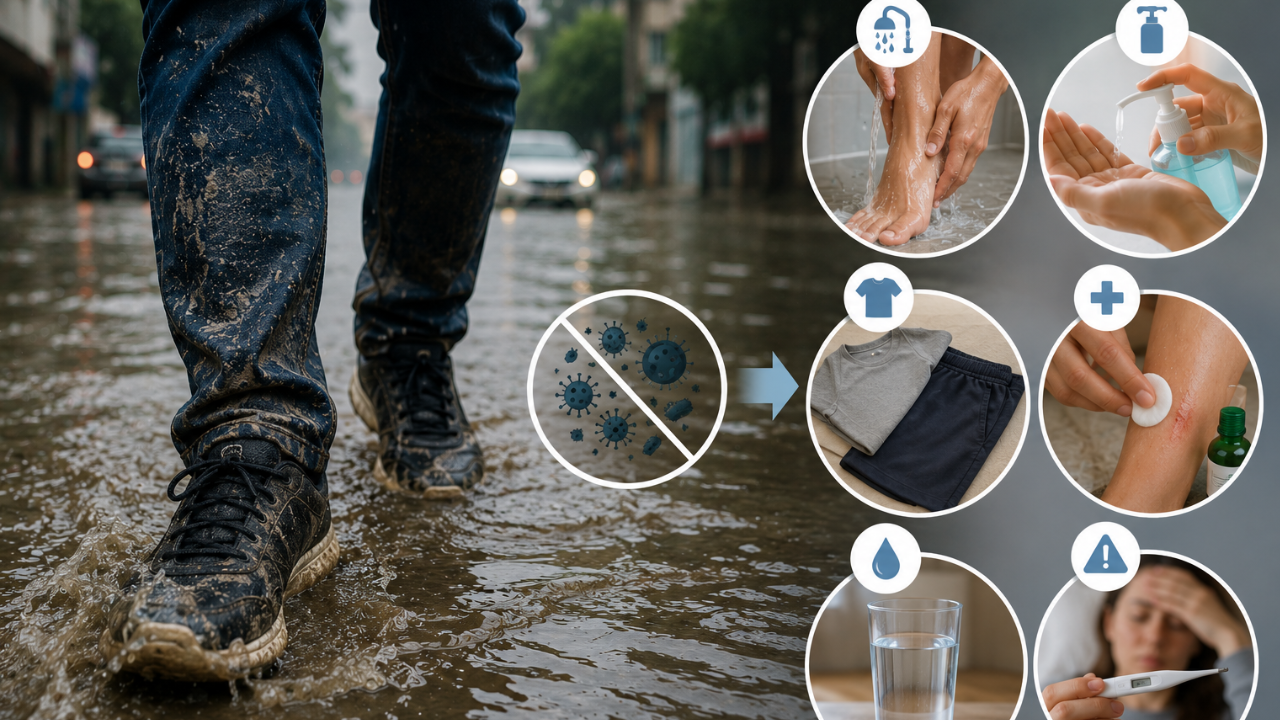
Mumbaikars are currently being forced to wade through waterlogged streets, as the city has been receiving heavy rainfall for the last few days. Floodwater often gets mixed with harmful contaminants like animal waste, animal feces, waste from human settlements, industrial pollutants, and harmful microorganisms, which can lead to serious monsoon infections. Here’s how one can stay safe after getting exposed to floodwater: Precautionary Measures After Walking Through Floodwater HealthandMe spoke to Dr. Murtaza S Bagwala, Head of Emergency Medical Services, Saifee Hospital, Mumbai, about how to keep infections at bay after coming in contact with filthy floodwater. Pay Close Attention To Your Feet And Legs, Even If They Don't Hurt When you are in floodwater, there may be sharp objects like broken glass, nails, stones and metal debris around you. You are more likely to come in contact with these objects unintentionally. Dr. Bagwala recommends, “Small cuts, blisters, or punctures may not be noticed but can lead to infection if bacteria get into the skin. If you see any injury, clean it well, brush on antiseptics and consult a doctor for advice if the wound is deep or dirty.” Also read: World Zoonoses Day 2026: Monsoon Season And The Rise Of Zoonotic Diseases Don't Overlook Body Aches Or Fever In The Following Days As the risk of contracting infections is high during monsoon, do not neglect if you develop flu-like symptoms after coming in contact with contaminated floodwater. The expert warns against dangerous monsoon infections like leptospirosis. He says, “After contact with water contaminated with the urine of an infected animal (usually a rodent), the early symptoms of leptospirosis may include fever, severe muscle pain, headache, vomiting, chills, or redness of the eyes. The symptoms are very similar to those of a viral disease, so prompt medical evaluation is crucial to avoid complications, such as kidney, liver, or lung involvement.” Don't Ignore Skin Changes The doctor also says that if your skin’s colour or texture changes after getting exposed to floodwater, do not ignore it. He says that if the area around the feet or legs becomes red, swollen, painful, warm, discharges pus or the itching persists, it should be treated immediately. These can be signs of bacterial or fungal infections that need to be treated, especially in individuals with diabetes, poor blood flow, or impaired immune function. Also read: Leptospirosis In Monsoon: Expert Explains Why Early Detection & Prevention Is A Must Determine If Your Tetanus Shots Are Updated As you can get cuts and bruises after walking through floodwater, it is important to stay on top of your tetanus shots.The expert advises, “Seek health care advice if you have a cut or puncture wound, particularly from a sharp object that was submerged in the water, while walking through the water. Early management of wounds can help avoid complications." Take Precautions When Eating Or Drinking After Exposure You are also at risk of contracting gastrointestinal infections after coming in contact with floodwater. Contaminated water may enter your mouth and lead to stomach and intestinal infections or may contact food and lead to food poisoning. Prevent diarrhoea, vomiting and dehydration by drinking only clean, safe water, eating only freshly prepared food and practicing good hand hygiene before eating.