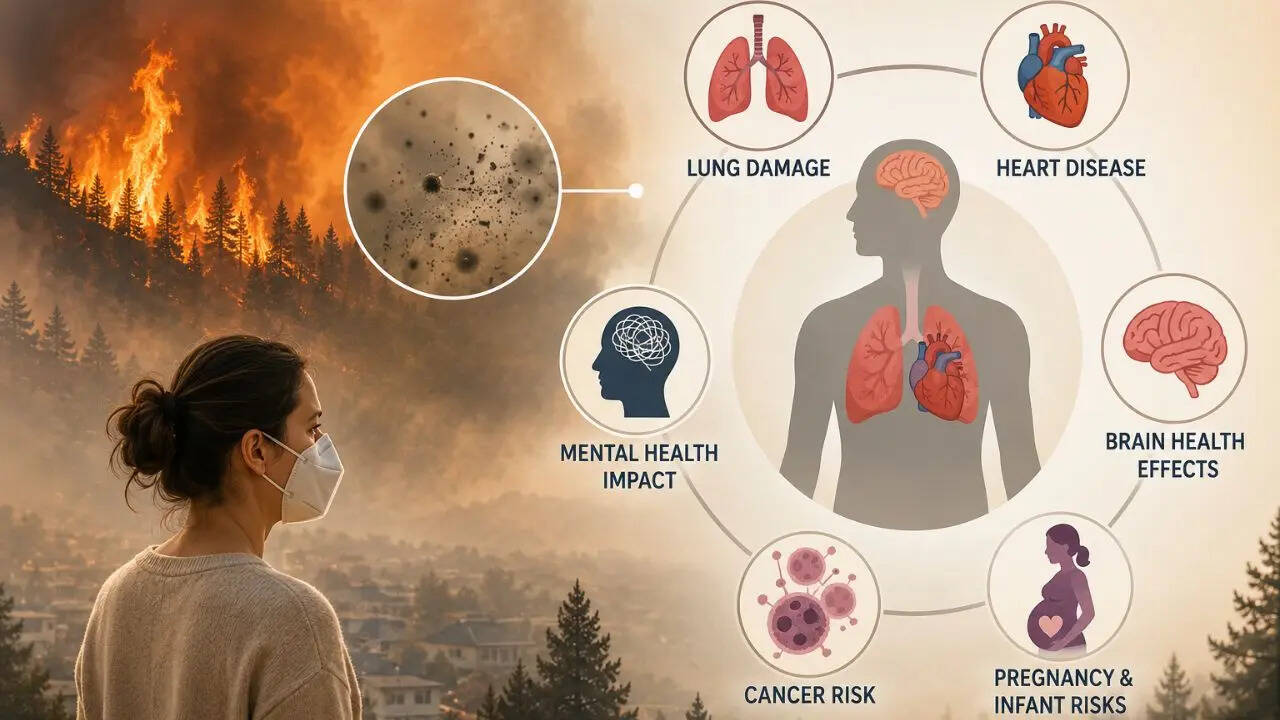
Massive wildfires have ravaged several parts of Canada and other regions of the world, filling the air with hazardous smoke. This has triggered health warnings far beyond the fire zones. While most people experience immediate breathing problems during and after wildfires, experts say that some health effects can persist long after the skies clear. Why Is Wildfire Smoke Harmful? Wildfire smoke is composed of harmful gases and microscopic particles known as PM2.5. These tiny particles are small enough to travel into our lungs and enter the bloodstream, where they can trigger inflammation throughout the body. Unlike typical air pollution, wildfire smoke also contains toxic substances released from burning homes, plastics, furniture, vehicles, electronics, and industrial materials, making prolonged exposure particularly harmful. Long-Term Health Risks After Wildfire Exposure Also read: Delhi's Poor AQI, Monsoon Conditions Put Children's Lungs at Risk: Ways to Keep Kids SafeLung And Chronic Respiratory Disease Prolonged exposure to wildfire smoke can have long-term effects on the respiratory system. Possible health effects may include: Persistent coughPoor lung functionWorsening asthma symptomsIncreased COPD episodesGreater risk to respiratory infections Children, older adults, and people with existing lung conditions face the highest risk because their lung function is already compromised. Heart Disease Also read: Phones, Pollution, AI: What Is Driving Cognitive Decline In Humans?The tiny particles in wildfire smoke don't just stay confined to the lungs. Once they enter the bloodstream, they can affect the cardiovascular system. In the long run, research says wildfire smoke exposure can lead to: Heart attacksStrokeIrregular heart rhythmsElevated blood pressureIncreased inflammation in blood vesselsEffects on Brain HealthWith frequent incidences of wildfires, scientists are looking into how wildfire smoke affects the brain. Emerging evidence suggests smoke exposure may contribute to: Headaches Difficulty concentratingMemory problemsCognitive declineIncreased inflammation affecting brain function Mental Health Consequences Wildfires can affect mental health in more than one way. Besides the stress of evacuation and property loss, smoke exposure itself may contribute to mental health problems directly. One is at the risk of the following mental health issues after exposure: AnxietyDepressionPost-traumatic stress disorder (PTSD)Sleep disturbancesCommunities repeatedly exposed to wildfire events may experience prolonged psychological distress that could often go undetected. Possible Cancer Risk Growing evidence suggests that long-term exposure to wildfire smoke may increase the risk of several cancers. Studies have reported possible associations with lung cancer, breast cancer, colorectal cancer, bladder cancer, and certain blood cancers Although researchers say more studies are needed to establish a direct cause-and-effect relationship, the findings highlight the importance of limiting repeated smoke exposure.Also read: How Air Pollution Puts Heart Patients At Risk - What You Can Do About It Pregnancy And Infant Health Pregnant women are among the groups considered most vulnerable to wildfire smoke. Research suggests exposure during pregnancy may increase the risk of preterm birth, low birth weight and other pregnancy complications.Healthcare providers recommend minimizing outdoor exposure whenever air quality deteriorates. How To Protect Yourself After Wildfire Exposure? Even after visible smoke disappears, harmful particles may remain in the air. Experts recommend: Monitor local air quality before going outdoors.Stay indoors when pollution levels are high.Use HEPA air purifiers if available.Wear a well-fitted N95 mask if exposure is unavoidable.Keep doors and windows closed when it is smoky outside.Continue taking prescribed medications for asthma or heart disease.Seek medical attention if coughing, chest pain, breathlessness, or other symptoms persist.