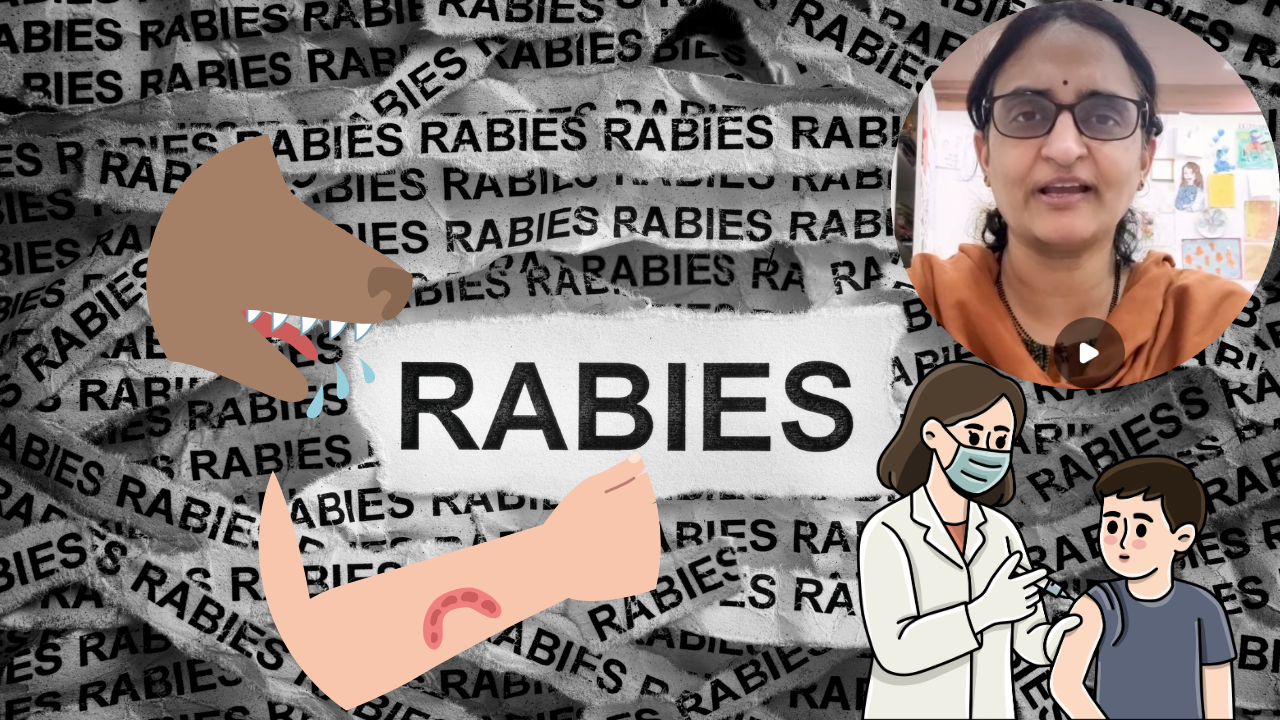
Dr Srivanjani Santosh, Pediatrician, Social Activist and First Aid trainer, who had earlier spearheaded the ORS campaigned for eight years, urging FSSAI to ban the misuse of the term 'ORS' on non-WHO=standard sugar drinks, has once again shared an important health video on rabies vaccination. Dr Santosh shared that if any mammal, including dog, cat, horse, cow, buffalo, monkey or bat scratch or bit a person, they must be vaccinated with rabies shot. She also pointed out something many miss: the location of administering the rabies shot. In her video she urged people to not get the shot administered in buttocks, and to only get it on their shoulders or thighs. She also claimed that many clinics and hospitals, despite knowing this fact, are administering rabies vaccination on buttocks. View this post on Instagram A post shared by Dr Sivaranjani Santosh (@drsivaranjanionline)]]> Why Does Location Of Administration Matter In Rabies Shot? The World Health Organization (WHO) strongly recommends that rabies vaccines must be injected into the deltoid region, which is the upper arm or near the shoulder region in adults. In small children, the WHO notes that deltoid region, as well as anterolateral area of the thigh muscle, which is also the upper thigh works. WHO notes that like any other injections, rabies vaccine should not be given in the gluteal region, that is the buttocks, because of low absorption due to the presence of adipose or the fat tissue. This video comes at the time when a case of a Birmingham woman losing all her limbs to dog's lick has made headlines all over the news. Health and Me also reported on the same.Read: Woman Loses All Her Limbs After Getting Sepsis From Dog LickHealth and Me spoke to Dr. Rakesh Pandit, Senior Consultant & HOD, Internal Medicine at Aakash Healthcare, who further explained, that as per guidelines by the WHO, the rabies vaccine should not be given in the buttocks as they have a heavy layer of fat. The body might not properly absorb the vaccine if it is injected into this fat instead of the muscle, which could result in a vaccine failure."A vaccine failure in case of rabies is like a death sentence because the disease is one hundred percent lethal once it shows the signs. The injection site for the vaccine depends on the patient's age; older children and adults must receive the vaccine in the upper arm or shoulder, while infants and toddlers must receive it in the thigh. The vaccine must also be administered with the right needle length to reach the required depth," he said. Dr Pandit further elaborated, "The place of administering the vaccine (arm or thigh, subcutaneous or intramuscular) has an effect on the immune response, speed at which the vaccine is absorbed, pain and the risk of side effects." He said, "Some vaccines give best results when given in muscle for better immunity. Other vaccines may need subcutaneous administration. When given at the correct site, the vaccines ensure maximum effect, safety and reduced local reactions like swelling."Read: 36% Of Rabies Death Comes From India: This Is What You Should Do After A Dog Bite, Explains Doctor What Should One Keep In Mind While Getting A Rabies Shot?Health and Me previously spoke to Dr Ankit Mule, Consultant Internal Medicine at KIMS Hospital, Thane, who said, Rabies vaccination is required for bites or scratches from any rabies-susceptible animal, including cats, monkeys, bats, foxes, and other wild mammals.”Dr Mule points out that even when there are minor scratches, without bleeding, you must get a rabies shot. "Rabies can be contracted through broken skin. Such exposures still require medical evaluation and, in most cases, rabies vaccination."What Should One Do Immediately After Being Bitten Or Scratched?Wash the wound immediately for at least 15 minutes with soap and running waterApply an antiseptic such as povidone-iodineDo not apply home remedies like turmeric, chili or oilSeek medical care promptly for rabies vaccination and possible immunoglobinDr Mule points out that the rabies vaccine should be started as soon as possible. "Ideally within 24 hours of a bite or scratch. However, even if there is a delay of days or weeks, vaccination should still be started immediately as rabies has a variable incubation period," he says.The temperature of the vaccine matters. "Rabies vaccines are temperature-sensitive and must be stored between 2°C and 8°C. Exposure to heat or freezing can reduce vaccine potency. Poor cold-chain maintenance is a known reason for vaccine failure in rare cases," points out the doctor.Dr Mule points out that the vaccine should be given intramuscularly in the deltoid or upper arms for adults, as gluteal or buttock injections could lead to inadequate absorption and reduce effectiveness.