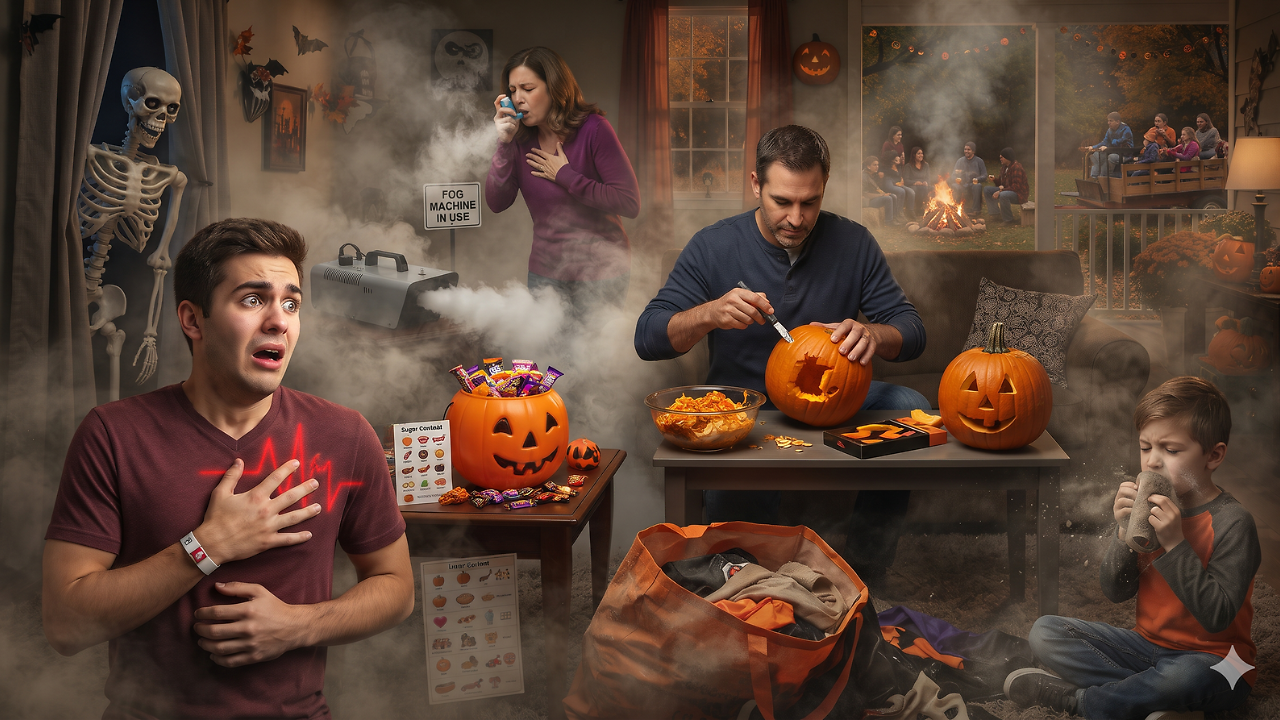
From haunted houses and sudden scares to sweet treats and costumes, Halloween fun can come with hidden health risks, particularly for people with existing heart and lung conditions. Experts explain how sudden fright, excessive sugar and common activities on Halloween, observed on October 31, can affect heart and lung health. How Sudden Scares Can Affect Your HeartA sudden scare activates the body's sympathetic nervous system, raising heart rate and blood pressure while constricting blood vessels. This response is usually harmless in healthy people, but may pose risks for those with arrhythmias, coronary artery disease or a history of stents or heart surgery. A racing heartbeat should settle after the scare. Persistent palpitations, dizziness, shortness of breath, chest pain or tightness, nausea, sweating or fainting warrant medical attention, says Dr Mohamed Gabr, cardiologist and electrophysiologist at Baylor College of Medicine. In addition, excessive consumption of sugar candies during Halloween can contribute to obesity, diabetes, high blood pressure and unhealthy cholesterol levels. Cholesterol and plaque buildup in the coronary arteries can begin at a young age. Also read: You Feel Healthy. But Plaque May Already Be Building In Your Arteries In Your 20s Halloween Activities That Can Trigger Asthma Halloween activities can expose people with asthma to several triggers. Ragweed pollen, mould on damp fallen leaves and cold, dry air can worsen symptoms during autumn, according to the American Lung Association. Fog machines and dry ice effects in haunted houses can release water droplets and chemicals, including glycol-based solvents, that may irritate airways. Glitter machines, bonfire smoke, dust from stored costumes and decorations, and strong fragrances can also trigger symptoms. Dr Rubabin Tooba, a pulmonologist with Northwestern Medicine, says these exposures may cause coughing, wheezing, breathlessness and chest tightness, particularly in people with asthma, severe allergies or COPD. Tight-fitting masks can also make breathing difficult. Fear, excitement and laughter may trigger asthma symptoms in some people. Trick-or-treating can bring additional exposure to pet dander, scented candles, cigarette smoke and fireplace fumes. Pumpkin Carving And Halloween Injuries Read More: Why Are Asthma Cases Rising Among Young Kids? Early Symptoms Parents Must Not IgnoreThe US Consumer Product Safety Commission (CPSC) estimates that an annual average of 3,200 Halloween-related injuries were treated in US emergency departments over a recent three-year period. Pumpkin carving accounted for 55% of these injuries, while 25% were related to falls while putting up decorations, tripping on costumes or walking while trick-or-treating. The remaining 20% involved lacerations, ingestions, allergic reactions and other costume- or decoration-related injuries. Children younger than 18 years accounted for 46% of injuries, with approximately 10% occurring in children aged 6 years or younger. The Plastic Hand Trauma Unit at Royal Devon and Exeter Hospital has also treated patients with deep cuts, severed tendons and nerve damage from pumpkin carving, BBC reported. How Can You Stay Safe This Halloween Protect your heart: Be mindful of sudden scares if you have an existing heart condition. Seek medical attention for persistent palpitations, chest pain, breathlessness or fainting. Moderate candy: Limit sugary treats and consider fruit alternatives. Avoid asthma triggers: Ask about fog effects at haunted attractions and leave if you experience breathing discomfort. Check costumes and decorations: Clean stored items before use and discard anything with mould or a musty smell. Choose breathable, open-face masks. Use makeup carefully: Choose fragrance-free or hypoallergenic products and apply them in well-ventilated spaces. Carry asthma medication: Keep your prescribed quick-relief inhaler and spacer handy. Watch for coughing, wheezing or chest tightness, and take breaks when needed. Reduce infection risks: Practise good hand hygiene, stay home when sick and keep vaccinations up to date. Carve pumpkins safely: Avoid kitchen knives. Use pumpkin-carving kits with serrated tools and make small, controlled cuts.