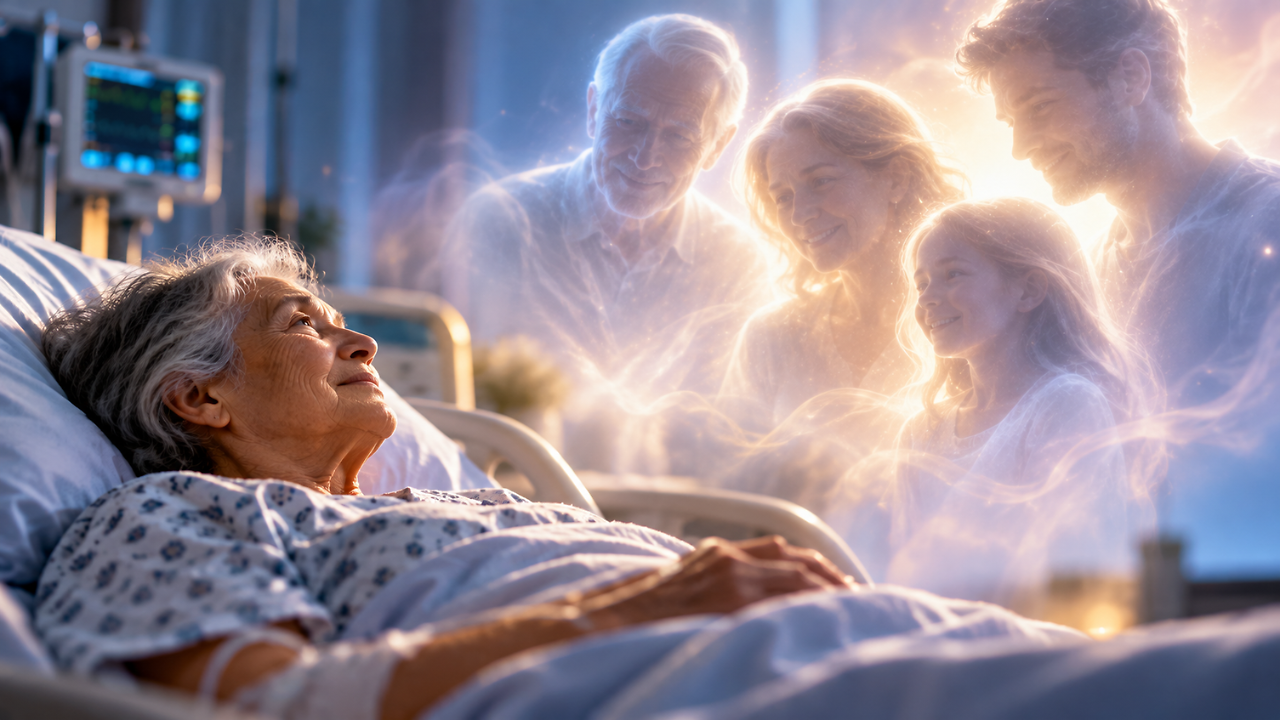
Someone who is dying may start to their loved ones who passed away years ago. This could be unsettling and confusing for families and relatives who may assume that the person is just hallucinating or undergoing a deeper neurological issue. But hospice physician Dr Christopher Kerr says such experiences are a known phenomenon called end-of-life dreams and visions (ELDVs). Kerr, chief medical officer of Hospice Buffalo, has spent decades studying these experiences in dying patients extensively. Appearing on The Oprah Podcast, he told Oprah Winfrey that many patients near death describe seeing deceased relatives or people who cared for them during their lives. The experiences can feel completely real to them. Why Do People Near Death See Deceased Loved Ones? Also read: Ebola Bundibugyo Virus: Kenya Confirms First Death In Case Imported From CongoOne of the possibilities is that the brain experiences significant changes as the body starts to shut down. Alterations in sleep, consciousness, metabolism, oxygen levels, medications, and brain chemistry can all affect perception during the final stages of life. Dr. Rakesh Lalla, Additional Director - Neurology, Fortis Hospital, Mumbai, told HealthandMe, " These visions could be explained by the alterations that occur within the brain as the body starts to close down. Due to oxygen deprivation and altered brain activity, the brain would process memories, feelings, and stimuli differently. The areas responsible for memory processing and vision could become stimulated or disrupted, which could result in some vivid visions or experiences." The expert also said that these visions do not mean that the person has a neurological or psychiatric issue. Dr. Lalla said, "They do not necessarily mean that the person is confused or suffering from a psychiatric condition. In many cases, they are brief, peaceful, and emotionally meaningful to the individual. We still do not fully understand why particular people or memories appear." The neurologist also advised families to stay supportive and calm during such situations. He added, "The brain’s complex relationship between memory, emotion and perception is likely to play an important role. For families, the key is to remain calm, listen without dismissing the experience, and provide reassurance and comfort."Also read: Global Life Expectancy Returns To Pre-Pandemic Levels, But NCDs Resulted In 8 Out 10 Deaths: WHO Hallucinations Or Part Of The Dying Process? Experts who have been studying ELDVs have also found that these experiences have some distinctive patterns that do not resemble random hallucinations. In a 2014 longitudinal study led by Kerr, most of the 59 hospice patients who completed the study reported at least one dream or vision. Almost half occurred during sleep, and nearly all patients said the experiences felt real. The most common involved deceased friends or relatives or other loved ones. In fact, comforting visions of deceased people became more common as patients moved closer to death. A 2026 systematic review of 13 studies similarly found that ELDVs occurred in at least one in five dying adults. The National Institute on Aging also states that dying people may appear to see or talk to someone who is not present and may report dreams involving deceased relatives or friends. Such experiences are often comforting, and caregivers are generally advised not to immediately correct or challenge the person. Seeing Loved Ones Could Be A Comforting End Kerr said that patients seeing deceased loved ones in their visions appeared calmer afterward. His research suggests that these experiences may carry deep emotional meaning for patients. “Very little is said between the person in the dream and the dreamer, but everything seems to be understood,” Kerr told Oprah. Scientists still cannot say exactly what produces these experiences or whether they represent anything beyond changes occurring in the dying brain.