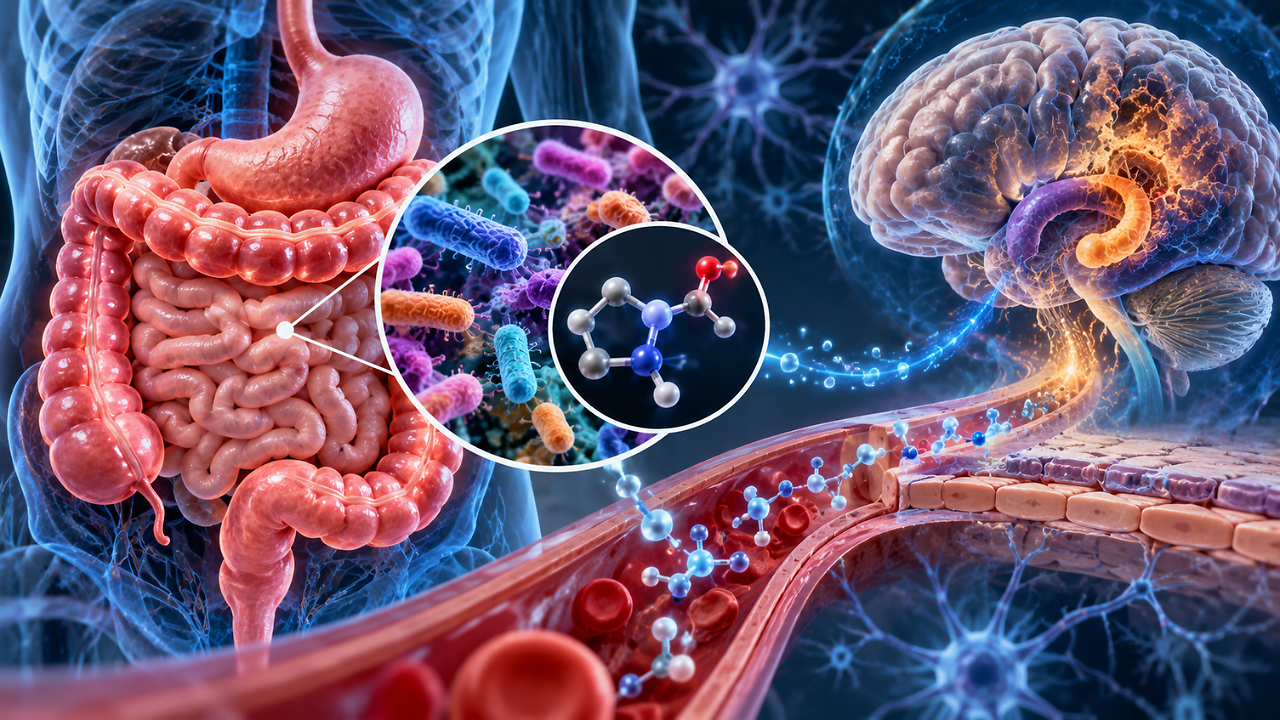
Gut chemicals may play a role in influencing the likelihood of someone developing Alzheimer's disease. A new study has a chemical produced by certain gut bacteria in focus that may affect Alzheimer’s disease risk, cognitive decline, and other changes related to the disease. Published in Nature Communications, the study focused on imidazole propionate (ImP), a metabolite produced by some gut bacteria when they break down the amino acid histidine. Researchers found that people with higher levels of ImP in their blood had lower cognitive scores and higher levels of biomarkers that indicate the likelihood of Alzheimer’s disease and neurodegeneration. How Was The Study Conducted? Also read: Global Life Expectancy Returns To Pre-Pandemic Levels, But NCDs Resulted In 8 Out 10 Deaths: WHOThe researchers studied health data from 1,196 adults who were cognitively unimpaired, with an average age of about 61 years. Higher blood levels of ImP were associated with poorer cognitive performance and faster age-related decline. Higher ImP was also linked to increased levels of p-tau217, a key biomarker in Alzheimer’s pathology, and neurofilament light chain, a marker of nerve-cell damage. The finding builds on earlier work from the University of Wisconsin-Madison team showing differences in gut microbes between people with Alzheimer’s and those without the disease. “Since then, we've been trying to figure out how this difference in the gut perhaps leads to changes in the brain,” said Barbara Bendlin, professor of medicine at the University of Wisconsin-Madison. But ImP itself may be more relevant than simply having a particular type of gut bacteria. “ImP-producing bacteria are present in a large fraction of people, but they're not very abundant in most people,” said Federico Rey, professor of bacteriology at the University of Wisconsin-Madison. “But something we have learned over the years is that a microbe doesn't have to be abundant to have an impact on the host.”Also read: Could This Popular Joint Supplement Turn Mild Cognitive Impairment Into Dementia? New Study Finds LinkCould Changing Your Diet Prevent Dementia Risk? The researchers also found genetic evidence that linked higher ImP levels with an increased risk of Alzheimer’s. In experiments on mice, long-term exposure to ImP increased amyloid-beta plaques and signs of brain inflammation. Laboratory experiments further suggested that ImP could affect the blood-brain barrier and promote tau hyperphosphorylation, a process involved in nerve damage that occurs in Alzheimer’s. Researchers also caution against making changes to diet to alter gut bacteria. They say ImP is produced when bacteria metabolise histidine, an amino acid that the body needs and that is found in many protein-rich foods. “Generally improving your diet would probably help,” Bendlin said. “But it's not as easy as saying, 'Stop eating eggs' or 'Don't eat so much red meat.' Because you need histidine, and it's all over the place.” Instead, the researchers are looking at whether ImP itself could eventually be targeted. “It could be just like cholesterol, where people with elevated cholesterol take a drug, a statin, that reduces their risk for heart disease,” Bendlin said. “If we can find an inhibitor that can help decrease the levels of ImP in the blood, that could hopefully reduce the risk of Alzheimer's and the speed of cognitive decline for a significant number of people.” Researchers also say that the findings do not show that ImP causes Alzheimer’s in humans, nor do they suggest that probiotics or dietary changes can prevent dementia. But they strengthen growing evidence that suggest chemicals produced by gut microbes may affect brain health years before symptoms surface.