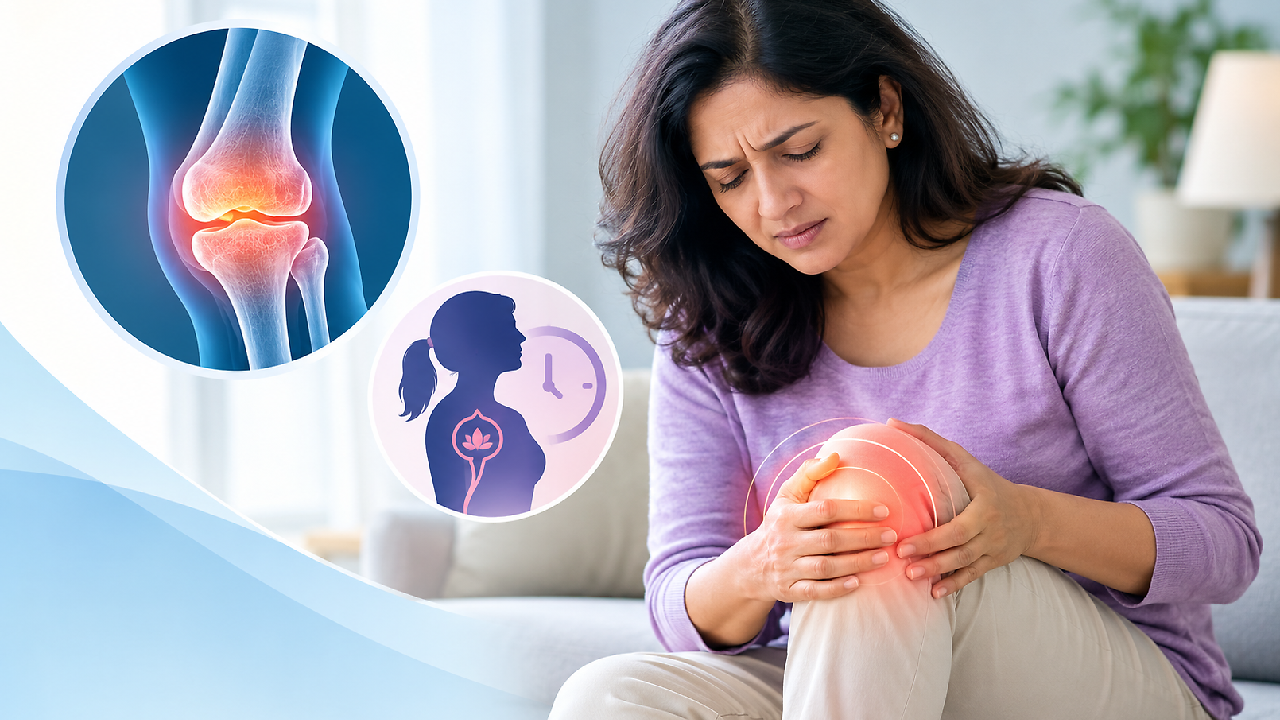
Many women in their forties come to my clinic with joint pain they have lived with for months, assuming it is part of getting older. World Arthritis Day is a good time to look at what changes in a woman's joints after 40 and why it pays to act early.Why Does The Risk Rise After 40?The biggest shift is hormonal. Oestrogen helps regulate inflammation and protects cartilage, bone and muscle. As levels fluctuate during perimenopause and fall after menopause, the joints lose part of that protection. A 2024 review in the journal Climacteric named this pattern the musculoskeletal syndrome of menopause, estimating that more than 70% of women experience joint or muscle symptoms during the transition and about one in four find them disabling.Lower oestrogen also speeds up the loss of muscle and bone. When the thigh muscles weaken, the knee absorbs more shock with every step, which is one reason knee osteoarthritis becomes more common in women at this stage. Osteoarthritis, the gradual wear of the cartilage cushioning the bones, commonly affects the knees, hips, hands and spine. Old injuries, excess weight, and family history increase the risk.Women are also two to three times more likely than men to develop rheumatoid arthritis, an autoimmune condition in which the immune system attacks the joint lining. It most often begins between the ages of 30 and 60. Which Signs Should You Watch For?One simple check is how long your joints stay stiff in the morning. Stiffness and pain that increases with movement is typical of osteoarthritis. Stiffness even with rest, especially with swelling in the small joints of both hands or wrists, suggests inflammatory arthritis and needs prompt assessment. Other signs include pain while climbing stairs or getting up from the floor, a grating feeling in the knee, firm bony swellings on the finger joints and tiredness out of proportion to your activity.Not every ache after 40 is arthritis. Menopause-related pain, for instance, tends to move around the body. An examination, an X-ray, and simple blood tests can tell these conditions apart, so avoid self-diagnosis.How Can You Protect Your Joints?Strength training: Muscle-strengthening exercise at least twice a week, focused on the thighs and hips, takes load off the knees.Low-impact activity: Walking, swimming, and cycling keep joints mobile without straining them.Weight: A study of adults with knee osteoarthritis found that every kilogram lost takes about four kilograms of load off the knee with each step.Diet: Get enough protein and calcium, and ask your doctor whether you need a vitamin D test.Daily habits: If your knees already hurt, limit deep squatting and long hours sitting cross-legged on the floor, wear supportive footwear, and avoid smoking.When Should You See A Doctor?Consult an orthopaedic specialist if joint pain or stiffness lasts beyond a few weeks or affects daily tasks. In rheumatoid arthritis, early treatment can slow the disease and prevent permanent joint damage. A suddenly hot, red, swollen joint with fever needs same-day attention, as it may signal infection.Arthritis does not have to come with turning 40. Women who notice the early signs, keep their muscles strong, and see a doctor in time can stay active and independent well into later life.By Dr Saurabh Bansal, Consultant Orthopaedic Surgeon, PB Health