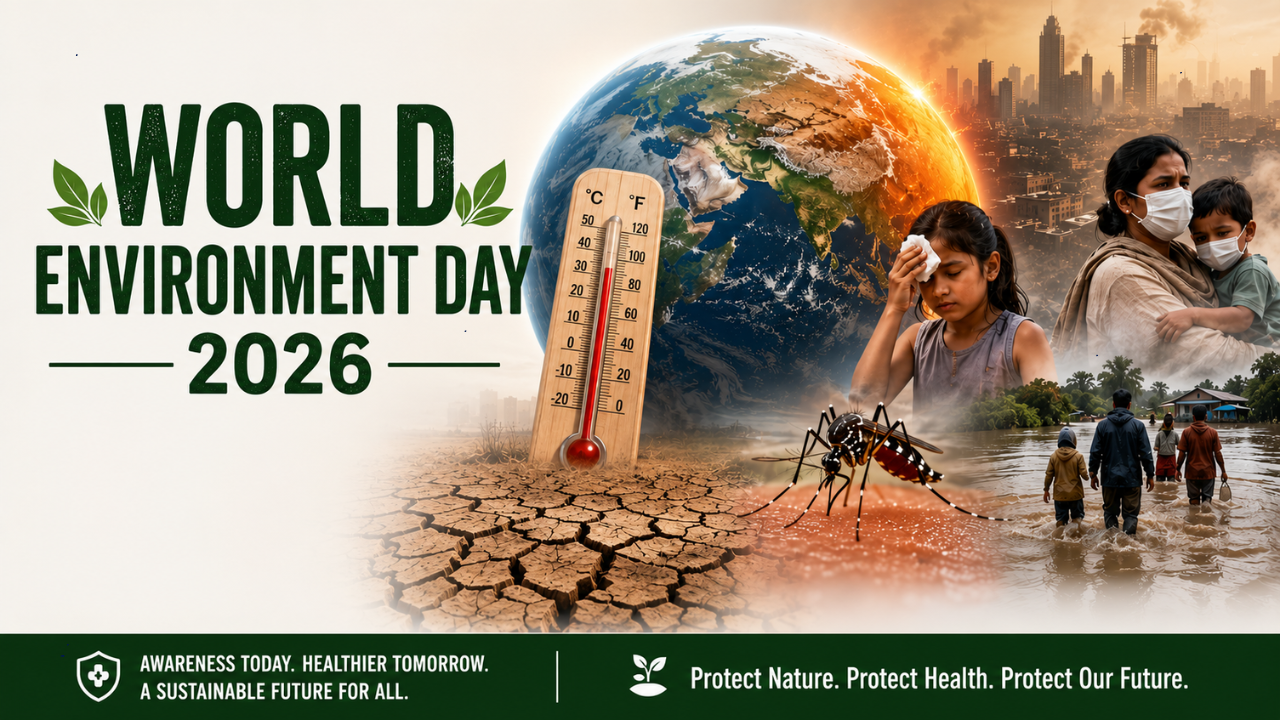
Climate change is increasingly emerging as a major public health threat, contributing to a growing burden of disease worldwide and creating favorable conditions for the spread of infectious illnesses, according to health experts on World Environment Day 2026.World Environment Day is observed every year on June 5 to raise awareness about the need for immediate action as heatwaves intensify, air pollution worsens, ecosystems degrade, and climate anxiety grows worldwide, even as the world crosses the UN-mandated 1.5°C limit.The theme for World Environment Day 2026 is "Inspired by Nature. For Climate. For Our Future". It focuses on climate change and the signals nature is sending such as rising seas, raging wildfires, heatwaves and melting glaciers.To understand the intersection between climate change and health impacts, HealthandMe spoke to two experts.Heatwaves, Pollution And Food InsecurityAccording to Dr. Sabine Kapasi, UN advisor, the consequences are no longer limited to environmental damage. Rising temperatures, worsening air pollution and shifting weather patterns are already affecting human health across the globe.“Longer and more intense heatwaves are resulting in more cases of heat-related illness. Air pollution continues to exacerbate respiratory diseases, while changing weather patterns are impacting food security and nutrition in many parts of the world,” she said.Importantly, in India, children, pregnant women and communities living in flood- and drought-prone regions face some of the greatest risks. Women are often disproportionately affected due to challenges related to water supply and sanitation. While India has reduced malaria cases by nearly 80 per cent since 2015, climate change is creating new health challenges that health systems will need to address in the coming years.Infectious Disease OutbreaksAlso read: Dengue Is Spreading Beyond Monsoons And Into New Regions Across India, Says ExpertThe expert warned that changing climatic conditions are also increasing the risk of infectious disease outbreaks. Dr. Kapasi told HealthandMe that rising temperatures and altered rainfall patterns are allowing mosquitoes to breed more easily and remain active for longer periods.Floods further compound the problem by contaminating drinking water, damaging sanitation systems and disrupting healthcare services. Displacement caused by disasters can force families into crowded living conditions, increasing the risk of infections such as cholera, leptospirosis and tuberculosis.“Recent climate-related disasters in South Asia and Africa have shown how quickly an environmental crisis can turn into a public health challenge,” she noted.The spread of mosquito-borne diseases such as dengue, malaria and chikungunya is also becoming a growing concern. Health authorities around the world are reporting these diseases in areas where they were previously uncommon.Globally, countries including Italy, France and Spain have also witnessed an increase in locally transmitted dengue and chikungunya cases over the past decade. In the United States, locally acquired malaria cases were recently reported in Florida and Texas, marking the first such transmission in nearly 20 years.India is also experiencing rising dengue activity. Dengue outbreaks have become a regular occurrence during the monsoon and post-monsoon seasons in many states. Estimates suggest dengue cases could reach around 278,000 in 2025, up from roughly 230,000 the previous year. Experts say warmer temperatures and changing rainfall patterns are helping disease-carrying mosquitoes survive and spread more effectively.Climate Change And Shifting Disease PatternsAlso read: Forget Supplements: Barbara O'Neill Says Sleep Is The Best Medicine Dr. Devarsetty Praveen, Program Director at NIHR GHRC for Non-communicable Diseases and Environmental Change, hosted by The George Institute India, in partnership with Imperial College London, said climate change is affecting both communicable and non-communicable diseases.“Climate change is increasing health risks through rising temperatures, extreme weather events, worsening air quality and changing disease patterns. In India, it is affecting both communicable and non-communicable diseases, with vulnerable populations bearing the greatest burden,” he told HealthandMe.He noted that research has found that people living with chronic conditions such as hypertension and diabetes are particularly vulnerable to extreme heat, underscoring the growing link between climate change and non-communicable diseases.Dr. Praveen added that climate change influences disease transmission by altering temperature, humidity and rainfall patterns while also affecting water quality, food systems and interactions between humans, animals and disease vectors.“These changes can make outbreaks more frequent, more widespread and harder to predict,” he said.How To Reduce Climate-related Health RisksTo reduce climate-related health risks, the experts recommend staying informed about weather conditions, remaining hydrated, limiting outdoor exposure during extreme heat and taking precautions against mosquito bites.People with chronic conditions such as hypertension, diabetes, heart disease and kidney disease are advised to maintain adequate medication supplies and consult healthcare providers during periods of extreme heat.According to the experts, awareness and early action remain critical to protecting public health as climate change continues to reshape disease patterns around the world.To reduce the risk of mosquito-borne diseases, people should make sure that water does not get collected in buckets, coolers, flower pots or other containers around the home. Additional precautions include the use of mosquito repellents, sleeping under nets when necessary and wearing clothing that covers the arms and legs.Dr Sabine said food and water safety is particularly important after heavy rain or flooding. Proper food storage, clean drinking water and good hygiene practices can go a long way in preventing many infections. Those with pre-existing medical conditions should also have essential medicines within easy reach during extreme weather.