
- Health Conditions A-Z
- Health & Wellness
- Nutrition
- Fitness
- Health News
- Ayurveda
- Videos
- Medicine A-Z
- Parenting
Your Daily Work 'Grind' Is Ruining Your Heart Health, Cardiologist Explains How These Daily Habits Affect Your Heart

(Credit-Canva)
Recently, we are seeing a rise in ‘grind culture’. People are encouraged to pack their days with work and be as productive as possible to secure future success. However, did you know that chasing this success could come at the cost of your heart's health? Dr. Dmitry Yaranov, MD, a cardiologist, who often shared important health advice and knowledge on Instagram videos, explained posted about how as a practicing healthcare professional, there are many heart facts that he wished his patients knew about.
Things we often perceive as important for our careers can come at the cost of our mental and physical health. By not realizing the value of their health and ignoring their limits, people often stretch themselves too far, which can result in reaching a breaking point.
In a recent video posted with the text, “After treating thousands of patients with heart failure this are the things I wish more people knew before it was too late” in the caption he listed 6 hard facts that most people ignore.
6 Habits That Are Leading You To Heart Failure
In the caption Dr. Yaranov explained that cardiovascular health involves much more than just hitting the gym and eating salads. Your heart health is fundamentally tied to sleep, stress management, environmental factors, access to resources, and even the state of your gut. Fix the foundation, not just the numbers.
Sleep Deprivation is Dangerous
Sleeping only six hours nightly and pushing yourself is a serious threat, not a badge of honor. This chronic sleep loss significantly raises your long-term risk of developing severe conditions like heart failure, having a stroke, or experiencing sudden cardiac death. Your body needs rest to recover.
Air Quality Hardens Arteries
Commuting daily in heavy traffic means breathing exhaust and particulate matter. This consistent exposure to air pollution does more than irritate your lungs; scientific studies confirm it literally hardens your arteries, increasing your risk for major cardiac events over time.
Stress Causes Overload
If you are always stressed and simply "pushing through" without managing the pressure, your body is producing too much cortisol. This hormonal overload leads to persistent high blood pressure and widespread inflammation, key factors that severely damage the cardiovascular system.
Gum Health Impacts Heart Health
Ignoring routine dental care and having gum disease creates chronic infection in your mouth. This persistent gum disease results in more body-wide inflammation, which is directly linked to a significantly higher risk of heart attack and other cardiovascular problems.
Food Access Matters
Even if you have the best intentions to eat well, living where healthy food is hard to find (a food desert) makes it difficult. This lack of access to nutritious options leads to worse cardiac outcomes, proving that environment, not just personal willpower, shapes your health.
Gut Health Affects Vital Signs
The state of your digestive system should not be ignored. The millions of bacteria in your gut microbiome play a critical, unrecognized role in helping your body regulate blood pressure and cholesterol levels. You must consciously feed your gut bacteria the right way.
This AI Tool Predicts Women’s Breast Cancer Risk Up to Four Years
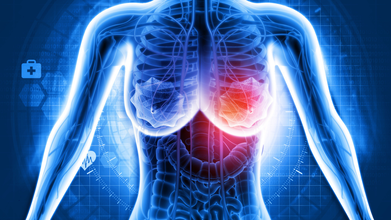
Credit: Canva
An international group of scientists has created an artificial intelligence tool that can estimate a woman’s likelihood of developing breast cancer within the next four years.
The AI tool, known as the BRAIx risk score, analyzes mammogram images to generate an individualized risk assessment and flag women who may face a higher chance of developing the disease.
It may not only show the current risk but also predict the future risk, enabling early detection and treatments for a better outcome.
According to the findings published in The Lancet Digital Health journal, nearly one in 10 women ranked in the top 2 percent of risk by the AI tool were diagnosed with breast cancer within four years. This was despite previously receiving a clear screening result.
“These risk scores enable future development of personalized screening pathways to transform population breast cancer screening and save lives,” said corresponding author Helen M. L. Frazer of the University of Melbourne.
Frazer noted that identifying women who appear cancer-free but carry very high risk -- comparable to those with inherited BRCA1 or BRCA2 mutations -- will unravel both hereditary and non-hereditary causes of breast cancer.
From one-size-fits-all screening to personalization
Breast cancer screening programs have significantly lowered mortality rates -- by roughly 40-50 percent among women aged 50 to 74. However, most screening systems still apply the same approach to all women, regardless of individual risk.
Traditional screening tools use genetics, breast density, and questionnaires to estimate breast cancer risk. On the other hand, new AI-based screening tools, such as BRAIx personalizes screening by gathering information already present in breast scan images to better identify who is at higher risk.
“Our results show that conventional mammographic density is a far weaker predictor of breast cancer risk than the BRAIx risk score, even for interval cancers,” the researchers said in the paper. Interval cancers are aggressive tumors diagnosed after a negative mammogram.
The BRAIx Tool
The BRAIx risk score was developed using mammograms from nearly 400,000 women. To prove its efficacy, the AI tool was tested on data from almost 96,000 women from Australia and then confirmed in an independent Swedish population of over 4,500 women.
The findings showed that:
- The BRAIx risk score estimated breast cancer risk more accurately than the traditional risk factors, such as breast density, country of birth, and even family history.
- For the top 2 percent of women with the highest BRAIx risk score, the probability of a cancer diagnosis within 4 years was 9.7 percent -- a risk level exceeding that typically seen in women with inherited BRCA1 or BRCA2 mutations.
The BRAIx risk score can:
- Make breast screening more personalised,
- Improve early cancer detection,
- Reduce false alarms,
- Save lives without increasing costs
Global Breast Cancer Burden
Breast cancer continues to be the most common cancer among women worldwide.
A recent study published in The Lancet Oncology journal predicted that the number of new cases of the deadly disease will reach more than 3.5 million globally in 2050 -- rising by a third from 2.3 million in 2023.
Annual deaths from the disease will also rise by 44 percent -- from around 764,000 to 1.4 million.
However, not smoking, getting sufficient physical activity, lowering red meat consumption, and having a healthy weight can help prevent over a quarter of healthy years lost to illness and premature death from breast cancer.
COVID Survivors At Nearly Fivefold Risk Of Kidney Failure: Study
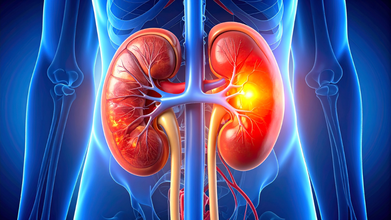
Credit: Canva
People who survived a COVID-19 infection can be at significant risk for kidney disease, acute kidney injury, and chronic kidney disease. compared to individuals who were not infected, according to a study.
The study, published online in the journal Communications Medicine, revealed that COVID patients have
- a 2.3-times higher risk of acute kidney injury
- a 1.4-times higher risk of chronic kidney disease
- a 4.7 times higher risk of kidney failure
“While we’re in the post-pandemic era, this shows that COVID-19 history is an important variable when considering the long-term impact of the infection on kidney function and disease,” said first author Yue Zhang, who was at Pennsylvania State University, US, while conducting the study. Zhang is currently a postdoctoral scholar at Johns Hopkins Bloomberg School of Public Health.
How Was The Study Conducted?
For the study, data on over 3 million working-age adults in the United States were analyzed.
The team compared the effect of influenza, another common viral infection that affects kidney health, and people with a history of COVID infection on kidney infections.
Using a machine learning model, the individuals were followed between 180 and 540 days for the emergence of new acute or sudden kidney disease.
The results showed that:
- Both COVID and the flu can worsen kidney health
- Flu caused a mild and temporary effect
- COVID increased the risk of acute kidney injury for a longer duration
- COVID survivors developed kidney disease within a few hours to a few days
- COVID patients had a longer-term chronic and end-stage kidney disease.
How COVID Worsens Kidneys Health
The Penn State researchers explained that kidney cells express high levels of the primary protein receptors that SARS-CoV-2 uses to enter and infect cells. Kidney cells also produce specialized enzymes that help viruses enter cells.
According to Kidney Health Australia, an acute COVID infection can impact the kidneys with fevers and respiratory symptoms, and/or worsening blood sugar control.
The US National Institutes of Health stated that renal dysfunction is an increasing clinical indicator of COVID propagation.
Citing several studies, the NIH said that the most common clinical manifestation is proteinuria -- found in more than half of the COVID patients. In addition, hematuria, elevated blood urea nitrogen, and elevated serum creatinine are other common features in Covid survivors with poor kidney health.
Nasr Ghahramani, Professor of Medicine at Penn State College of Medicine, stressed the need for COVID survivors, especially those with diabetes and high blood pressure, to take "more frequent and more prolonged monitoring of their kidney function" to enable early detection and better outcomes.
Demi Moore’s Drastic Weight Loss Makes Her Look Weak, Netizens Ask If She Took Ozempic

Credits: Instagram
When Demi Moore stepped onto the red carpet at the 2026 Actor Awards, the conversation quickly shifted away from couture and glamour. The 63 year old actor wore a striking black Schiaparelli gown with a dramatic feathered train, but what truly caught public attention was her noticeably thinner frame.
Photos from the event spread rapidly across social media, and many fans expressed worry over what they described as a “skeletal” appearance. Some questioned whether the transformation was intentional. Others speculated whether she may have used Ozempic, the diabetes medication that has become synonymous with rapid celebrity weight loss.
There has been no confirmation that Moore used any weight loss medication. Still, the public reaction reflects a growing anxiety about how quickly bodies can change in the era of injectable weight loss drugs.
The Ozempic Question
Ozempic was originally developed to help manage type 2 diabetes. Its active ingredient, semaglutide, works by mimicking a hormone that regulates blood sugar and appetite. Over the past few years, it has gained immense popularity for its ability to produce significant weight loss.
But as prescriptions surged, so did questions about side effects. One of the biggest concerns is loss of lean mass, which includes muscle.
Research published in Cell Metabolism examined how semaglutide affects body composition. In animal studies, overall lean mass dropped by about 10 percent during weight loss. Interestingly, much of that loss was not from skeletal muscle but from organs like the liver, which can shrink as body fat decreases. Some skeletal muscles did shrink slightly, by about 6 percent on average, while others remained unchanged.
However, other human studies suggest that people taking semaglutide may lose a substantial amount of muscle along with fat. One study found that around 39 percent of the weight lost was muscle. Research on tirzepatide, another injectable drug, showed muscle loss closer to 25 percent of total weight reduction.
It is important to note that muscle loss is not unique to Ozempic. Anytime someone loses a large amount of weight, whether through dieting, surgery, or medication, about one quarter to one third of that loss can come from muscle. When calories are restricted, the body taps into stored energy from glycogen, fat, and muscle.
The problem is that muscle matters. Losing muscle lowers metabolic rate, increases fatigue, and can raise the risk of falls or injury, especially in older adults. For women over 60, rapid weight loss may also affect bone health.
Why Rapid Weight Loss Raises Red Flags
When a public figure appears dramatically thinner within a short span of time, people naturally worry. Rapid weight loss can sometimes signal aggressive calorie restriction, illness, or medication side effects.
Even when weight loss is intentional, the speed matters. Quick changes can strain the body, impact strength, and alter facial structure, which may explain why some fans said Moore looked “different” rather than simply “slimmer.”
Healthy weight loss is not just about a number on the scale. It is about preserving muscle, supporting metabolism, and protecting long term health.
How To Lose Weight Without Losing Strength
If someone chooses to pursue weight loss, whether naturally or with medical supervision, protecting muscle should be a priority.
Prioritize protein. Most adults aiming for fat loss need between 60 to 90 grams of high quality protein daily. Protein supports muscle repair and helps maintain lean mass, especially when appetite is reduced.
Strength train consistently. Resistance training at least three to four times a week signals the body to hold onto muscle. Lifting weights, using resistance bands, Pilates, or bodyweight exercises all help.
Do weight bearing cardio. Walking, tennis, or light jogging can support both bone density and muscle retention.
Stay hydrated. Muscle is largely made of water. Dehydration can worsen fatigue and impair recovery.
Aim for slow, steady loss. Losing weight gradually gives the body time to adapt and reduces the risk of excessive muscle breakdown.
Demi Moore’s appearance has reignited a broader conversation about beauty standards, aging, and the pressures surrounding thinness. Regardless of the cause behind her transformation, the moment highlights an important truth. Sustainable health is about strength, balance, and care, not just shrinking numbers on a scale.
- Follow Us :


© 2024 Bennett, Coleman & Company Limited