
- Health Conditions A-Z
- Health & Wellness
- Nutrition
- Fitness
- Health News
- Ayurveda
- Videos
- Medicine A-Z
- Parenting
A Longevity Expert Who Studies 'Super Agers' Eats All THIS In A Day
Credits: Canva
What does it actually take to eat your way into old age with your health intact. According to cardiologist and longevity researcher Eric Topol, it has far less to do with rare genes and far more to do with everyday food choices made consistently over decades.
Topol, author of Super Agers: An Evidence-Based Approach to Longevity, has spent years studying people who live well into their 80s, 90s and even past 100 without developing major chronic illnesses such as heart disease, cancer or neurodegenerative disorders. In an interview with The Washington Post, he explained that his research at the Scripps Research Translational Institute followed more than 1,400 adults aged between 80 and 105 who had avoided these conditions altogether. Genetics, surprisingly, played only a minimal role. Lifestyle, especially diet, did the heavy lifting.
Why genes matter less than daily habits
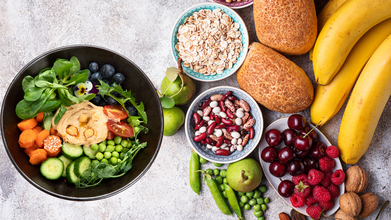
For Topol, eating for longevity means sticking closely to an anti-inflammatory, Mediterranean-style diet. His plate is built around vegetables, fruits, legumes, nuts, seeds, olive oil and fish, with poultry appearing occasionally. Red meat, however, has been absent from his diet for roughly 45 years. That decision began as a family choice and was reinforced by early evidence linking red meat consumption to cancer risk, particularly relevant given his family history of colon cancer.
The consistency of this approach matters. The Mediterranean diet remains one of the most studied eating patterns in the world, with strong evidence linking it to lower inflammation and reduced risk of chronic disease.
Read: 7 Science-Backed Tips For Healthy Aging, According To Cardiologist
A predictable, protein-rich breakfast
Topol’s days begin early, around 5 am, and breakfast is almost ritualistic. A large bowl of non-fat Greek yogurt forms the base, topped with blueberries, strawberries or both, and finished with a small amount of low-sugar granola. It is simple, repeatable and something he genuinely looks forward to, which he believes matters more than novelty when it comes to sustaining healthy habits.
Nuts for lunch and hydration as a strategy
Lunch is deliberately light. Instead of a full meal, Topol relies on a homemade mix of walnuts, almonds and peanuts. It is filling, nutrient-dense and easy to fit into a busy workday. When lunch becomes social, he gravitates toward salads, occasionally adding crackers or pretzels.
Nuts are his favorite food, even though a history of kidney stones forced him to be mindful of hydration due to their oxalate content. His solution is aggressive fluid intake, especially fizzy water, which allows him to continue eating these foods without triggering problems.
The big salad that anchors dinner
Dinner is the most substantial meal of the day. A large salad made with lettuce and arugula is layered with carrots, tomatoes and avocado. Several times a week, baked salmon or another fish is added on top. The dressing is minimal, just olive oil and balsamic vinegar. Sometimes he adds crumbled blue cheese, Gorgonzola or seasonal corn for variety.
The meal is quick to prepare, deeply satisfying and so central to his routine that skipping it leaves him feeling noticeably off.
Calories, fasting and mindful indulgences
Topol generally eats around 1,500 to 1,600 calories a day and avoids eating late at night, aiming for a roughly 12-hour overnight fast. If hunger strikes early in the evening, he keeps it simple with dried fruit, a few nuts or an occasional low-calorie cookie.
There are foods he avoids keeping at home altogether. Tortilla chips test his willpower, and most commercial ice creams are too heavily processed for his comfort.
What he tells patients about eating better
In his clinic, Topol begins diet conversations by asking patients exactly what they eat across the day. Many are unaware of how much sugar, alcohol or excess protein they consume, often assuming these habits are normal. His advice is steady and evidence-based. Eat mostly whole foods, prioritize plants and fish, hydrate well, limit ultra-processed products and pay attention not just to what you eat, but when you eat it.
Indore Food Contamination: 6 People Hospitalized In Bhagirathpura
Credits: Canva
Not too long ago, Indore made headlines in water contamination case where a 67-year-old woman, identified as Parvati Bai Kondla also showed signs of Guillain-Barré syndrome. Bacteria like E coli. and Klebsiella were found in the water sample of Bhagirathpura, the epicentre of water contamination.
Indore's Bhagirathpura is again on the news, this time for food contamination.
Also Read: Woman Lost Weight On Mounjaro But Her Breasts Didn't Stop Growing, This Is Why...
Indore Food Contamination: What Happened?
Six people have been admitted to a hospital after they consumed contaminated food in Bhagirathpura. At a birthday party in Bhagirathpura on a late Saturday night, 60 people ate the food and some of them developed health problems. Chief Medical and Health Officer (CMHO) Dr Madhav Hasani stated on Monday.
Bhagirathpura was the epicentre of water contamination that claimed 22 lives earlier. The minister said that affected individuals were treated and as a precaution, six of them were admitted to the Government Maharaja Yashwantrao Hospital.
Indore Municipal Corporation Commissioner Dilip Kumar said, “We have found that in case of the construction of the toilet, no safety tank was constructed beneath it. We are also probing the other lapses.”
As per the official statement, all patients are doing well after the treatment.
Indore Food Contamination: What Happened In Indore Before?
Earlier in January, Mayor Pushyamitra Bhargav reported that due to lapses in civic infrastructure. Investigation revealed that a toilet constructed directly above a main drinking pipeline near a police outpost, without a mandatory safety tank resulted in the sewage mixing with drinking water.
Read: Sewage Mixing With Drinking Water Kills 7 in Madhya Pradesh’s Indore, Over 100 Remain Hospitalized
Speaking to The Indian Express, Indore Municipal Corporation Commissioner Dilip Kumar said, “We have found that in case of the construction of the toilet, no safety tank was constructed beneath it. We are also probing the other lapses.”
What Is E. Coli Bacteria?
Escherichia coli, commonly known as E. coli, refers to a group of bacteria that naturally live in the intestines of humans and animals. Most of these strains are harmless and even play a role in digestion. However, certain types can trigger illness when they enter parts of the body where they do not belong or release harmful toxins.
These disease-causing strains attach themselves to body cells and produce toxins, leading to infection and inflammation.
What Is Guillain-Barré syndrome?
Guillain-Barré syndrome is a rare autoimmune condition in which your immune system attacks your peripheral nerves, leading to symptoms like numbness, tingling, and muscle weakness that progress to paralysis. However, with treatment, most people fully recover from the condition.
Doctors say GBS occurs at any age, but it most commonly affects people between 30 and 50 years of age.
Guillain-Barré syndrome is rare. About 100,000 people worldwide develop GBS every year. To put that into perspective, the world population is about 7.8 billion. That means healthcare providers diagnose GBS in about 1 in 78,000 people each year.
Horlicks Controversy: Why Is This Popularly Branded 'Health' Drink Suddenly Under The Scanner In Odisha

Credits: ANI and Horlicks Website
Branded as a health drink, Horlicks has come under the scanner in Odisha as the government raised alarm over the growing incidence of food adulteration. On Monday, Odisha's Health Minister Mukesh Mahaling revealed that adulterated batches of Horlicks were seized from multiple districts. He raised serious concerns over food safety across the state.
This came in the backdrop of Congress MLA Tara Prasad Bahinipati asking for clarification on reports of food adulteration. The attention was focused on the everyday food products consumed by households.
Also Read: Fact Check: Should You Change Your Underwear In Every 6 Months?
Horlicks Controversy: Adulteration In 'Health' Drink

Mahaling responded to MLA Bahinipati's query in the Assembly and said that batches of Horlicks have been seized from Baugh and Dhenkanal districts. Furthermore, other reports of confiscation also came form Jagatsinghpur and Mayurbhanj.
Officials have conducted inspections and seized suspect stock during routine checks, however, the Minister did not specify the exact quantity of the adulteration involved, neither the nature of adulteration was revealed.
This has triggered concerns among the consumers who are parents of young children and elderly citizens who regularly rely on health drinks like Horlicks for nutritional supplements.
Horlicks Controversy: Adulteration In Other Food Items
The Minister said that adulteration is not just limited to packaged health drinks, but has affected a wide range of commonly consumed food items:
- Chhena
- Curd and milk
- Bread
- Spices
- Chhatua
- Sauces
- Soybeans
- Ghee
- Salt
- Sugar
- Papad
- Chocolate
- Maida
As per the Health Department, some samples were found to contain harmful and toxic substances, and severe levels in Khurda district. The Health Minister said that the department has intensified inspections, raids and enforcement measures to curb the malpractice and safeguard public health.
Read: Bacteria Found in Amul Milk Pouches, Officials Urge Pasteurization
'Health' and 'Nutritional' Drink Controversy Case Study
In 2023-24, a controversy on Bournvita, which is marketed as a health drink began when influencer Revant Himatsingka of Food Pharmer alleged in a viral video that the drink contained excessive sugar, which is approximately 50 per cent by the weight. He also said that the drink contained harmful additives and that it contradicted from the marketing of it as a health drink.
Afterwards, a legal notice was sent to Mondelez-owned Cadbury and Bournvita reduced its added sugar content by 14.4 per cent and faced regulatory orders to remove the "health drink" tag from its packaging.
These Fruits Have The Least Sugar In Them
Credits: Canva
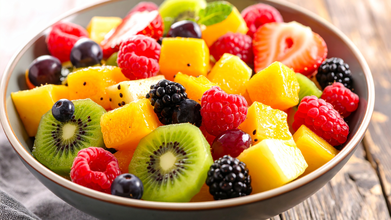
Trying to cut back on sugar does not mean you have to give up fruit. Many people assume fruits are automatically “too sugary,” especially if they taste sweet. In reality, quite a few fruits are naturally low in sugar while still packed with fiber, vitamins and hydration. The trick is choosing wisely.
Here are some delicious fruits that satisfy your sweet tooth without sending your sugar intake soaring.
Citrus Picks That Barely Have Any Sugar
If your goal is minimum sugar, citrus fruits are a great place to start.
Lemons and limes top the list. They are intensely sour for a reason. A lime contains roughly 1 gram of sugar and a lemon about 2 grams. Add them to water, salads or chutneys for flavor without sweetness overload.
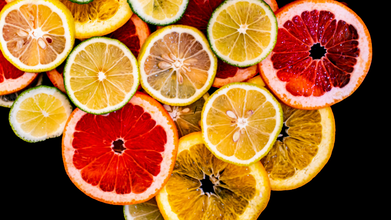
Grapefruit is another excellent option. Half a grapefruit has just around 10 grams of sugar and works perfectly as a refreshing breakfast fruit.
Oranges taste sweet but are still moderate in sugar. One medium orange contains about 14 grams along with a strong dose of vitamin C, making it a far better snack than packaged juice.
Berries: Naturally Sweet And Light On Your Body
Berries are among the best fruits for people watching blood sugar.
Raspberries have just over 5 grams of sugar per cup and a lot of fiber, which helps you feel full longer.
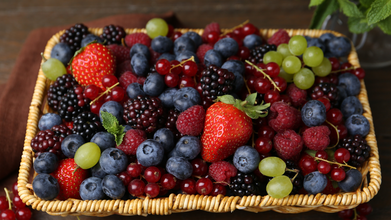
Strawberries come next. A full cup contains about 7 grams of sugar and more vitamin C than many citrus fruits.
Blackberries also sit at roughly 7 grams per cup and bring powerful antioxidants to the table. They are filling, tart and ideal for evening snacking.
Fruits That Hydrate You
Some fruits taste dessert like but are mostly water.
Watermelon is a summer favorite and surprisingly light. One cup contains under 10 grams of sugar and plenty of hydration.
Cantaloupe is slightly higher but still reasonable at under 13 grams per cup. It is rich in vitamin A and works well as a cooling midday snack.
Everyday Fruits That Help You Stay Balanced
You do not need exotic produce to eat smart.
Peaches contain less than 13 grams of sugar in a medium fruit and satisfy dessert cravings naturally.
Kiwis have around 6 to 7 grams per fruit and offer a strong vitamin C boost.
Avocado, also makes it to the list, it is technically a fruit and one of the lowest in sugar overall at about 1 gram in a whole fruit. Its healthy fats keep you full for hours.
- Follow Us :


© 2024 Bennett, Coleman & Company Limited