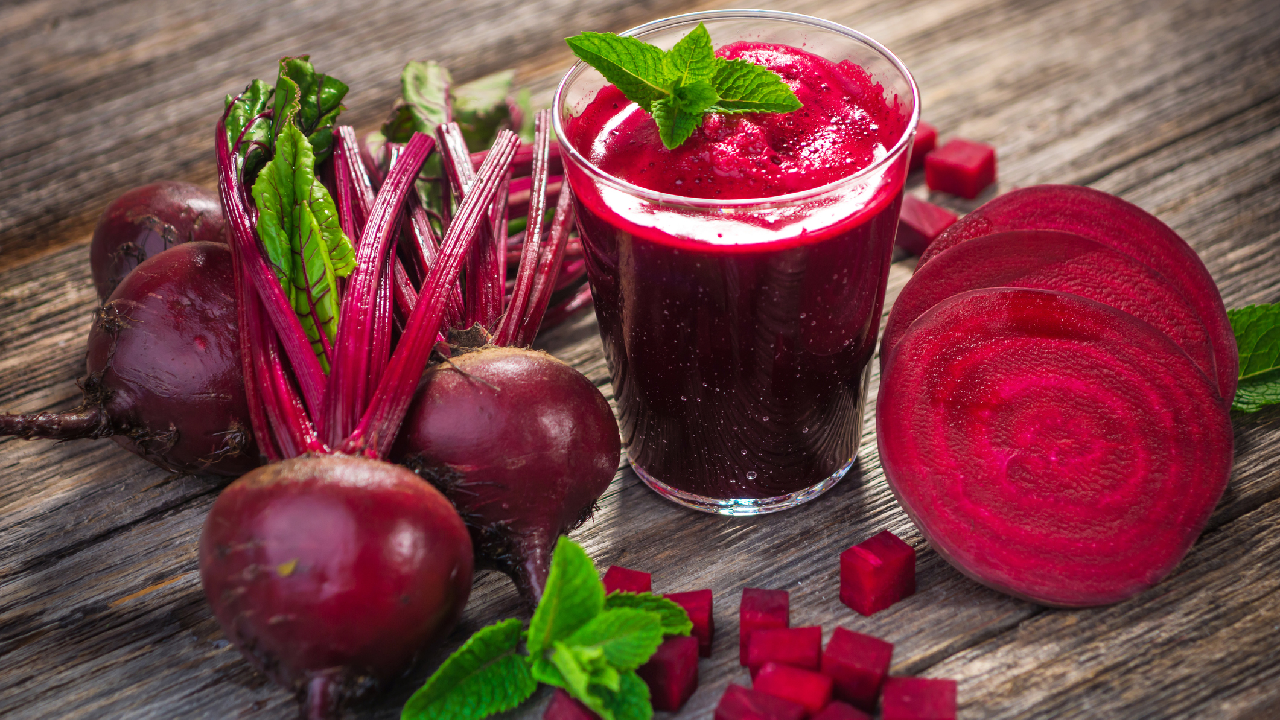
The data from the Centers for Disease Control and Prevention (CDC) shows that almost half the population of the United States has high blood pressure, numbering around 119.9 million people, who are suffering from this disease. The data also reveals that over 660,000 deaths occur every year. Thus, keeping your blood pressure under check is a necessity, and beetroot, along with some leafy greens, can help you in this.A recent study conducted by the University of Exeter found that drinking beetroot juice twice daily can help lower blood pressure in older adults in just a fortnight. The findings of this study were published in the journal Free Radical Biology and Medicine. The study was conducted with 75 volunteers from different age groups. They belong to the age bracket of 30s to 60s and 70s. The researchers asked each person to complete two separate two-week trials. In one of the two weeks, they were given nitrate-rich beetroot juice, and in the other week, it changed to a placebo version with the nitrate removed. Benefits Of Drinking Beetroot JuiceBeetroot is naturally high in nitrates, which the body converts into nitric oxide. This compound relaxes and widens blood vessels, improving circulation and reducing blood pressure.Beetroot juice contains betalains, natural pigments with anti-inflammatory properties.Beetroot contains iron, an essential component of red blood cells, which helps transport oxygen throughout the body. Low iron levels can lead to iron deficiency anemia, resulting in symptoms such as fatigue, dizziness, and shortness of breath.Beetroot juice may help manage nonalcoholic fatty liver disease (NAFLD).Benefits Of Adding Spinach to Your DietThe potassium in spinach helps relax blood vessels, leading to lower blood pressure. Spinach is also high in magnesium and folate, which support the production of nitric oxide—a molecule that dilates blood vessels and promotes better circulation.Spinach provides a significant amount of vitamins and minerals with minimal calories. This makes it an ideal food for those looking to maintain a healthy weight while getting ample nutrients.Spinach is rich in antioxidants such as beta-carotene and lutein, which protect against cell damage caused by free radicals.Spinach is high in fiber, with about 2 grams per serving. Insoluble fiber helps improve digestion by adding bulk to stools and preventing constipation.The lutein and zeaxanthin in spinach, antioxidants related to vitamin A, help protect the eyes from sun damage and age-related disorders like cataracts and macular degeneration.Spinach is an excellent plant-based source of iron, essential for producing haemoglobin in red blood cells. This helps prevent iron-deficiency anemia, which can cause fatigue.