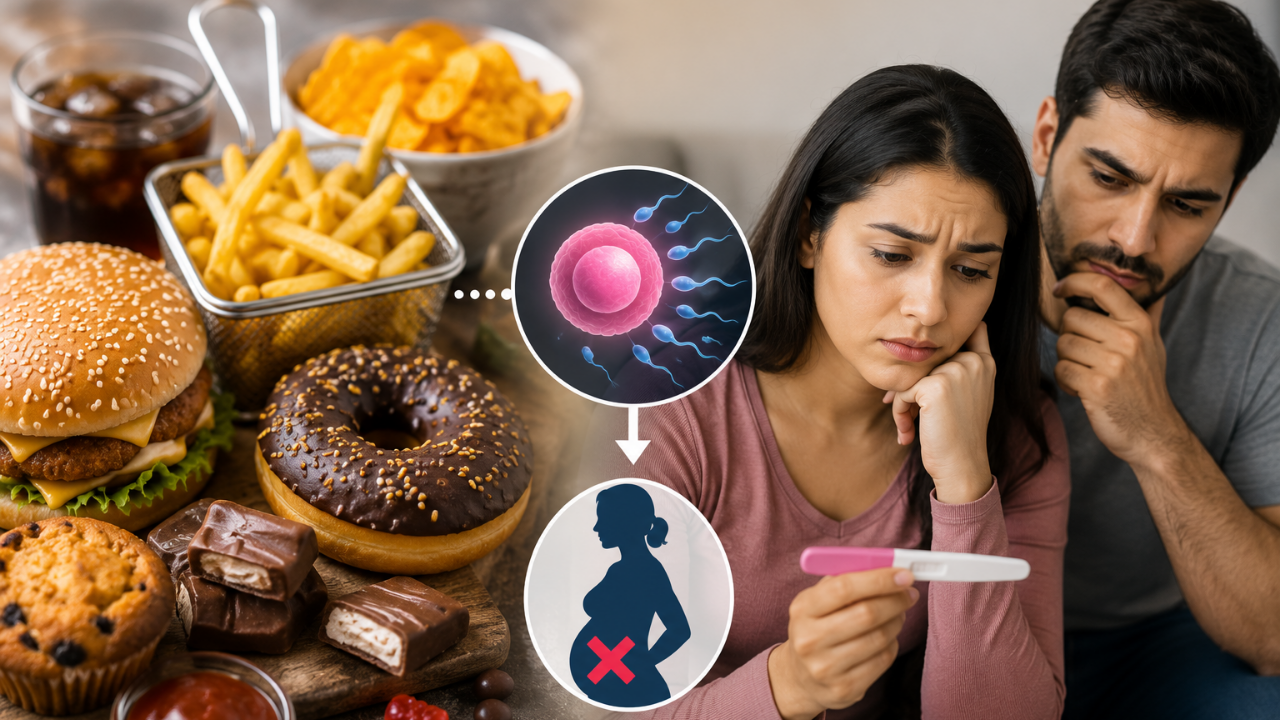
Food choices play an important role in overall health, and reproductive health is no exception. Eating junk or highly processed foods occasionally is unlikely to directly cause infertility. However, regularly consuming foods that are high in added sugar, unhealthy fats, salt and refined carbohydrates, while being low in essential nutrients, may affect the body in several ways. Poor dietary patterns can contribute to weight gain, insulin resistance, inflammation and hormonal changes, all of which may influence fertility. Both men and women can be affected, although the impact may differ depending on individual health, age and other factors.The Link Between Diet, Weight And Hormonal HealthIt can affect healthy body weight: Regular intake of calorie-dense foods such as fried snacks, fast food, sugary beverages and packaged foods can contribute to weight gain. Being significantly overweight or underweight can affect reproductive hormones. In women, excess weight may interfere with ovulation and menstrual regularity, while in men it may affect testosterone levels and sperm production.It may influence blood sugar and insulin: A diet high in refined carbohydrates and added sugars can contribute to insulin resistance, particularly when combined with excess weight and low physical activity. Insulin resistance can worsen hormonal imbalance and may contribute to irregular ovulation in women, especially those with conditions such as PMOS (earlier known as PCOS).Nutrient deficiencies can matter: Highly processed foods may provide calories without supplying enough important nutrients. Fertility and reproductive health require adequate amounts of proteins, healthy fats, vitamins and minerals such as folate, iron, zinc, selenium and vitamin D. A diet lacking variety may therefore not provide the nutritional support needed for healthy reproductive function.Also read: For The First Time, Study Links 'One Sugary Drink A Day' To Higher Stomach Cancer RiskWhy Sperm Health And Overall Diet Matter TooSperm health can also be affected: In men, a consistently poor-quality diet may be associated with poorer sperm concentration, movement and quality. Diets rich in fruits, vegetables, whole grains, nuts, seeds, legumes, fish and other nutrient-rich foods are generally considered more supportive of reproductive health.Inflammation and oxidative stress may play a role: Frequent consumption of highly processed foods, particularly those rich in unhealthy fats and added sugars, may contribute to inflammation and oxidative stress. These processes can affect overall health and may potentially influence egg and sperm quality.Also read: Can What You Eat Before 9 AM Shape Your Blood Sugar For The Rest Of The Day?Small Dietary Changes Can Support Reproductive Health Small changes can make a difference: Improving fertility-supportive nutrition does not mean completely avoiding favourite foods. The focus should be on balance. Fresh fruits and vegetables, whole grains, pulses, nuts, seeds, dairy or suitable alternatives and adequate protein should form a regular part of the diet. Processed snacks, sugary drinks and deep-fried foods can be limited rather than consumed frequently.Lifestyle matters along with diet: Diet is only one part of fertility. Regular physical activity, adequate sleep, stress management, avoiding smoking and excessive alcohol, and maintaining a healthy weight are also important. Existing conditions such as diabetes, thyroid disorders, or PMOS (earlier known as PCOS) should be properly managed.Regular consumption of junk and highly processed foods does not automatically mean that a person will become infertile. However, when such foods form a large part of the daily diet, they may contribute to obesity, metabolic problems, nutritional deficiencies and hormonal changes that can affect reproductive health. A balanced and nutrient-rich diet, combined with healthy lifestyle habits and timely management of medical conditions, can help create a healthier environment for fertility. If a couple is having difficulty conceiving, dietary changes should not replace a proper medical evaluation.