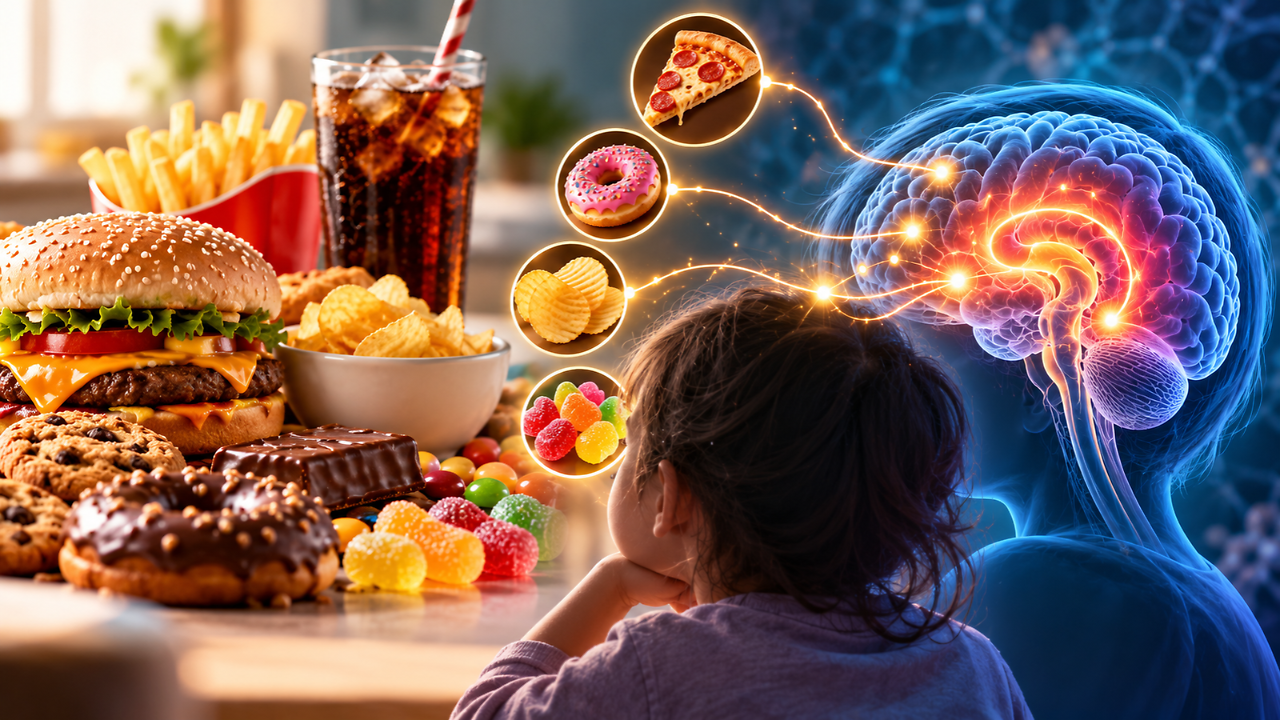
Children who consume more ultra-processed foods may show stronger brain responses that could make them crave those foods repeatedly. This helps explain the link between these foods and childhood weight gain, according to a new study.The research, published in JAMA Network Open, found that kids who ate more ultra-processed foods had greater activity in a brain region that is involved in reward and motivation when they saw tempting pictures of appetising foods. That brain activity was also associated with increase in body fat over the following year.The findings raise important questions about how eating highly processed foods frequently may affect a developing brain.UPFs May Influence A Developing BrainAlso read: Six To Eight Cups Of Tea A Day Linked To Lower Heart Disease Risk: But Should You Drink More?The study included 46 children aged 7 to 10 who had a healthy weight at the beginning of the research. Scientists collected data about their diets and used functional magnetic resonance imaging (fMRI) to examine brain activity while the children viewed pictures of appetising foods, including cookies and French fries.The researchers focused on the striatum, a brain region involved in learning, motivation and reward anticipation.Children who consumed more ultra-processed foods showed stronger responses in the dorsal striatum when viewing food images. Greater activity in this region was also linked with an increase in body mass index (BMI) and body fat percentage one year later.The researchers found that accounting for differences in brain responses weakened the association between ultra-processed food intake and subsequent increases in BMI by 31% and body fat percentage by 44%. This suggests that brain activity related to reward may help explain part of the relationship.Senior study author Dr Kathleen A. Page, a professor of medicine and pediatrics at the Keck School of Medicine of the University of Southern California, said, “This study goes beyond just understanding that UPFs affect weight gain. It actually gives us insight into the neurobiological underpinnings by which these foods may be linked to body composition over time.”Importance Of Childhood NutritionAlso read: Peanut Consumption Associated With Lower Type 2 Diabetes Risk: Study ExplainsUltra-processed foods include many packaged snacks, sugary cereals, sweetened drinks, instant meals and other similar products. They are often designed to be convenient, appealing, and have a long shelf life.The researchers say childhood is an important period for understanding how food habits influence eating patterns and long-term health.“Children’s brains are still developing, habits are still forming and food preferences are still being made. It’s an important period where the brain is very sensitive to food and the food environment,” Page said.The research had key limitations. It involved only 46 children, assessed brain activity at a single time point and followed changes in body composition for one year. The observational design means researchers cannot determine whether greater ultra-processed food consumption caused the brain responses or whether other factors contributed to both. Message For ParentsThe findings point to existing concerns about children's diets high in ultra-processed foods. Page emphasised the importance of making healthier options more accessible.“Changing the food environment to help people access healthier, more minimally processed foods is an important part of the solution,” she said.Families can offer more fruits, vegetables, whole grains, pulses and other minimally processed foods while limiting consumption of sugary drinks and packaged snacks.