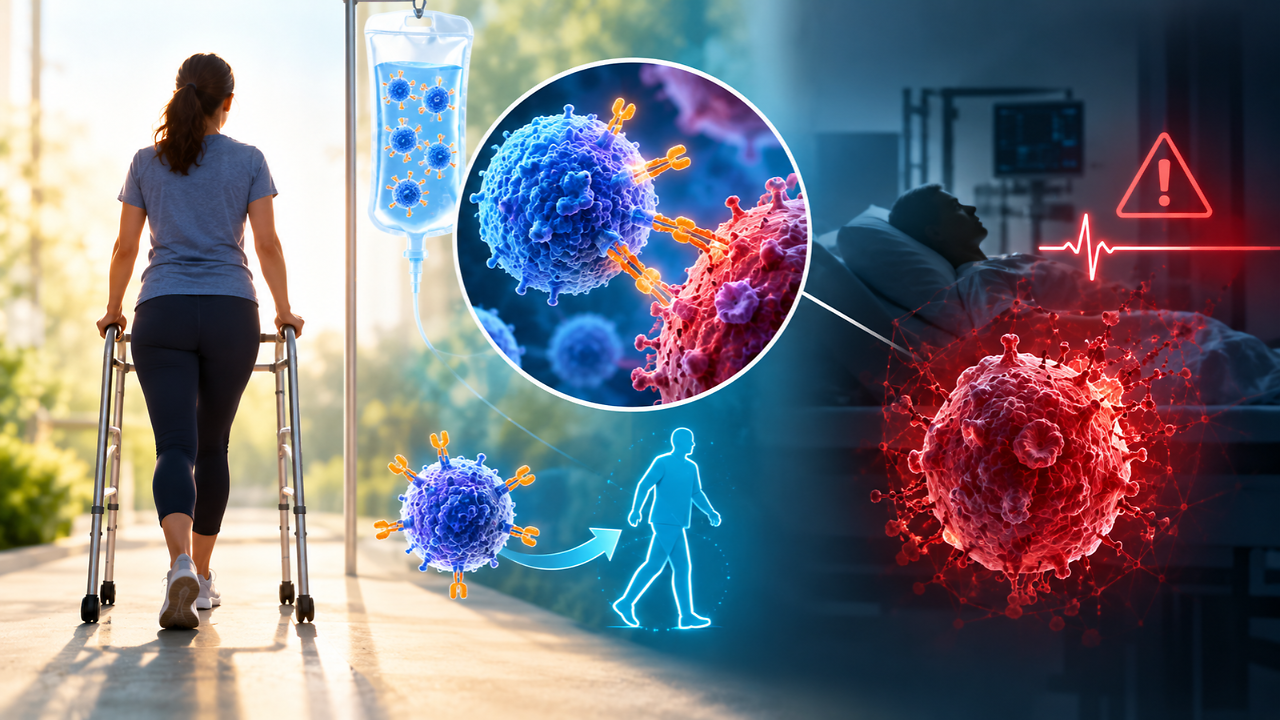
An experimental CAR-T cell treatment has reportedly helped people with stiff person syndrome regain mobility. Some patients even reported not needing walking aids any longer. But new safety concerns have also emerged after Bristol Myers Squibb disclosed a patient's death in a separate early-stage trial of CAR-T therapy for another autoimmune condition, multiple sclerosis.The developments highlight both the promise and the risks of using these engineered immune cells that are being used to treat autoimmune diseases, rather than cancer. Science News reported the improvements on October 22, while Reuters reported the death on October 23 CAR-T Therapy Helps Patients With Stiff Person Syndrome Walk AgainAlso read: Trump Signs Women’s Health Order: Melania’s 5 Pillars of Innovation ExplainedStiff person syndrome (SPS) is a rare, progressive neurological autoimmune disease that causes severe muscle stiffness, painful spasms and difficulty in walking. Some patients experience sudden spasms that can lead to falls and injuries.Lynn Montgomery-Haga, who had lived with the condition for about a decade, struggled to walk even short distances and often relied on a walker or wheelchair. After receiving an experimental CAR-T therapy called mivocabtagene autoleucel, or miv-cel, in 2024, her mobility improved significantly.“I’m just really excited about the future,” Montgomery-Haga told Science News.Her experience reflects findings from a clinical trial led by neurologist Amanda Piquet at the University of Colorado Anschutz. One year after treatment, patients continued to show improvements in mobility and disability. Of the 12 participants who needed walking aids during their initial 25-foot walking test, eight completed the follow-up test without one, marking a positive finding. Piquet told Science News, “You could see that she was walking with a lot more confidence.”The therapy uses a patient's own T cells, which are modified to recognise and target B cells involved in driving the autoimmune response. The goal is to remove the harmful cells and allow the immune system to rebuild with healthier ones, an approach often described as an “immune reset.”“It’s revolutionary to think how far things have gone,” said Carl June, a University of Pennsylvania immunologist and oncologist known for his pioneering work on CAR-T cancer treatments.However, researchers still need longer follow-up and more patient data to understand how reliable the benefits are and what risks may occur. Bristol Myers Squibb Reports A Patient DeathAlso read: 43% Of Women With Autoimmune Diseases Say They Were Told It Was ‘All In Their Head’: LancetThe safety questions became more pressing after Bristol Myers Squibb disclosed that a patient in its Phase 1 trial of another CAR-T therapy, zolacabtagene autoleucel (zola-cel), died after developing septic pneumonia.The patient had highly active relapsing multiple sclerosis and developed delayed motor symptoms after receiving the therapy. The symptoms did not respond to treatment. The patient later received high-dose chemotherapy and died from septic pneumonia the following day, 44 days after the CAR-T infusion.A company spokesperson told Reuters that the patient had “a late onset side effect, a series of other complications and was heavily pretreated prior to CAR T, confounding our ability to determine the root cause of the issue.”The trial enrolled 66 people with relapsing or progressive forms of multiple sclerosis. Bristol Myers Squibb said most reported side effects were brief and reversible. It also said no additional severe side effects had been reported across its autoimmune CAR-T programmes, which had treated 190 patients in early-stage studies. The company is working with the US FDA to restart studies, with enrolment targeted to resume in early 2027. The Findings Need To Be Interpreted Carefully The two developments involve different CAR-T products and separate clinical trials. The death reported in the zola-cel study does not establish that miv-cel carries the same risk, but it reinforces the need for close safety monitoring.CAR-T therapy can cause serious complications, including overactive immune system, neurological toxicity and infections. These risks need to be considered when it comes to autoimmune diseases, where patients may otherwise live with their conditions for years and have existing treatment options.“It’s very important not to oversell it,” said Marc Scherlinger, a rheumatologist at Strasbourg University Hospital, in the Science News report.