
- Health Conditions A-Z
- Health & Wellness
- Nutrition
- Fitness
- Health News
- Ayurveda
- Videos
- Medicine A-Z
- Parenting
Eating Fish While Pregnant May Lower Autism Risk By 20%, Study Finds
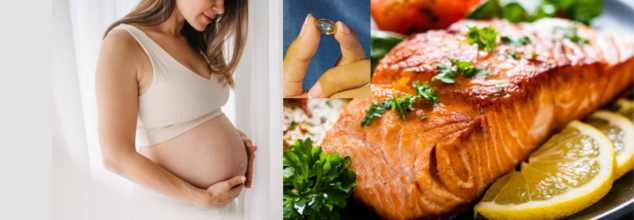
A recent study in The American Journal of Clinical Nutrition highlights a compelling connection between fish consumption during pregnancy and a reduced likelihood of autism spectrum disorder (ASD) in offspring. According to the research published, eating fish during pregnancy was associated with about a 20% lower risk of autism diagnosis, particularly among females.
The study also found a slight reduction in autism-related traits in children whose mothers consumed fish.
Researchers analyzed data from approximately 4,000 participants in the ECHO Cohort to explore the relationship between maternal fish intake, omega-3 fish oil supplements, and neurodevelopmental outcomes related to autism. The study aimed to determine if low fish consumption or omega-3 supplement use could be linked to the occurrence of autism diagnoses or autism-related traits reported by parents.
Fish is renowned for being a rich source of omega-3 fatty acids, which are crucial for maternal health and fetal brain development during pregnancy. Despite the known benefits, the study revealed that about 25% of pregnant participants either never ate fish or consumed it less than once a month. The intake of omega-3 fish oil supplements was even lower among the participants.
Dr. Emily Oken, MD, MPH, of Harvard Medical School, a leading researcher in the study, emphasized the importance of these findings. "Our study contributes to a growing body of evidence demonstrating the role prenatal diet plays in autism-related outcomes in offspring," said Dr. Oken. She noted the need for improved public health messaging regarding fish consumption guidelines for pregnant individuals, given the low intake levels and increasing autism diagnoses in the U.S.
The researchers categorized participants' fish consumption into four groups: less than once a month, more than once a month but less than weekly, weekly, and two or more servings per week. Data showed that about 20% of participants reported no fish intake, and most did not use omega-3 or fish oil supplements. The team examined the association between maternal fish intake and the risk of clinician-diagnosed autism and parent-reported autism-related traits, measured using the Social Responsiveness Scale (SRS). Higher SRS scores indicate more autism-related behaviors.
The findings revealed that any level of fish consumption during pregnancy was linked to a lower likelihood of autism diagnosis and a slight decrease in total SRS scores compared to no fish consumption. This relationship held true across all levels of fish intake, from "any amount" to "more than twice per week." However, no significant association was found between omega-3 fish oil supplement use and autism diagnosis.
Experts recommend that pregnant individuals increase their intake of omega-3 fatty acids, with fish being a primary source. Despite this, fish consumption and omega-3 supplementation remain low in the U.S. Dr. Oken highlighted that regular fish consumption not only reduces autism risk but also offers other proven benefits, such as a lower risk of preterm birth and enhanced cognitive development.
This study underscores the importance of dietary choices during pregnancy and advocates for better public health guidelines to ensure pregnant individuals receive the necessary nutrients for optimal fetal development and well-being.
'Not Sure How He's Alive' Says RFK Jr About Trump's Eating Habits And Drinking Diet Coke

Credits: Wikimedia Commons, X, Facebook
US President Donald Trump’s eating habits have drawn a blunt and unusually candid assessment from Health Secretary Robert F Kennedy Jr, who described them as “unhinged” and dominated by fast food, candy, and Diet Coke.
Speaking on a podcast, Kennedy said Trump regularly consumes what he called “really bad food,” with McDonald’s, sweets, and Diet Coke forming a constant part of his routine. “The interesting thing about the president is that he eats really bad food, which is McDonald's. And then candy and Diet Coke,” Kennedy said, adding that Trump drinks Diet Coke “at all times.”
“Pumping Himself Full of Poison”
Kennedy, who has travelled with Trump, painted a vivid picture of the president’s food habits on the road. “If you travel with him, you get this idea that he's just pumping himself full of poison all day long,” he said.
Despite the criticism, Kennedy also expressed disbelief at Trump’s physical resilience. “He’s got the constitution of a deity,” he remarked. “I don’t know how he’s alive, but he is.”
Why Trump Trusts Fast Food on the Road
According to Kennedy, Trump has his own reasoning for relying on food from large corporate chains while travelling. The president, he said, believes such food is safer and more predictable.
“[Trump] says that the only time that he eats junk food is when he's on the road, and he wants to eat food from big corporations because he trusts it,” Kennedy explained. Trump reportedly worries about falling ill while travelling and prefers food he considers consistent and hygienic.
Kennedy added that Trump’s energy levels remain astonishing despite his diet. “You don’t know how he’s walking around, much less being the most energetic person any of us have ever met,” he said.
A Shift in Tone on Trump’s Health
While Kennedy’s comments about Trump’s diet were sharp, he later struck a more positive tone about the president’s overall health. He said that, in his view, Trump is in excellent physical condition and does not always eat poorly.
“I think he actually does eat pretty good food usually. He's got incredible health,” Kennedy said.
Medical Tests and ‘Exceptional Health’ Claims
Kennedy also cited a medical assessment conducted by Dr Mehmet Oz, referencing Trump’s test results. According to Kennedy, Dr Oz reviewed Trump’s medical records and found unusually high testosterone levels for someone over 70. “He’s got the highest testosterone level that he’s ever seen for an individual over 70 years old,” Kennedy said, adding that Trump would likely be pleased to hear that repeated publicly.
Last month, the White House released details of an MRI scan that described Trump as being in “excellent health.” In a memo, Trump’s physician, Navy Captain Sean Barbabella, said the president’s cardiovascular system was in excellent condition, abdominal imaging was normal, and “all major organs appear very healthy and well-perfused.”
Addressing Age and Visible Bruising
The medical disclosure came amid ongoing public scrutiny of Trump’s health, particularly as he is set to turn 80 in June and is the oldest person ever sworn in as US president.
The White House also addressed visible bruising on Trump’s right hand, explaining that it was linked to aspirin use as part of a standard heart-health regimen.
Inside Trump’s Latest Medical Report
Following a recent checkup at Walter Reed National Military Medical Center, Trump’s physician described him as being in “exceptional health.” The evaluation, which lasted roughly three hours, included lab tests, advanced imaging, and preventive health assessments as part of his ongoing health maintenance plan.
During the visit, Trump also received his annual flu shot and a Covid-19 booster vaccine.
“President Donald J. Trump remains in exceptional health, exhibiting strong cardiovascular, pulmonary, neurological and physical performance,” Barbabella wrote in a one-page memo released by the White House.
The doctor also assessed Trump’s cardiac age, noting that it appeared to be about 14 years younger than his actual age. Trump is currently 79.
Despite questions around his fast-food-heavy diet, official medical reports continue to present a picture of a president who, by clinical measures at least, remains remarkably fit for his age.
DASH Diet Found To Significantly Lower High Blood Pressure, Scientists Say
Credits: AI Generated
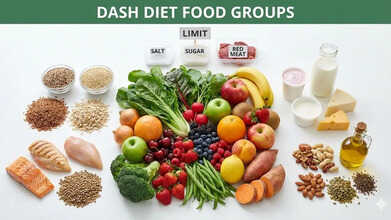
A diet backed by scientific research may help people slim down while also bringing down high blood pressure. For those who have been told by their GP to lose weight, there are several eating plans and everyday changes that can support steady, healthy weight loss. One well-known approach is the DASH diet, created by researchers in the United States. Designed by the National Heart, Lung, and Blood Institute to help manage blood pressure, it has previously been described as the “best heart-healthy diet” and the “best diet for high blood pressure.”
DASH Diet Found To Significantly Lower High Blood Pressure
The plan advises cutting back on salt while prioritising nutritious foods such as fruit, vegetables, and whole grains. According to nutritionist and author Robert Hobson, who wrote Unprocess Your Life, this way of eating may also support weight loss.
Speaking to Saga Magazine, Hobson explained: “The DASH (Dietary Approaches to Stop Hypertension) diet is similar to the Mediterranean diet, as it focuses on fruits, vegetables, lean protein, and keeping salt, sugar, and fat intake low. Research shows it can significantly reduce high blood pressure. Although it wasn’t created as a weight-loss plan, many people following DASH do end up losing weight.”
Many people report losing weight while following the DASH diet, particularly if they also lower their overall calorie intake. Studies suggest weight loss can range from modest to more noticeable levels, with one piece of research showing an average loss of 3.8kg in eight weeks when compared with other diets. This is often because the DASH diet centres on low-calorie foods like fruit and vegetables. Long-term commitment is key for lasting benefits, according to The Mirror.
What Is The DASH Diet?
The National Heart, Lung, and Blood Institute explains that no special or hard-to-find foods are needed to follow the DASH diet. Instead, people are encouraged to eat specific portions from each food group, based on their daily calorie requirements. The diet also stresses choosing foods that are low in saturated and trans fats, as well as lower in sodium.
DASH Diet: What Does The Plan Recommend?
- Eating plenty of vegetables, fruits, and whole grains
- Including fat-free or low-fat dairy products, fish, poultry, beans, nuts, and vegetable oils
- Limiting foods high in saturated fat, such as fatty meats, full-fat dairy products, and tropical oils like coconut, palm kernel, and palm oils
- Cutting back on sugary drinks and sweet foods
Further guidance is available online, and the British Heart Foundation also offers advice and recipe ideas for those following the DASH diet. Outlining the potential benefits, the charity notes on its website: “A large study published in 2019 in the journal Nutrients reviewed seven meta-analyses, including 15 observational studies and 31 controlled trials, on the DASH diet.
“It found the diet was associated with a 5.2mmHg reduction in systolic blood pressure, which is the top number, and a 2.6mmHg reduction in diastolic blood pressure, the bottom number.”
The NHS states that the recommended daily calorie intake is around 2,500 calories for men and 2,000 calories for women. Anyone with health concerns should always speak to their GP.
For maintaining a balanced, healthy diet, the NHS advises: “If you’re eating foods and drinks high in fat, salt, or sugar, try to have them less often and in smaller portions. Aim to eat a wide variety of foods from the five main food groups to ensure you get a broad range of nutrients.”
An Oncologist's Food Guide To Lower Your Risk Of Colorectal Cancer
Credits: Canva
Colorectal cancer impacts around 1.9 million people every year, noted the World Health Organization (WHO) as per its 2022 data. However, your diet could in fact help you reduce your chances of getting colorectal cancer. Dr Andy Gaya, a consultant clinical oncologist at the Cornwall Hospital in London writes for The Telegraph, UK, and has come up with a food guide that could reduce one's risk of colon cancer.
Home Cooked Foods Over Instant Meals
Dr Gaya points out that ultra-processed foods are high in sugar, salt, and saturated fat. These food are also low in fiber, so if you eat a lot of it, you would get obese, which could lead to cancer, including bowel cancer. As, studies often link obesity with cancer. Furthermore, the chemicals in these foods, whether the preservatives or additives and artificial sweeteners could increase your risk of cancer, as many tests have shown that they contain carcinogens.
Also Read: Mattel Launches First-Ever Barbie With Autism
Swipe Your White Sliced Bread For Wholemeal
Doctor points out that eating more fiber is important. He notes that on an average the fiber intake of people in UK is lower than the recommended 30 grams a day. How to know your fiber intake is low? You are prone to constipation.
If someone is prone to constipation, the doctor explained, "then the toxins are being retained in your body for longer and that can cause inflammation which plays a key role in cancer formation". He says that keeping your bowel moving more efficiently could reduce your colon cancer risk.
Fiber also helps toxin chemicals pass through the system quicker.
Toss Your Pork And Lamb Chops For Turkey Or Chicken Breast
From time and again, many studies have shown that eating a lot of red meat could increase your risk of cancer. While no one has defined what quantity is safe for consumption of red meat, points out Dr Gaya, however, eating it regularly could increase your risk of colon cancer by 10 to 20%.
This happens because of the breakdown in the digestion of red meat that cause cancer by damaging the DNA in the cells lining in the bowel and also causing chronic inflammation.
Halloumi Over Salami
Halloumi is a firm, salty, semi-hard cheese from Cyprus, which is made from sheep's and goat's milk. Processed meat like salami is high in saturated far, salt and "marinated in preservatives". This is why colon cancer could be more prone to those who eat such diets on a regular basis. Chemicals like nitrates and nitrites are added further during cooking.
Glass Of Kefir Over Sweetened Yogurt
Yogurt sells well as it is tagged a probiotic, but sweetened yogurt could actually do you more harm than good. While probiotics help with the balance of bacteria in your gut, sweetened yogurt does no good. In fact, it can throw the balance off, increase risk of diabetes. Kefir on the other hand, helps maintain the balance of your gut microbiome, which could play a huge role in surveillance against cancer.
Porridge And Fruits Better Than Sugary Cereal
While cereal may be sold as a healthier breakfast option, it is high in sugar, and could cause chronic inflammation. Cancer grows best when there is chronic inflammation, and could cause mutations.
- Follow Us :


© 2024 Bennett, Coleman & Company Limited