
- Health Conditions A-Z
- Health & Wellness
- Nutrition
- Fitness
- Health News
- Ayurveda
- Videos
- Medicine A-Z
- Parenting
Fact Check: Is Water Stacking A Healthy Way To Stay Hydrated?
Credits: Instagram
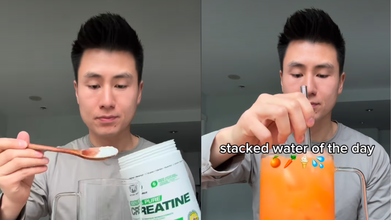
Water Stacking trend that went viral on TikTok, with the hashtag trending #WaterTok is a creative way to ensure that you drink enough water a day. Health and Me previously reported on the trend going viral and how it was the food scientist and content creator Jeffrey Ma who tarted this.
However, is it really a healthy way to hydrate yourself? Health and Me did a fact check and spoke to doctors to know the truth behind it.
Read: What Is the Viral Water Stacking Trend?
What Do Doctors Say About Water Stacking?
As per Dr Prabhat Ranjan Sinha, senior consultant - Internal Medicine at Akash Health care, "The concept might seem helpful, the procedure might lead to issues once the supplements are taken without the appropriate understanding about the needs of the body."
The increasing popularity of the so-called stacked water is a trend, explains Dr Sinha, where people use supplements in their drinking water. The supplements include collagen, creatine, electrolytes, vitamins or herbal powder. Dr Sinha explains that "The human body needs nutrients in a certain proportion and any additional intake can have undesirable results."
Edwina Raj, who is the Head of Services - Clinical Nutrition and Dietetics at Aster CMI Hospital, Bengaluru pointed out that while some of these supplements may offer benefits when used correctly, "adding multiple nutrients without understanding what the body actually needs can sometimes cause harm."
Ms Raj points says, "Every person’s body has different nutritional requirements, and excessive intake of certain supplements may lead to side effects such as stomach discomfort, kidney strain, or imbalance of nutrients in the body. For example, taking high amounts of creatine without proper guidance may affect kidney health in some individuals, especially if they already have underlying health issues."
Both experts highlight that taking unnecessary supplements may not provide any extra benefits if the person is already getting it through their diet. Dr Sinha also points out that when someone consumes an excessive amount of nutrients, it could overstrain organs like the kidney or liver.
"Several interactions can also be formed when several supplements are used together which can cause imbalances in electrolytes and metabolism or the interactions can interfere with the absorption," he says.
How Can One Stay Hydrated?
Both experts say that one can stay hydrated by drinking enough water and eating a balanced diet. Dr Sinha notes: "Supplementation is preferably to be taken when the deficiency is known to be medically or there is a certain health need. Following the trends of social media without necessarily knowing the state of the personal health can result in excessive consumption of specific substances or unneeded dependence on supplements."
Stay Hydrated In A Creative Way
Dr Sinha says that maintaining a healthy drinking habit is not an additive based habit that involves the use of additives, but a simple and consistent lifestyle choice.
Ms Raj points out a simple way is by starting the day by drinking a glass of water as soon as you wake up. This helps body rehydrate after sleep. "Keeping a water bottle nearby at your desk, in your bag, or in your car can remind you to drink water regularly throughout the day." She also says that setting small goals help, for instance - drinking a glass of water every hour, or setting reminders on phones.
What to do if water feels boring? "Those who do not like plain water may use the natural alternatives of adding lemons, mint leaves, or cucumber to improve the taste without putting any extra supplement," points out Dr Sinha, and seconded by Ms Raj.
Note: Please consult your nutritionist and doctor before adding any extra supplements or nutrients to your daily water intake. Health and Me Does NOT promote a user-generated content as a substitute for medically verified hydration techniques.
Kate Middleton Says She Has Curbed Her Alcohol Intake After Cancer Diagnosis
Credits: Instagram
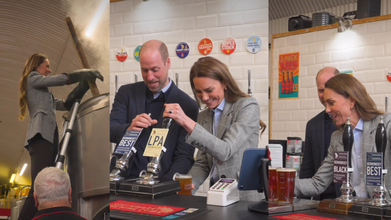
Kate Middleton visited a brewery, London beer hall. The princess of Wales shared her new approach to alcohol and said, "Since my diagnosis, I haven't had much alcohol. It's something I have to be a lot more conscious of now."
In March 2024, Kate Middleton shared her cancer diagnosis. "It has been an incredibly tough couple of months for our entire family, but I’ve had a fantastic medical team who have taken great care of me, for which I’m so grateful,” her message began. “In January [2024], I underwent major abdominal surgery in London, and at the time, it was thought that my condition was noncancerous. The surgery was successful. However, tests after the operation found cancer had been present. My medical team therefore advised that I should undergo a course of preventive chemotherapy, and I am now in the early stages of that treatment.”
She said that her diagnosis was a "huge shock" for her family and that recovery form such a major surgery took a lot of time.
In January 2025, she announced that she was in remission. “It is a relief to now be in remission, and I remain focused on recovery,” she wrote on her Instagram account. “As anyone who has experienced a cancer diagnosis will know, it takes time to adjust to a new normal. I am, however, looking forward to a fulfilling year ahead. There is much to look forward to. Thank you to everyone for your continued support.”
Alcohol And Cancer
In 1987, the International Agency for Research on Cancer (IARC) classified alcohol as a Group 1 carcinogen, meaning there is sufficient evidence that it causes cancer in humans. Research has linked alcohol consumption to cancers of the oral cavity, pharynx, larynx, esophagus (particularly squamous cell carcinoma), and liver.
Although the level of risk varies between light, moderate, and heavy drinkers, the association between alcohol and cancer has been well documented for decades. In light of this evidence, Middleton appears to have reconsidered her relationship with alcohol following her diagnosis, remission, and recovery.
Scientific evidence continues to reinforce these concerns. According to the National Cancer Institute, alcohol consumption can increase the risk of several cancers, and the risk rises with greater intake. Even light drinking may carry some risk. For instance, studies show that women who consume one alcoholic drink a day have a higher risk of breast cancer compared with those who drink less than once a week, with the risk increasing further among heavy and binge drinkers.
Data from the United States also highlights the scale of the impact. Alcohol was estimated to be responsible for about 5% of the 1.8 million cancer cases diagnosed in 2019, as well as around 4% of cancer-related deaths that year. Research consistently shows that people who consume alcohol face higher risks of several cancers compared with those who do not drink.
The following table shows the risk of cancer and consumption of alcohol as per the National Cancer Institute data:
| Cancer Type | Risk increases associated with alcohol drinking |
| Oral cavity (mouth) and throat |
|
| Voice box |
|
| Esophageal (squamous cell carcinoma) |
|
| Liver | 2 times as likely in heavy drinkers |
| Breast |
|
| Colorectal | 1.2 to 1.5 times as likely in moderate to heavy drinkers |
What Is the Viral Water Stacking Trend?
Credits: Canva and Instagram
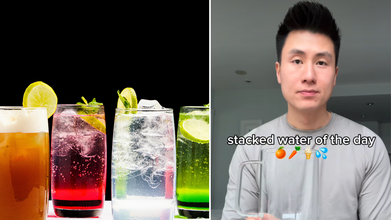
Water Stacking, a new term , a new trend comes up, after we have already reached the peak of "maxxing". If you have been keeping up with social media wellness trend, then you must be aware of the water stacking trend. For the uninitiated, this is a viral #WaterTok trend which started on the social media platform TikTok, that involves elevating plain water with various supplements, electrolytes, collagen, and flavoring the enhance hydration. For those who struggle to drink water and keep themselves hydrated, this is a trend which could help them stay on top of their hydration game.
Who Created Water Stacking Trend?
The trend was created by food scientist and content creator Jeffrey Ma. Ma says stacked water is a combination of different functional ingredients and juices added to water that enhances the hydration experience. Ma has worked in natural product industry for more than a decade and this is how he has come up with this idea that lets you get all your nutrients, simply through water.
In an interview with Vogue, he says, "It really came from me being lazy and wanting to mix everything into one tasty all-in-one drink." How did he come up with the ingredients, you ask? This is his answer: "I'm in my mid-30s and once you get past your 20s, it feels like there are more preventative supplements to think about (collagen for skin, joints and hair; vitamin C for immunity; fiber; protein; creatine; probiotics; electrolytes), while also trying to eat enough fruit and drink enough water each day. At the same time, I was working out a lot for Hyrox (a fitness competition), running, playing pickleball, and doing HIIT, so I genuinely needed daily electrolytes."
Read: Why The Social Media Trend Of Parents Shaving Children's Facial Hair Could Go Wrong
How To Make Your Own Stacked Water?
Think of it as a detox drink. You can customize your drink as per your needs. A bottle of stacked water does not have to be the same for everyone. Yours might include the nutrients you need, whereas someone else could have a completely different set of ingredient. The aim is to ensure that you get all your nutrients and the tasty water will make it easier for you to stay hydrated.
Jeffrey Ma on his Instagram (@heyjeffreyhouse) shared how people can use ingredients to make their own stacked water:
- Blended carrot
- 2 tsp Collagen peptides
- Lime or orange juice
- 1 Yakult
- 1 scoop creatine (optional)
- ½ tsp sea salt for electrolytes
- ½ tsp vanilla
- Lots of ice
- Just mix everything, and your stacked water is ready
You can customize your drink using chia seeds to add more fiber or chopped fruits to give it a little texture. The best part? It suits best for a summertime drink!
Note: Please consult your nutritionist and doctor before adding any extra supplements or nutrients to your daily water intake. Health and Me Does NOT promote a user-generated content as a substitute for medically verified hydration techniques.
David Protein Bars Faces Lawsuits For Understating Calories And Fat Content
Credits: davidprotein.com and Instagram
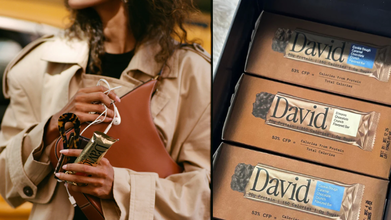
David Protein Bars is facing a lawsuit that alleged that the company misrepresented the calorie and fat contents. It is a challenge for a company which is known for catering health-conscious customers.
The complaint was filed on January 23 in the US District Court for the Southern District of New York. Three individuals who bought David bars claimed that the protein bars contained "way more" calories and fat than the label noted.
Also Read: What Is the Viral Water Stacking Trend?
As per CBS News, independent and third-party testing used a method called Atwater factors. The result showed that the number of calories exceeded the amount listed on the label as much as by 83 per cent.
Fat Content In David Protein Bars
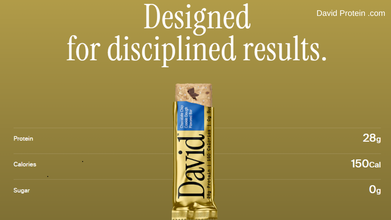
The lawsuit alleged that David Protein underestimated the fat content, as the testing revealed that the fat content exceeded by as much as 400 per cent.
As per the David Protein's website and the product label, the bar is supposed to contain 150 calories, 28 grams of protein and 0 grams of sugar. The lawsuit also stated Food and Drug Administration (FDA) guidelines that dictate that a product is misbranded if the "nutrient content of the composite is greater than 20% in excess of the value for that nutrient declared on the label."
The lawsuit names Linus Technologies as the primary defendant. The nutrition-focused company was founded by entrepreneur Peter Rahal in 2023, according to market intelligence platform Tracxn. It operates under the brand name David Protein.
Neither Linus Technologies nor David Protein immediately responded to requests for comment as reported by CBS News. However, on Wednesday the company posted a statement on Instagram that said, “No one is getting Regina Georged,” referencing the film Mean Girls, where the character Cady Heron tricks Regina George into eating a protein bar that leads to weight gain.
After the lawsuit was filed in January, Rahal told Vanity Fair that the company stands by the accuracy of its product labeling and plans to strongly contest the claim.
The David Protein bar was launched in 2024. According to Forbes, its name is inspired by Michelangelo’s famous 16th-century sculpture David.
The bars are sold in several flavors, including chocolate chip cookie and fudge brownie. A pack of 12 bars retails for $39, which works out to about $3.25 per bar.
Clear Information On Labels
FDA last year announced that in the coming next few years, food manufacturers have to put nutritional labels on the front of packaged foods. This proposal by FDA comes in the content of chronic diseases and the need for combating the same. The front-of-package labels are required for "most packaged foods", said the announcement.
Read: FDA Wants Nutrition Labels Of Saturated Fat, Sodium, And Added Sugar On Food Packaging
This announcement makes it easier for the customer to read the nutrition box that could otherwise go unnoticed, with many thinking that they are consuming something healthy. In most cases nutrition boxes are placed behind the packaging, and many ignore the content and thus continue to consume products with the presumption that it is healthy.
- Follow Us :


© 2024 Bennett, Coleman & Company Limited