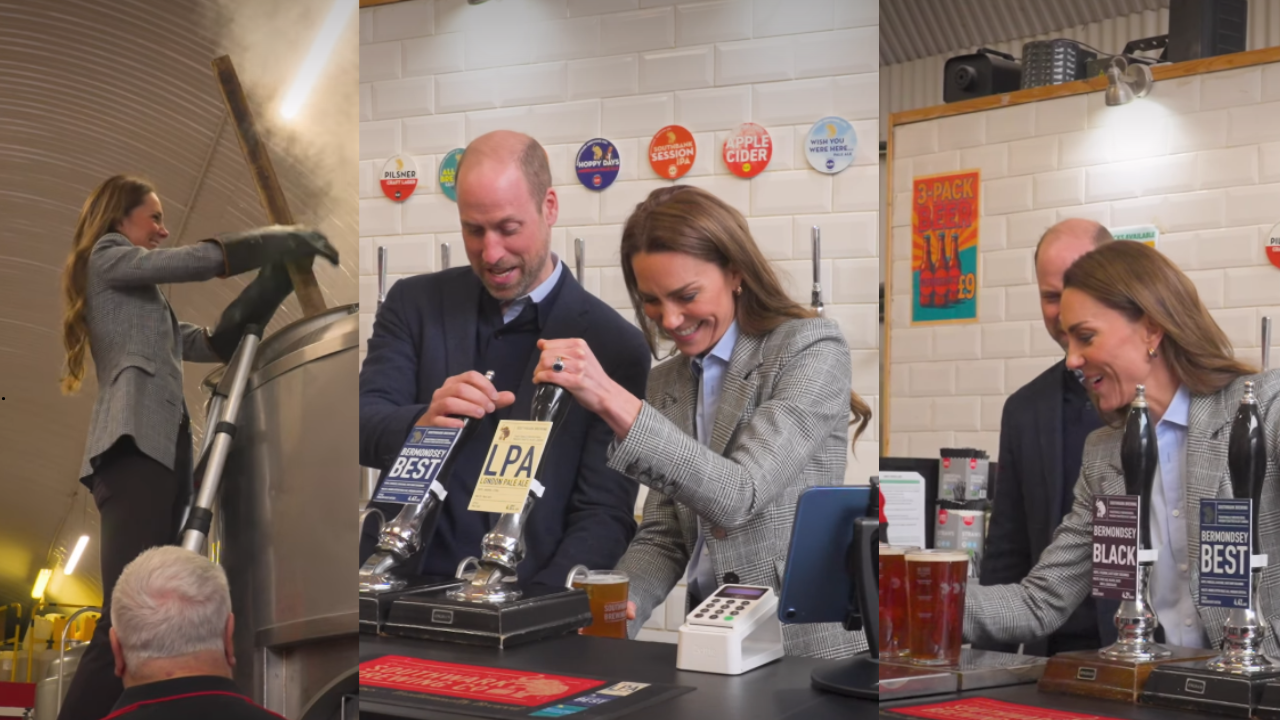
Kate Middleton visited a brewery, London beer hall. The princess of Wales shared her new approach to alcohol and said, "Since my diagnosis, I haven't had much alcohol. It's something I have to be a lot more conscious of now."In March 2024, Kate Middleton shared her cancer diagnosis. "It has been an incredibly tough couple of months for our entire family, but I’ve had a fantastic medical team who have taken great care of me, for which I’m so grateful,” her message began. “In January [2024], I underwent major abdominal surgery in London, and at the time, it was thought that my condition was noncancerous. The surgery was successful. However, tests after the operation found cancer had been present. My medical team therefore advised that I should undergo a course of preventive chemotherapy, and I am now in the early stages of that treatment.” She said that her diagnosis was a "huge shock" for her family and that recovery form such a major surgery took a lot of time. View this post on Instagram A post shared by The Prince and Princess of Wales (@princeandprincessofwales)]]> In January 2025, she announced that she was in remission. “It is a relief to now be in remission, and I remain focused on recovery,” she wrote on her Instagram account. “As anyone who has experienced a cancer diagnosis will know, it takes time to adjust to a new normal. I am, however, looking forward to a fulfilling year ahead. There is much to look forward to. Thank you to everyone for your continued support.”Alcohol And CancerIn 1987, the International Agency for Research on Cancer (IARC) classified alcohol as a Group 1 carcinogen, meaning there is sufficient evidence that it causes cancer in humans. Research has linked alcohol consumption to cancers of the oral cavity, pharynx, larynx, esophagus (particularly squamous cell carcinoma), and liver.Although the level of risk varies between light, moderate, and heavy drinkers, the association between alcohol and cancer has been well documented for decades. In light of this evidence, Middleton appears to have reconsidered her relationship with alcohol following her diagnosis, remission, and recovery.Scientific evidence continues to reinforce these concerns. According to the National Cancer Institute, alcohol consumption can increase the risk of several cancers, and the risk rises with greater intake. Even light drinking may carry some risk. For instance, studies show that women who consume one alcoholic drink a day have a higher risk of breast cancer compared with those who drink less than once a week, with the risk increasing further among heavy and binge drinkers.Data from the United States also highlights the scale of the impact. Alcohol was estimated to be responsible for about 5% of the 1.8 million cancer cases diagnosed in 2019, as well as around 4% of cancer-related deaths that year. Research consistently shows that people who consume alcohol face higher risks of several cancers compared with those who do not drink.The following table shows the risk of cancer and consumption of alcohol as per the National Cancer Institute data:Cancer TypeRisk increases associated with alcohol drinkingOral cavity (mouth) and throat1.1 times as likely in light drinkers5 times as likely in heavy drinkersVoice box0.9 times as likely in light drinkers2.6 times as likely in heavy drinkersEsophageal (squamous cell carcinoma)1.3 times as likely in light drinkers5 times as likely in heavy drinkersLiver2 times as likely in heavy drinkersBreast1.04 times as likely in light drinkers1.23 times as likely in moderate drinkers 1.6 times as likely in heavy drinkersColorectal1.2 to 1.5 times as likely in moderate to heavy drinkers