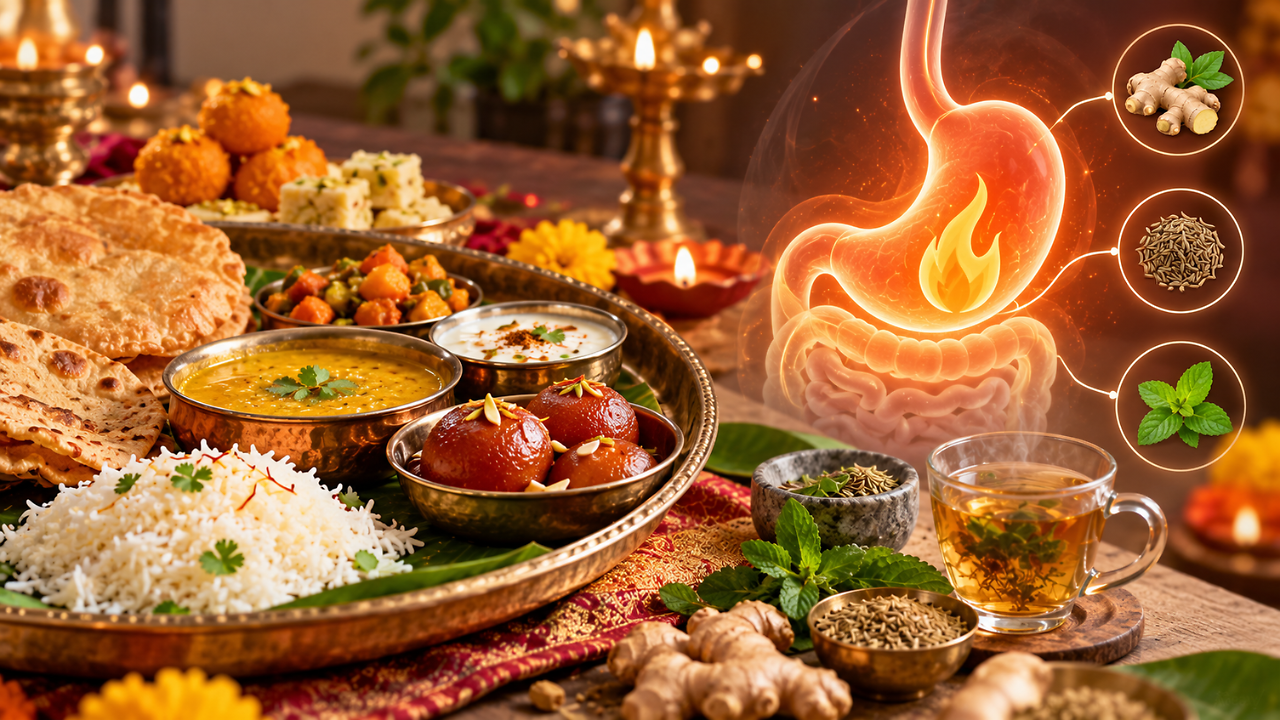
Festivals bring family and friends together and all enjoy traditional sweets and savouries to rich gravies and deep-fried delicacies. However, the joy of celebration and eating more than regular can sometimes lead to bloating, acidity, heaviness, gas and discomfort. Understanding how digestion works and how Ayurveda explains it through the concept of Agni can help us celebrate with smoothness in our digestive system. During festival, we may eat larger portions, enjoy several rich dishes at one meal, or eat again before we feel actual hunger. Digestive discomfort often occurs when we eat food without knowing agni, consume fatty or fried foods, eat too quickly or combine multiple rich dishes in one meal, untimely, without proper digestion of previous meal. For some people, carbonated drinks and particular food can increase gas or bloating. Stomach stretches when we overeat, and high-fat and heavy meals may delay stomach emptying, leaving us feeling uncomfortably full for longer period. Eating rapidly can also cause us to swallow more air. For people prone to acid reflux, large meals may get worsen with heartburn and regurgitation. Occasional bloating after a heavy meal is common. Ayurveda explain digesting and metabolism through concept of Agni. The concept of Jatharagni relates particularly to the digestion and metabolism of food. Ayurveda also describes Mandagni (diminished digestive capacity) which will be associated with symptoms such as heaviness, reduced appetite and sluggish digestion etc..., from a practical perspective, the Ayurveda emphasis on eating according to digestive capacity, avoiding excessive food intake and maintaining regular dietary habits aligns sensibly with modern nutrition advice. Classical ayurvedic text emphasise the importance of maintaining balance Agni, for overall health, well-being and preventive care; however, Agni is a traditional Ayurvedic concept and should not be directly corelated with any single modern physiological process.Also read: We Fact Checked The Ayurveda Claim Of Papaya Lowering Your Cholesterol, Details Inside Five Healthy Eating Habits For Festive Season1. Portion awareness: Enjoy your favourite dishes of festival but begin with moderate portions. Eat in moderate speed and pause before taking a second serving. 2. Avoid excessive food in one sitting: Multiple preparations which are fried and sugary can make a meal unnecessarily heavy. Choose a balanced plate with vegetables, protein-rich foods and appropriate portions of carbohydrates and Fats. 3. Hydration: Drink warm water regularly throughout the day sip by sip. Limit excessive carbonated beverages if they are causing any discomfort or not. 4. Digestion time: Avoid lying down immediately after meals. A gentle 10–15-minute slow walk after eating may support general digestive comfort, then if needed lie-down on left sided. 5. Routine and mindful eating: Avoid skipping meals to compensate for feasting. Eat when comfortably hungry after analysing agni, pay attention to fullness and maintain regular sleep, physical and mindfulness activities. Festive eating need not mean deprivation or discomfort. Ayurveda's emphasis on Agni encourages us to respect individual digestive capacity, and guidance from nutrition reinforces moderation, mindful eating and balanced meals. Enjoy the foods you love, savour every bite, observe and recognise when you are comfortably full of stomach. Seek medical evaluation if bloating is persistent, frequently recurring or accompanied by severe abdominal pain, repeated vomiting, diarrhea, blood in the stool, unexplained weight loss, difficulty swallowing or any GI related symptoms. Severe or sudden abdominal pain requires urgent medical attention and assessment. This festive season, let celebration nourish your well-being not leave you feeling weighed down.Disclaimer: This article is for informational purposes only and is not a substitute for professional medical advice.