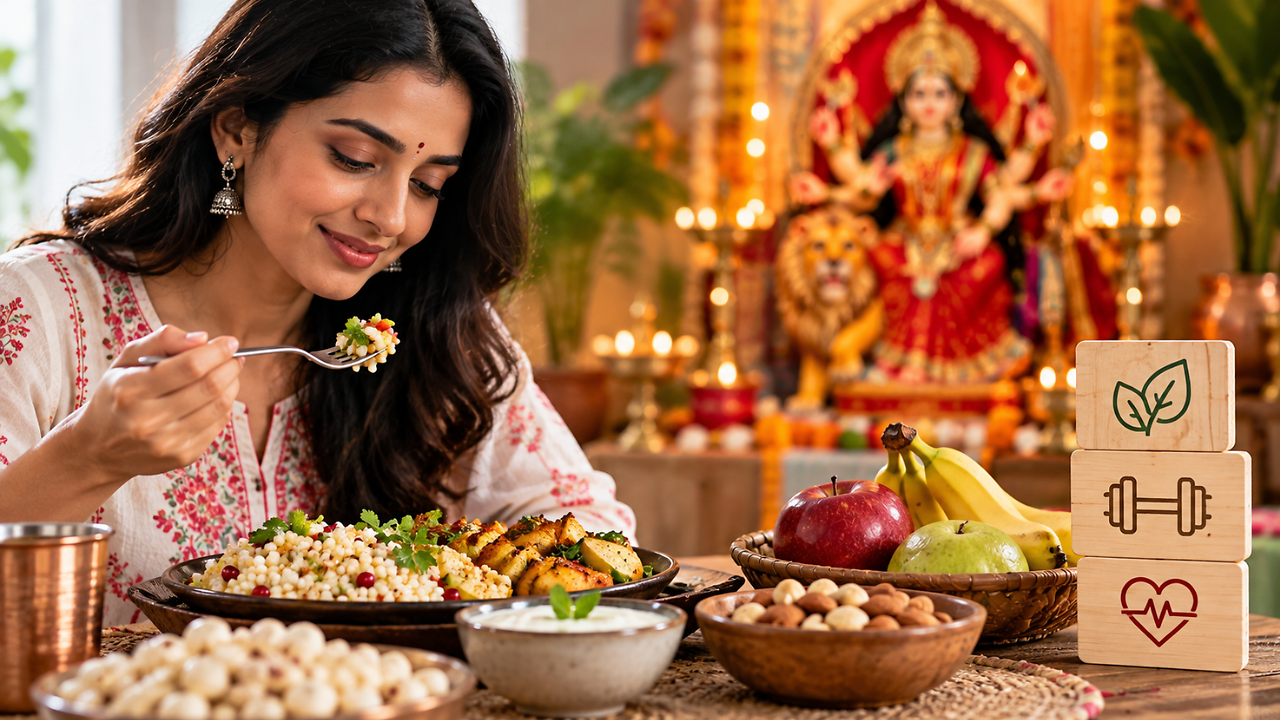
Navratri is a time of prayer, devotion and fasting for many people. While fasting is an important part of the celebration, what you eat during this period matters too. Choosing the right foods can help you stay energetic, avoid unnecessary hunger and maintain healthy blood sugar levels. A few simple changes to your fasting meals can make a real difference. What Should You Eat During Navratri Fasting? Fasting does not mean you have to compromise on nutrition. Instead of depending mainly on potatoes, sabudana and fried snacks, try including a variety of foods in your meals. Some healthier choices include: Fresh fruits: Apples, guavas, pears and oranges provide vitamins, minerals and fibre. Choose whole fruits instead of juices.Vegetables: Cucumber, bottle gourd and pumpkin can add variety and nutrients to fasting meals.Protein-rich foods: Curd, paneer, milk and nuts help keep you satisfied for longer.Fasting grains: Buckwheat (kuttu) and amaranth (rajgira), where permitted, can be included in moderate portions.Healthy fats: Use small amounts of nuts, seeds and cooking oils instead of relying on deep-fried snacks.How to Balance Carbohydrates, Protein and Fibre One common mistake during fasting is eating too many carbohydrate-rich foods while missing out on protein and fibre. This can leave you feeling hungry soon after a meal and may cause blood sugar levels to rise quickly. For better balance, combine fasting grains or potatoes with protein-rich foods such as curd or paneer. Include permitted vegetables and choose whole fruits for additional fibre. Keep portions of sabudana khichdi, potato dishes and fasting flour rotis under control. Remember, foods considered traditional or healthy during fasting can still raise blood sugar when eaten in large quantities.Also read: Peanut Consumption Associated With Lower Type 2 Diabetes Risk: Study Explains Which Fasting Foods Should You Limit? Sabudana, potatoes, sweets and fruit juices can raise blood sugar levels, particularly when consumed in large portions. Fried foods such as puris and pakoras can also add excess calories. Whenever possible, choose boiled, steamed, roasted or lightly sautéed foods. Limit added sugar and avoid combining several starchy foods in the same meal. Stay Hydrated and Watch Your Portions Drinking enough water is important, especially if your fasting routine limits when you can eat or drink. Where permitted, unsweetened buttermilk can be another option. Avoid relying on sugary drinks to manage hunger or tiredness. Instead of eating one very large meal after hours without food, choose moderate portions during your permitted eating periods.Also read: Heart Racing During Garba: Is It Adrenaline Or A Warning Sign?How Can People with Diabetes Fast Safely? For people with diabetes, fasting needs extra care. Changes in meal timings and food intake can increase the risk of low or high blood sugar, as well as dehydration. The risk may be greater for those taking insulin or certain diabetes medicines. Here are a few important precautions: Speak to your doctor before starting a fast.Discuss whether your medication timings or doses need adjustment.Monitor your blood sugar as advised by your healthcare team.Do not ignore symptoms such as sweating, dizziness, confusion or unusual thirst.Stop fasting and seek medical advice if your blood sugar becomes dangerously low or high, or if you feel unwell.The takeaway: Navratri fasting can be both meaningful and mindful of your health. Simple choices, such as eating balanced meals, limiting fried foods and controlling portions, can help you feel better throughout the festival. If you have diabetes, plan your fast with your doctor to observe the tradition without putting your health at risk.