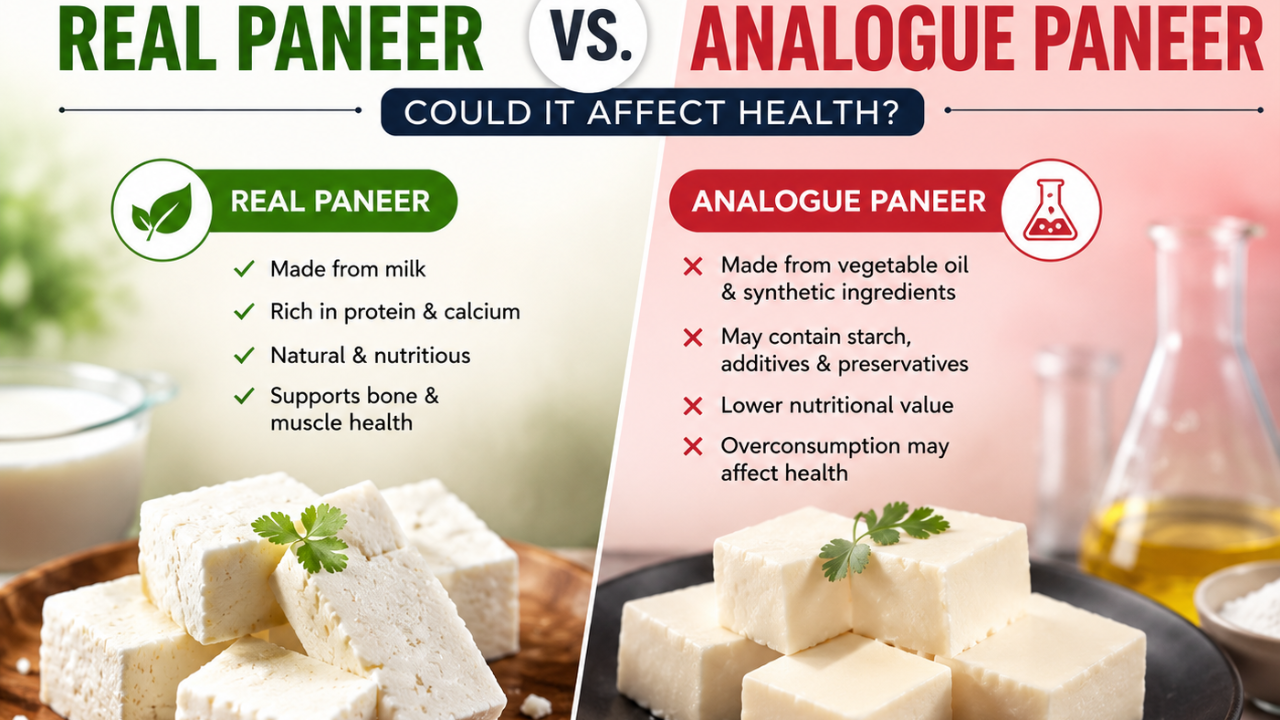
Paneer has long been a staple in Indian households, valued for its high protein content and versatility. However, growing concerns over food adulteration and the increasing availability of cheaper alternatives have brought analogue paneer into the spotlight. While both products may look similar on the plate, they differ significantly in how they are made, their nutritional value, and their potential impact on health.Real Paneer Vs Analogue Paneer Real paneer is made by curdling milk. It naturally contains dairy protein (casein), calcium, and other milk nutrients. The nutritional differences between the two can be significant. While genuine paneer provides complete protein and beneficial dairy nutrients, analogue paneer may contain lower-quality protein, higher amounts of unhealthy fats, sodium, and food additives depending on its formulation. Regular consumption of heavily processed versions, particularly those high in trans fats or saturated fats, could contribute to long-term health concerns when eaten frequently as part of an unhealthy diet. That said, not all analogue paneer products are nutritionally poor, making it important for consumers to read ingredient labels and choose products carefully. Analogue paneer is typically made using vegetable fats/oils, starches, emulsifiers, and other additives to mimic paneer's texture and appearance. It is often cheaper and may contain substantially less protein than real paneer. If someone regularly eats analogue paneer believing it is real paneer: They may consume less protein and calcium than expected, especially if paneer is a major protein source in their diet.Some products may contain higher amounts of refined starch, sodium, saturated fat, or hydrogenated fats, depending on formulation.Over years, frequent intake of products rich in trans fats or poor-quality fats could contribute to worse cholesterol levels and cardiovascular risk.The biggest issue is often mislabeling: people think they are getting the nutritional benefits of dairy paneer when they are not.Also read: Why Has FSSAI Banned The Sale Of Dabur India's Ghee, Honey & Other Products?What Happens If You Eat Analogue Paneer? That said, not all analogue paneer is inherently harmful. When manufactured properly and clearly labeled, it is a legal food product. The health impact depends on its ingredients and how often it is consumed. Occasional consumption is unlikely to be a major problem for most healthy people. However, people with heart disease, high cholesterol, diabetes, or those trying to maintain a balanced diet may benefit from choosing traditional paneer more often. Understanding what goes into the food we eat and making informed choices can help ensure that convenience does not come at the cost of good nutrition.By Dr. Aakash Patel, Internal Medicine, Sterling Hospital, Gandhidham