
- Health Conditions A-Z
- Health & Wellness
- Nutrition
- Fitness
- Health News
- Ayurveda
- Videos
- Medicine A-Z
- Parenting
What Is The Best Time To Eat Dinner?

Credits: Canva
Eating is something we do every day, and its connection to our weight is undeniable. Most of us concentrate on what we eat, and rightly so, because the nutritional value and calorie content of food directly impact our weight. Yet, an increasingly important factor in weight management is when we eat. Nutritionist Pooja Makhija explains the science behind having early dinners, particularly in the evening, and how this aligns with the body clock to support overall weight management.
In an Instagram video, she writes in the caption, “You don't start digesting worse at night because of the food… you digest worse because melatonin has already risen,” adding, “Melatonin climbs 2–3 hours before your bedtime, dropping your insulin sensitivity by up to 50% and switching fat cells into storage mode. So the same meal hits very differently at 7 pm vs 10 pm.”
What Is Melatonin?
Melatonin is a hormone made by the pineal gland in the brain that helps control the body’s sleep-wake cycle. Its levels usually rise in the evening, peak during the night, and fall in the early morning. Many doctors even recommend melatonin supplements to help regulate sleep patterns, though they can sometimes cause side effects, so consulting a physician is advised, as per Healthline.
How Does Melatonin Affect Your Fat Storage In Body?
In her video, Pooja grabs attention by asking, “We all know that melatonin makes you sleepy. But what if I told you that melatonin wakes up your fat cells and makes them store more? Hadn't heard of that?”
She continues, “Melatonin isn’t just your sleep hormone. It’s your body’s night mode switch. As it rises in the evening, your metabolism slows down. Insulin sensitivity drops 25 to 50 percent, glucose clearance slows, and your fat cells switch from burning energy to storing it.” Referring to a study published in the *Clinical Endocrinology and Metabolism* journal, she adds, “People who ate dinner when their melatonin was high had a 34 percent higher glucose spike. Same people, same meal, same calories—just bad timing.”
What Is Front Loading Calories?
Front-loading calories is a way of eating where most of your daily calories are consumed earlier in the day, with a big breakfast and hearty lunch and a lighter dinner in the evening. This approach matches your meals with your body’s natural circadian rhythms, improving metabolism, insulin response, and appetite control. It helps with weight management and energy levels by taking advantage of the morning metabolism, reducing late-night cravings, and supporting better sleep.
What Is The Correct Time To Have Dinner To Prevent Fat Storage And Weight Gain?
Pooja Makhija says the most effective method to prevent melatonin from triggering fat storage is to eat early dinners and front-load calories during the day.
“So when most of your calories land late at night, it’s at a time when your biology is saying, ‘I’m done for the day; I’m not burning more.’ In contrast, front-loading calories with a big breakfast, solid lunch, and small dinner means you’re eating when melatonin is low. Your insulin is sharp, mitochondria are active, and your body is in daytime burning mode,” she explains.
She concludes with a reminder: “Your fat cells have melatonin receptors, and they behave differently depending on the time of day. Front-loading isn’t a hack—it’s circadian biology. Melatonin guides your metabolism. So eat in tune with your body clock, not against it, and notice the difference.”
According to Healthline, the ideal dinner time for better melatonin regulation and metabolism is 2–3 hours before bedtime—before your body naturally begins releasing melatonin—to avoid insulin spikes and fat storage.
Afraid You Will Gain Weight With Christmas Feast? Here's What You Can Do

Credits: iStock
Christmas is meant to be joyful, but the fear of gaining weight often sneaks in between helpings of roast potatoes and dessert. There is a reason this worry feels real. Nearly half of the weight many people gain in a year tends to show up during holiday periods, and once gained, it often sticks around longer than expected. The good news is that enjoying festive food does not have to mean starting the new year with regret. Smart choices, balanced plates, and mindful eating can make all the difference.
Build your plate around plant-forward foods
Festive spreads are often richer than everyday meals, which is why vegetables play a key role in keeping things balanced. Christmas classics like Brussels sprouts, red cabbage, carrots, parsnips, onions, and even potatoes offer more than color and crunch.
Cruciferous vegetables such as Brussels sprouts and red cabbage support the body’s natural detox systems and provide compounds linked to healthy ageing.
Roasted root vegetables supply complex fibers that feed good gut bacteria, helping digestion stay on track despite heavier meals. Onions support natural cleansing processes, while cooked and cooled potatoes contain resistant starch that behaves like fiber and helps keep blood sugar steady. This also makes leftovers a surprisingly good option.
Adding grains and healthy fats further improves satiety. Quinoa provides complex carbohydrates along with complete protein, while avocado contributes heart friendly fats that help you feel full longer. Pomegranate seeds add antioxidants and support gut and heart health, making them a festive ingredient worth sprinkling generously.
Pair plants with protein for better balance
A common reason for holiday overeating is a lack of protein on the plate. Protein helps regulate appetite and keeps energy levels stable. Plant based mains such as mushroom wellingtons, nut roasts, or lentil loaves work well for this reason. Mushrooms offer antioxidants and immune supporting nutrients, while lentils provide protein, iron, and fiber without excess fat. Chestnuts stand out among nuts because they act more like a starch, making them filling but lighter than many other nut based foods.
Even for non vegetarians, these dishes can sit comfortably alongside traditional mains, adding variety and balance without sacrificing flavor.
Mindful eating matters as much as food choices
What and how you eat both matter during the holidays. Slowing down helps the body register fullness before overeating sets in. Taking time to notice the aroma, texture, and taste of food improves satisfaction, often with smaller portions. Putting cutlery down between bites and staying present at the table can naturally reduce mindless eating.
Hydration is another simple but powerful tool. Alcoholic drinks are calorie dense and dehydrating, which can increase appetite. Alternating festive drinks with water or fruit based punches helps manage intake while still allowing you to join the celebration.
Choose desserts that satisfy without excess
Dessert does not need to be skipped to stay on track. Lighter versions can be just as comforting. Fruit based options like baked apples, berry crumbles with oats and nuts, or spiced poached pears offer natural sweetness and fiber. Greek yogurt based desserts provide protein and probiotics that support digestion and help prevent overindulgence.
Dark chocolate with a high cocoa content can also fit in. A small portion enjoyed slowly with fruit delivers antioxidants and satisfies cravings without going overboard. Nuts and dates make rich, festive treats too, but portion awareness matters since they are calorie dense.
Focus on joy, not guilt
Christmas food is about connection, tradition, and pleasure. Guilt free enjoyment actually supports digestion and overall wellbeing. When meals are built around vegetables, balanced with protein, and eaten mindfully, the festive season can feel indulgent without tipping into excess. The goal is not perfection, but balance. Nourish the body, enjoy the moment, and let Christmas be both festive and kind to your health.
Can Eating Cheese Reduce Dementia Risk? Scientists Find A Surprising Link
Credits: Canva
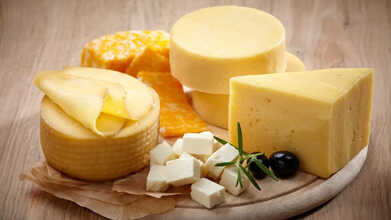
Cheese And Dementia Risk: One of the world’s most loved foods may offer an unexpected benefit for brain health. A long-term study has shown that regularly eating high-fat cheese is linked to a lower chance of developing dementia.
The findings come from research published December 17 in Neurology, the medical journal of the American Academy of Neurology. Scientists in Sweden examined dietary information from roughly 27,600 participants in the Malmö Diet and Cancer study, who were followed for an average of 25 years, and discovered a surprising connection between cheese consumption and dementia risk.
Cheese And Dementia Risk: Eating Cheese Linked To Lower Dementia Risk
High-fat cheeses and cream may help reduce the risk of dementia, according to a new study. Published in Neurology, the research found that individuals who included two servings of high-fat cheese in their daily diet were less likely to develop dementia. Participants who ate 50 grams or more of high-fat cheese per day had a 13% lower risk compared to those who consumed less than 15 grams, the study reported. Similarly, people who included more high-fat cream in their diet had a 16% lower risk than those who had none, as per USA Today.
While the study shows an association between high-fat cheese and cream and reduced dementia risk, it does not prove that eating these foods directly prevents the condition. “This does not prove that cheese prevents dementia, but it does challenge the idea that all high-fat dairy is harmful for the brain,” said study co-author Emily Sonestedt, a nutrition researcher at Lund University in Sweden, where the Malmö Diet and Cancer study is based, in an interview with USA TODAY. “For most people, it means that enjoying cheese in reasonable amounts, as part of a balanced diet, does not appear harmful and may even have some benefit.”
Cheese And Dementia Risk: Which High-Fat Cheeses Were Linked To Lower Dementia Risk In The Study?
The Swedish research specifically linked daily intake of high-fat cheeses—Brie, Gouda, and Cheddar—to a lower risk of developing dementia. Participants who consumed at least 50 grams of these cheeses each day experienced a 13% drop in dementia risk compared to those who ate smaller amounts.
The study also noted reduced risks of Alzheimer’s disease in certain genetic groups, though the researchers caution this does not prove a cause-and-effect relationship. Rather, it challenges the assumption that all high-fat dairy negatively affects brain health. Experts highlight that including these cheeses in moderation, as part of a balanced diet, could be beneficial.
Importantly, how cheese fits into a person’s overall diet may influence dementia risk. Sonestedt pointed out that U.S. dietary habits differ from Sweden’s, where cheese is often eaten uncooked, while in the U.S., it’s frequently heated or paired with meat. “A person’s overall dietary context matters,” she said. “Cheese eaten on a hamburger or with processed meat is very different from cheese eaten with healthier foods. We are not suggesting people switch to high-fat cheese as a strategy.”
Cheese could still be a healthier alternative in some cases. “Choosing cheese instead of a hotdog may be a step in the right direction,” said Yeh, “but the broader body of evidence suggests there are even better options for supporting cognitive health.”
The findings arrive as Health and Human Services Secretary Robert F. Kennedy Jr.’s Make America Healthy Again commission pushes to reintroduce whole milk in schools, despite ongoing questions about the health impact of saturated fats in milk.
Can You Consume Energy Drink Daily? This Is What The Experts Say
Credits: iStock
Energy drink is linked with stroke risk was found out when a fit 54-year-old man suffered stroke. Previously Health and Me also reported about the man, a non-smoker and non-drinker, who suffered stroke, thanks to his habit of consuming energy drinks. The doctors found his blood pressure to be sky rocketing. His left side of the body was weak, he lost balance, had trouble walking and speaking.
Another similar case comes from Canada, where a 10-year-old also suffered a seizure, consuming just two energy drinks in the week.
Experts are now weighing in if it is at all safe for anyone to consume energy drink.
Read: How Energy Drinks Nearly Killed a Healthy 54-Year-Old Runner
Energy Drink: Are They Safe To Consume?
As per the Food and Drug Administration (FDA), energy drinks are "pure and highly concentrated caffeine products can have serious health consequences, including death."
A BMJ study from 2025, Energy drinks, hypertension and stroke, found high morbidity and mortality rates associated with stroke and cardiovascular disease linked to high-sugar drink consumption.
Energy Drink: What Do experts Think Of Its Safety?
Speaking to wmur.com, Dr Raj Dasgupta, a board-certified physical who specializes in internal medicine, pulmonology critical care, and sleep medicine said, "Caffeine is a stimulant, which means it increases activity in your brain and nervous system."
Caffeine keeps us awake by blocking adenosine, the brain chemical responsible for making us feel drowsy. Energy drinks boost alertness and focus partly by increasing adrenaline levels, though how strong the effects feel and how long they last can vary based on the person and the amount of caffeine consumed.
What Makes Energy Drinks Different From Coffee?
The short answer is that it depends. The energy drink market is huge, and there is no one-size-fits-all comparison. That said, many energy drinks do contain more caffeine per serving than a regular cup of coffee.
An average 8-ounce cup of brewed coffee has about 95 to 100 mg of caffeine. Energy drinks, on the other hand, can range widely, often providing anywhere between 70 and 200 mg per serving. The actual impact depends on how much you drink and how your body responds to caffeine.
Where The Caffeine In The Energy Drink Comes From Matters
Not all caffeine is created equal. The source can influence the drink’s overall nutritional value.
Some natural sources, like green tea, come with added benefits such as antioxidants and trace minerals. Ingredients like guarana and yerba mate also contain natural compounds that may support mood and energy levels. In contrast, highly processed or artificial caffeine sources usually do not offer these extra benefits.
The Sugar Problem Of Energy Drinks
One of the biggest differences between coffee and energy drinks is sugar. Coffee can be customized, so you control how much sugar goes in. Many energy drinks, however, are loaded with added sugar.
For example, a single 16-ounce can of some popular energy drinks can contain over 60 grams of sugar, well above the recommended daily limit. Some brands use artificial sweeteners instead, which research has linked to a higher risk of heart disease and stroke over time.
How Safe Are Energy Drinks?
Health experts agree that moderation is key, regardless of your caffeine source. Most healthy adults can safely consume up to 400 mg of caffeine per day.
Too much caffeine can cause shakiness, poor sleep, a racing heartbeat, headaches, or stomach issues. Over time, excessive intake can also lead to dependence, meaning you need more caffeine to feel the same effect.
Who Should Be Extra Careful Before Consuming Energy Drinks?
Certain people should be more cautious with energy drinks. Caffeine can worsen anxiety and interfere with sleep, especially for those already struggling with these issues. People with heart conditions may also need to limit or avoid caffeine since it can raise heart rate and blood pressure.
While labels may highlight antioxidants or added supplements, the high sugar, caffeine, and preservatives often cancel out these benefits. The same nutrients can be found more reliably in whole foods like fruits and vegetables.
- Follow Us :


© 2024 Bennett, Coleman & Company Limited