
- Health Conditions A-Z
- Health & Wellness
- Nutrition
- Fitness
- Health News
- Ayurveda
- Videos
- Medicine A-Z
- Parenting
World's Oldest Baby Born From 30-Year-Old Frozen Embryo Sets Record: Here's All That We Know About It
Credits: Canva
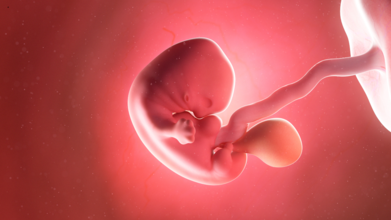
In what’s believed to be a world record, a baby boy born last week in Tennessee developed from an embryo that had been frozen for more than 30 years. The child’s parents, Lindsey and Tim Pierce from Ohio, welcomed their son after years of infertility, thanks to an embryo that had been stored since 1994, for a staggering 11,148 days.
The birth, confirmed by their doctor as the longest known frozen embryo to result in a live birth, is more than just a medical milestone. It is a deeply human story about hope, difficult choices, and the quiet lives of embryos waiting in storage.
Three Little Hopes
The embryo came from Linda Archerd, a 62-year-old woman in Oregon who underwent in vitro fertilization (IVF) over three decades ago. After giving birth to a daughter in the 1990s and later going through a divorce, she was left with four remaining embryos. For years, she struggled with what to do with them.
“I felt all along that these three little hopes, these little embryos, deserved to live just like my daughter did,” Archerd said.
Unable to discard them and burdened by rising storage fees, she eventually connected with Snowflakes, a division of Nightlight Christian Adoptions that facilitates embryo donations. Snowflakes allowed Archerd to choose the adopting family and maintain some openness in the process, a priority for her.
“I wanted to be a part of this baby’s life,” she said. “And I wanted to know the adopting parents.”
A Long Journey, Frozen in Time
The process wasn’t simple. Archerd had to track down her original IVF clinic in Oregon, retrieve decades-old paper records, and coordinate the shipment of the embryos to Rejoice Fertility, a clinic in Knoxville, Tennessee. Rejoice is known for its willingness to work with older embryos and for its refusal to discard them.
Of the three embryos donated, one didn’t survive the thaw. Two were transferred into Lindsey Pierce’s womb, and one successfully implanted, leading to a healthy pregnancy and birth.
Dr. John David Gordon, the Pierces’ physician, called the birth historic. He also helped oversee a similar case in 2022, when siblings Lydia and Timothy Ridgeway were born from embryos frozen for 10,905 days.
“These stories always capture the imagination,” Gordon said. “But they also raise an important question, why are there still so many embryos sitting in storage?”
The Bigger Picture
The Pierce family is not alone in navigating this path. Experts estimate around 1.5 million frozen embryos are stored across the United States. While only about 2 percent of all U.S. births involve IVF, embryo adoption represents an even smaller share.
The issue is growing more complex, particularly after a 2024 Alabama Supreme Court ruling granted frozen embryos legal status as children. The decision has sparked legal uncertainty and renewed ethical debates about embryo storage, use, and destruction.
For Lindsey and Tim Pierce, though, this moment is about gratitude and new beginnings.
“We didn’t go into this thinking about records,” Lindsey said. “We just wanted to have a baby.”
A Shared Miracle
Archerd is still coming to terms with the experience, equal parts joy, sadness, and hope. She has already received photos from the Pierces and dreams of meeting them and the baby in person.
“I’m hoping they’ll send more pictures,” she said. “And maybe, one day, I’ll get to meet them. That would be a dream come true.”
UK Teen Survives Septic Shock After Doctors Misdiagnose Stomach Bug Symptoms

Credit: Felicity-Jo Rowlett-Howes/GoFundMe
Felicity-Jo, a 13-year-old girl in the UK’s Lancashire, has survived a life-threatening bout of sepsis and two weeks of induced coma, after her symptoms were initially dismissed by doctors as a stomach bug.
In early February, Felicity-Jo suffered vomiting and abdominal cramps, and was admitted at the Royal Blackburn Teaching Hospital where the medical team administered intravenous fluids. They discharged her the following day as the teen girl showed temporary improvement, and attributed her condition to gastroenteritis, also known as a stomach bug.
"They [gave] her some fluids to stop the dehydration, and she seemed to like come around and seemed to feel better — the pain eased and then she took to small sips of water,” Natalie-Anne Rowlett, her mother told the BBC.
"The doctors said they thought it was gastroenteritis or a stomach bug going around. They had said they wanted to take her for a scan, but they didn't do it because she perked up."
What Happened To Felicity-Jo?
While Felicity-Jo returned to her normal activities, her health suddenly deteriorated weeks later. On March 15, the teen collapsed in extreme pain and was admitted to the ICU at Burnley General Teaching Hospital. Here, the surgeons discovered she had been born with congenital adhesions, or internal scar tissue.
The adhesions caused a total bowel obstruction, which was eventually followed by an infection and sepsis, her mom told the BBC.
“The main symptoms were abdominal pain and persistent vomiting. It’s frightening how quickly things progressed from what seemed like a typical upset stomach to a life-threatening situation," Rowlett was quoted as saying to PEOPLE.
After undergoing two emergency surgeries, including the removal of a portion of her bowel, Felicity-Jo was transferred to the pediatric intensive care unit at Royal Manchester Children's Hospital. She remained on life support for 14 days while battling the infection and subsequent blood clots.
"Sepsis develops so quickly, and I want others to be aware. I know she'll come through. She's a fighter," Rowlett said, according to the BBC.
How Is Felicity-Jo Now?
After being fitted with a stoma bag and diagnosed with two blood clots four weeks after the health scare, Felicity-Jo finally took her first steps in almost a month.
Felicity-Jo has “managed a smile,” which “melted” their hearts, wrote Rowlett on the GoFundMe page, which the family started to raise funds.
Rowlett confirmed that her daughter was being moved from the PICU to another ward in the hospital.
“She still has a long road of recovery, stoma care, and rehabilitation ahead, but moving to the ward is a giant leap forward,” Rowlett added.
Rowlett is now urging others to be aware of the symptoms of sepsis, telling them to "trust their guts" if something “doesn’t feel right,” the BBC reported.
Congenital Adhesions: How It Can Lead To Bowel Obstruction?
Abdominal adhesions are bands of scar tissue that form between the organs in the belly and pelvis. The scar tissue mainly forms between loops of the small intestine, but can also form between an organ and the wall of the abdominal cavity.
When the condition is present from birth, it is called congenital adhesion. Congenital bands arise from abnormal adhesions of folds in abdominal organs that form during the first eight weeks of pregnancy.
Adhesions are the most common cause of a small bowel obstruction — a medical emergency caused by complete or partial blockage in the intestines. With obstruction, food, liquid, air and waste can’t pass through the intestines and can cause:
- Severe abdominal pain.
- Cramping.
- Bloating.
- Nausea and vomiting.
- Abdominal distension (when your abdomen swells outward).
- Obstipation (being unable to pass gas or poop).
India’s 8th Poshan Pakhwada Targets Early Nutrition to Boost Brain Development In Children
Credit: Ministry of Women and Child/X
India's Ministry of Women and Child Development today launched the 8th edition of Poshan Pakhwada, under the flagship Poshan Abhiyaan mission to fight against malnutrition and improve the country's nutritional status.
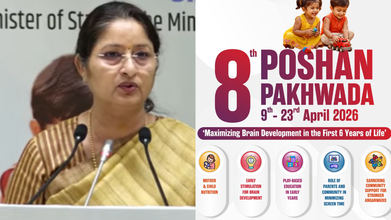
The nutrition campaign will run from April 9 to 23, and focuses on improving the nutritional and cognitive health of young children under six years.
"A well-nourished child is the foundation of a strong nation. Poshan Abhiyaan is not just a government programme, but a people’s movement to ensure holistic nutrition for every mother and child,” said Prime Minister Narendra Modi, while underscoring the importance of nutrition.
"This year's theme focuses on laying a strong foundation for our children's bright future. This campaign will not only strengthen the resolve for a malnutrition-free India but also promote public awareness and community participation," said WCD Minister Annpurna Devi, in a post on social media platform X.
Poshan Pakhwada 2026: Theme
The theme for Poshan Pakhwada 2026 is “Maximizing Brain Development in the First Six Years of Life”.
It recognizes that early childhood—particularly the first 1,000 days—is critical for brain development, physical growth, and overall well-being.
Scientific evidence indicates that over 85 percent of brain development occurs by the age of six, underscoring the importance of optimal nutrition, responsive caregiving, and early learning.
Also read:Silent Deficiency, Rising Risk: Why Protein May Be The Missing Link In Diabetes Care
The key focus areas under this year’s theme include:
- Maternal and Child Nutrition – Promoting optimal nutrition during pregnancy, exclusive breastfeeding, and age-appropriate complementary feeding.
- Early Stimulation for Brain Development (0–3 years) – Encouraging responsive caregiving and early learning interactions.
- Play-Based Education in Early Years (3–6 years) – Supporting holistic development and school readiness.
- Role of Parents and Community in Minimizing Screen Time – Promoting healthy habits and active engagement.
- Strengthening Anganwadi Centers through Community Participation – Enhancing infrastructure and service delivery through Jan Bhagidari and CSR.
Poshan Pakhwada 2026: Activities
During the Pakhwada, activities will be organized across States and Union Territories through Anganwadi Centers, with participation from mothers, caregivers, families, community institutions, and local bodies.
These will include Poshan Panchayats, awareness sessions, early stimulation activities, play-based learning initiatives, and campaigns promoting healthy lifestyles and reduced screen time among young children.
Through Poshan Pakhwada 2026, the Ministry aims to further strengthen the Jan Andolan by reinforcing that nutrition, care, early learning, and community participation together lay the foundation for a healthy, educated, and empowered India.
Also read: Longevity: How Eating Right For A Long Life Is An Everyday Endeavor
What Is Poshan Abhiyaan
Poshan Abhiyaan was launched by the Prime Minister on March 8, 2018, in the Jhunjhunu district of Rajasthan. The focus of Abhiyaan is to emphasize the nutritional status of adolescent girls, pregnant women, lactating mothers, and children from 0-6 years of age.
Poshan Pakhwada serves as a key pillar of this movement by driving awareness, behavioural change, and community mobilisation at the grassroots level. The major objectives include:
- Prevent and reduce stunting in children (0- 6 years)
- Prevent and reduce under-nutrition (underweight prevalence) in children (0-6 years)
- Reduce the prevalence of anaemia among young Children(6-59 months)
- Reduce the prevalence of anaemia among Women and Adolescent Girls in the age group of 15-49 years
- Reduce Low Birth Weight (LBW).
Busting Newborn Care Myths In India: What Every New Parent Needs To Know
Credit: Canva
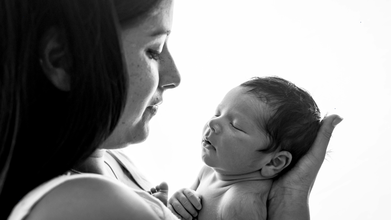
The birth of a baby is a joyous occasion, accompanied by celebrations as well as well-meaning advice from friends and family. "Don't feed for 24 hours!" "Give honey first!" "Discard the first milk!" These traditional and generational beliefs leave new mothers confused about what is appropriate for their baby.
As a neonatologist with years of experience, I have seen how these myths can harm the delicate newborns. Let us separate fact from fiction with simple, but evidence-based truths.
Myth 1: Wait Before First Feed
Traditional Belief: Many families delay breastfeeding for hours—waiting for an auspicious time, a particular relative, or to follow traditions and customs.
Fact: Babies should be breastfed within the first hour of birth (Golden hour) right in the labor room! The yellowish first milk (colostrum) is packed with antibodies and nutrition. Early feeds can prevent low blood sugar levels, build immunity, increase the mother’s milk supply, and lead to bonding between the mother and the newborn.
Myth 2: Honey or Jaggery First
Traditional Belief: Elders give honey, jaggery, or butter at birth for strength and good virtues.
Fact: Short-cuts are dangerous! Stick to mother's milk only. Anything else can cause infections (botulism with honey) and delay colostrum administration.
Myth 3: Throw Away Colostrum
Traditional Belief: "First milk is dirty—discard it!"
Fact: Colostrum is liquid gold! It is a natural vaccine, full of maternal antibodies and high in proteins. Discarding it deprives the baby of natural immunity.
Myth 4: 40-Day Lockdown
Traditional Belief: Keep mother-baby indoors for 40 days to avoid colds.
Fact: Fresh air and sunlight are rich sources of oxygen and vitamin D. Confining them in dark, stuffy rooms increases the risk of post-partum depression in the mother. Take short, safe outdoor trips, avoiding windy weather.
Myth 5: Gripe Water and Janam Ghutti
Traditional Belief: Essential for digestion, teething, and excessive crying.
Fact: Avoid completely as the ingredients are not standardized or regulated. Contents vary wildly—many contain alcohol, opioid derivatives, or bacteria, causing loose stools and sedation. Breast milk is the panacea.
Myth 6: Kajal Makes the Eyes Beautiful
Traditional Belief: Surma/kajal improves eyesight and makes the eyes bigger
Fact: May contain lead that causes eye infections, allergies, and lead poisoning if used excessively
Myth 7: Babies need water before 6 months.
Fact: Breast milk or formula is 88 percent water and meets the water requirement even in hot months. Early water intake increases the risk of sodium imbalance (hyponatremia). Start water in a sippy or cup, after 6 months, with complementary foods (150-250 ml water split into multiple times).
Myth 8: Sneezing = Cold
Traditional Belief: Any sneeze means an upcoming cold.
Fact: Newborns sneeze to clear mucus— a sign of healthy airways! Consult a doctor if it is accompanied by fever, cough, or runny nose.
Myth 9: Mother's 'Cold' Foods Harm The Baby
Traditional Belief: Curd, rice, and ice cream can cause cold or colic in the baby.
Fact: The temperature of the maternal diet does not influence the breast milk temperature or quality, so no cold food bans!
Myth 10: Teething Causes Fever/Diarrhea
Traditional Belief: Fever and loose stools indicate tooth eruption
Fact: Red flag! These signals indicate infections from dirty objects that babies put into their mouths during the mouthing phase of development. See a doctor immediately.
Myth 11: Protruding Navel = Doctor Error
Traditional Belief: Caused by excessive pull on the cord during delivery.
Fact: Commonly due to lax abdominal muscles. It usually resolves by one year of age. No tapes/coins are needed. Consult a doctor immediately if the swelling does not retract or becomes red.
Myth 12: Warm Head = Fever
Traditional Belief: A warm forehead means fever
Fact: Normal newborn temp is 97.6-99.5°F. The head feels warmer due to increased blood flow. Check the armpit if concerned.
What to Do?
Tips For Parents:
- Embrace science over superstition.
- Trust your pediatrician and not any advice.
- Verify advice: Does it align with the guidelines of scientific bodies.
- Join lactation support groups.
- Be aware of red flags like fever, lethargy, poor feeding, and excessive irritability.
- Seek expert opinion when in doubt.
- Your baby's first 28 days are critical and determine their lifelong health, so get them right.
- Follow Us :


© 2024 Bennett, Coleman & Company Limited