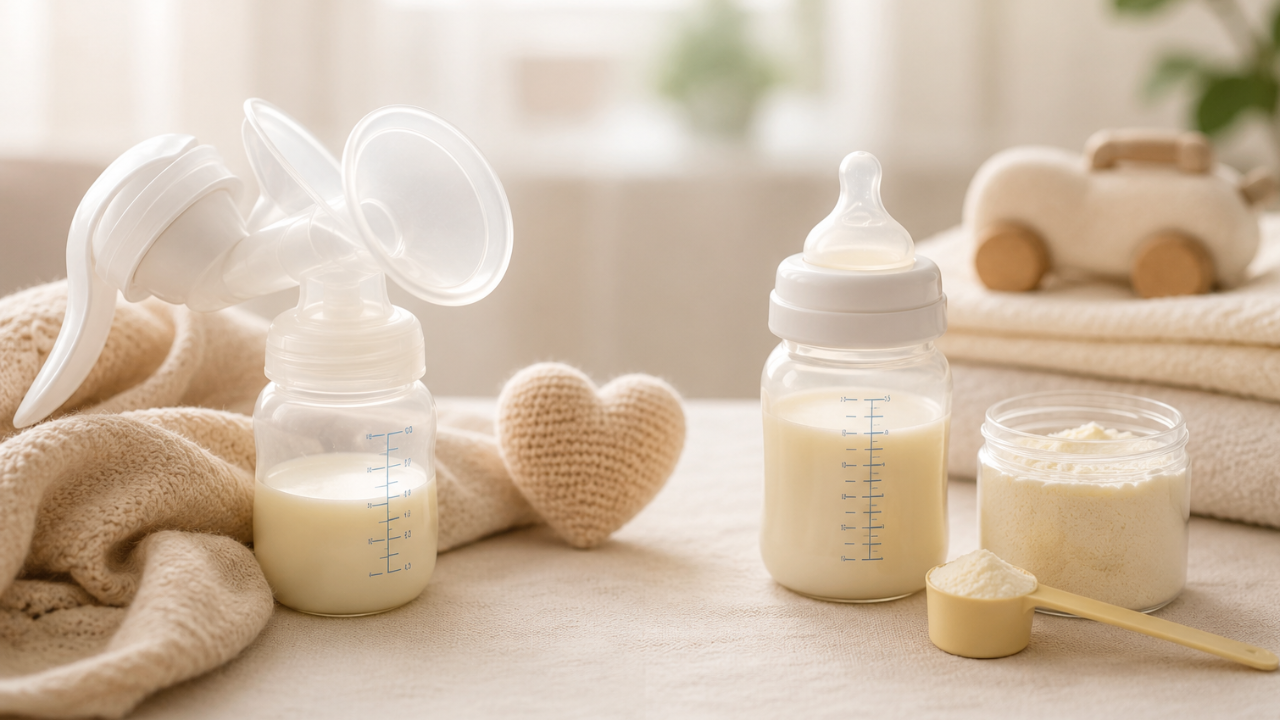
For new parents, few decisions feel as important as choosing how to feed their newborn. While breastfeeding is widely recognized as the best source of nutrition for infants, not every family can follow the same path. The key is to ensure that every baby receives adequate nutrition, care, and love, whether through breast milk or infant formula. Health experts, including the World Health Organization (WHO) and the Indian Academy of Pediatrics (IAP), recommend exclusive breastfeeding for the first six months of life whenever possible. This recommendation is based on decades of scientific evidence showing that breast milk offers benefits that extend far beyond nutrition. Breastfeeding Is The Gold Standard Unlike any other food, breast milk is a dynamic, living substance. It contains the right balance of proteins, fats, carbohydrates, vitamins, and minerals that an infant needs, while also delivering antibodies, enzymes, and immune cells that help protect against infections. These natural protective factors play a crucial role during the early months when a baby’s immune system is still developing. One of breast milk’s most remarkable qualities is its ability to adapt. The first milk, known as colostrum, is especially rich in antibodies and acts as a baby’s first natural vaccine. As weeks and months pass, the composition of breast milk changes to match the infant’s evolving nutritional requirements. This ability to respond to a baby’s changing needs cannot be replicated by formula. The benefits of breastfeeding are reflected in both short- and long-term health outcomes. Babies who are exclusively breastfed are less likely to suffer from diarrhoea, respiratory infections, ear infections, and several digestive illnesses. Breastfeeding also supports the development of a healthy gut microbiome, which contributes to stronger immunity. Studies further suggest that breastfeeding may reduce the risk of obesity, type 2 diabetes, and certain allergic conditions later in childhood. The advantages are not limited to babies alone. Breastfeeding supports a mother’s recovery after childbirth by helping the uterus return to its normal size and reducing postpartum bleeding. It also strengthens the emotional bond between mother and baby through close physical contact. In the long term, breastfeeding has been associated with a lower risk of breast cancer, ovarian cancer, and osteoporosis. When Is Formula Feeding A Necessary Alternative? That said, breastfeeding is not always possible. Medical conditions, certain medications, low milk production, maternal illness, work commitments, or mental health challenges can make breastfeeding difficult. In such situations, parents should never feel that they have failed. Modern infant formulas are carefully developed to provide complete nutrition for infants who cannot be breastfed. When prepared correctly, the formula supports healthy growth and development and remains a safe, dependable alternative. Parents should always seek guidance from their paediatrician to choose the most appropriate feeding option for their baby. Healthy Infant Feeding Without Judgment It is equally important to remember that healthy feeding is more than what goes into the bottle or breast. The way a baby is fed matters, too. Holding the baby close, maintaining eye contact, responding to hunger cues, and creating a calm, nurturing feeding environment all contribute to emotional security and healthy development. There is no one-size-fits-all approach to infant feeding. Every mother and every baby has unique circumstances, and feeding decisions should be based on medical advice rather than social pressure or comparison. Breast milk remains the gold standard because of its unmatched nutritional and immune-protective properties. However, when breastfeeding is not possible, infant formula provides a safe and effective alternative that allows babies to thrive. Ultimately, what matters most is not how a baby is fed, but that every child is nourished, loved, and given the healthiest possible start in life. By Dr. Sanjay Majmudar, Consultant Paediatrician, Bhailal Amin General Hospital, Vadodara