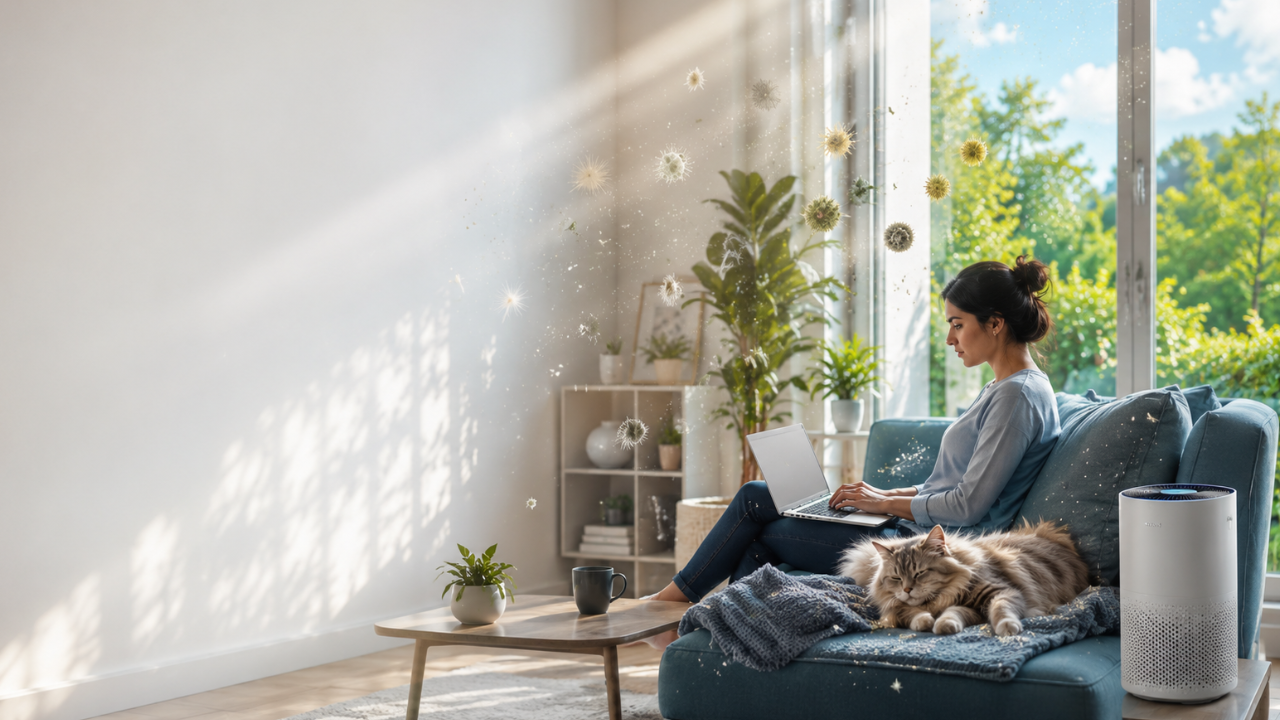
Many people associate allergies with outdoor pollution, dust, or seasonal changes. However, doctors are increasingly seeing another factor contributing to allergic reactions: the indoor environment. Allergies Worsening Even When You Stay Indoors? Over the last two years, there has been a definite increase in patients coming in with respiratory issues. Many people who develop asthma-like symptoms later in life often ask, “Doctor, we hardly go out. How can we develop these problems?” The answer often lies in the indoor pollutants and allergens that go unnoticed in everyday life. Most people spend nearly 90% of their time indoors — at home, in offices, malls, cars, and other climate-controlled spaces. While staying indoors may feel safer than being exposed to outdoor pollution, it can sometimes mean longer exposure to allergens trapped inside. These may trigger a runny nose, itchy eyes, cough, sinus congestion, asthma, rashes, or hives. Many indoor irritants are invisible. Common sources include dust mites, pet dander, fungi, chemical vapours from cleaning products, air fresheners, mosquito repellents, and cooking smoke. Poor ventilation or inadequate air exchange allows these allergens to remain trapped for long periods. In many urban homes, indoor air quality can sometimes be worse than outdoor air. Primary Indoor Irritants That Trigger Allergies Smoke is one of the most overlooked indoor triggers. Incense sticks, dhoop, and agarbattis, which are part of daily routines in many homes, generate smoke and fine particulate matter that can irritate the airways. Cooking smoke can also be harmful, especially when food is fried, roasted, or cooked with heavy spices. Mosquito coils are another common source. In short, any form of indoor smoke can affect respiratory health, particularly in people who already have allergies or asthma. Dust is another major concern. Many households practise dry dusting every day, but this can push dust particles back into the air and worsen symptoms in those with dust allergy or asthma. Wet mopping, wet wiping, or vacuum cleaning are safer alternatives. Mold is often missed because it may grow in hidden areas. Indoor plants, damp walls, bathrooms, kitchens, spaces under sinks, poorly ventilated corners, and even areas above false ceilings can harbour mold for years. Continuous exposure to mold spores can silently affect respiratory health. Storage spaces can also contribute; winter clothes kept in cupboards for long periods may collect mold and lint, which can be inhaled and trigger symptoms. Air conditioning is another factor. AC filters that are not cleaned regularly can become clogged with dust, pollen, and fungal spores, which keep circulating indoors. Closed rooms with little fresh air make this worse. If anyone in the family smokes or uses vaping products, these are well-established indoor pollutants that can significantly impact respiratory health. Modern interiors can add to the problem. Fabric sofas, heavy curtains, carpets, and excess furniture increase the surface area where dust collects, and dust mites thrive. Plug-in mosquito repellents, strong floor cleaners, aerosol sprays, room fresheners, smoking, and vaping indoors are also important for indoor pollutants. How To Tackle It? Lifestyle changes after the pandemic have worsened exposure. Work-from-home routines, online classes, longer screen time, and reduced outdoor activity mean people spend more hours in closed spaces with limited fresh air. Allergy symptoms are often mistaken for recurring colds. Frequent morning sneezing, nasal congestion, itchy or watery eyes, persistent cough, headaches, wheezing, or skin rashes may suggest an allergy, especially if symptoms return often or last for weeks. Small steps help - open windows when outdoor air quality allows, let sunlight in, wash bed linen and curtains regularly, clean AC filters, avoid dry dusting, check damp areas for mold, reduce incense smoke, mosquito coils, and strong fragrances, and air out stored clothes before use. Pollution remains a concern, but it is no longer the only culprit. The way we live indoors today is quietly shaping our respiratory and immune health. Recognizing these hidden triggers early can prevent allergies from becoming a long-term lifestyle problem. By Dr Sameer Bansal, Pulmonology Respiratory Medicine Specialist, Apollo Hospitals, Bangalore