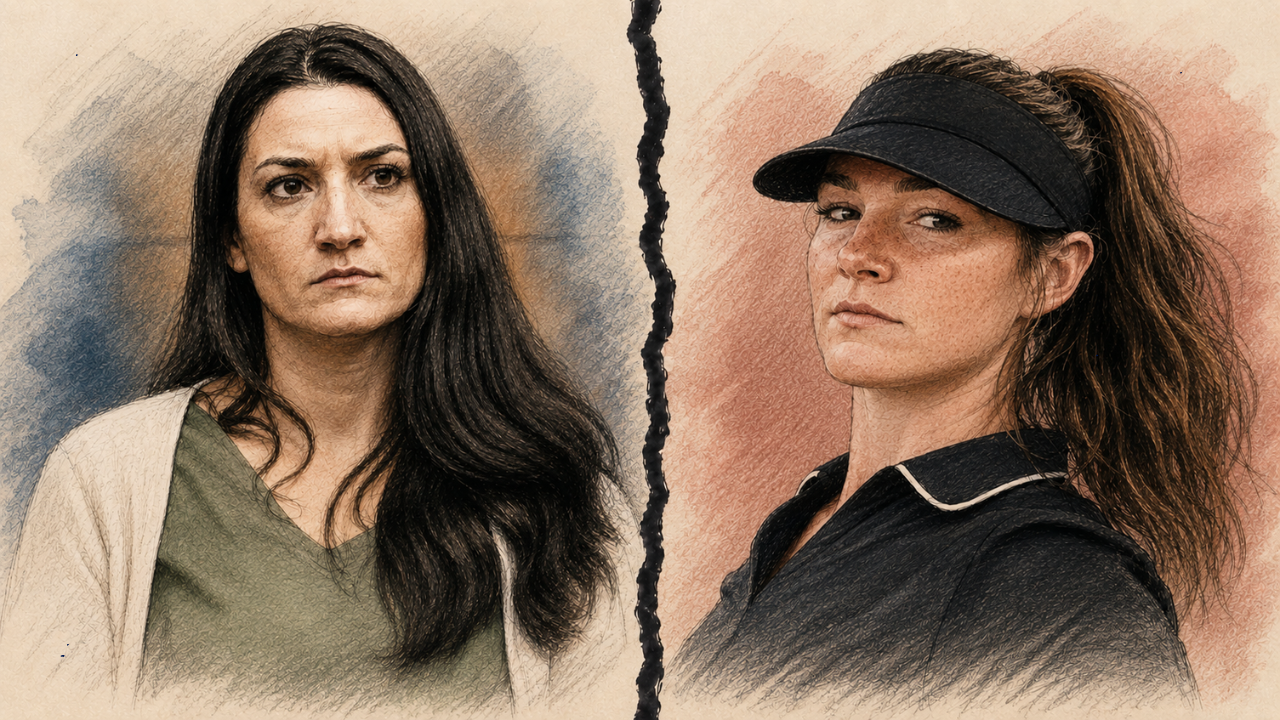
For nearly a year after her first son was born, Belinda Stischok did not fully believe she was alive. In her mind, several realities had folded into one, and the life she was living felt like something else entirely - more like an afterlife, a different timeline, anything but the present. This was not a dream or an ordinary breakdown.It was — a condition most new parents have never heard of until it is too late — and one that is suddenly back in public conversation because of the ongoing Lindsay Clancy trial.Clancy, on trial in Massachusetts, has told the court she heard a male voice in her head telling her, again and again, to kill her three children. She did so, and then jumped from a second-floor window, an act that left her paralyzed. Her defense says doctors repeatedly failed to grasp how serious her condition was and sent her home with heavier doses of medication instead of real intervention. Diary entries read in court this week described a mind "desperate to get a mental break." Prosecutors have rested; the trial is ongoing.For mothers who have lived through something similar, the case is not abstract. Belinda is one of them. Today she is healthy, married to her husband Kyle, and raising two sons in Florida. But getting there took nearly a year of a psychosis so consuming that, at its worst, she did not recognize her own child.A Textbook Pregnancy, Then SilenceAlso read: Lessons From The Lindsay Clancy Case: Can Families Spot Early Signs Of Postpartum Psychosis?There was nothing about Belinda's background that suggested trouble ahead. A former personal trainer and competitive bodybuilder, she describes herself and Kyle as disciplined about health, careful about routine. "Worrying about a mental health episode was never on the forefront of my mind," she said. "It wasn't anything I even knew could happen."Her pregnancy was heavily researched and carefully planned - she wanted an unmedicated, natural birth. That plan started slipping the moment doctors pushed to break her waters during labor, against her wishes, and her own physician was not even available for the delivery. Looking back, she calls that her first real red flag. At home with a newborn, she pushed herself hard, insisting on shifts, spotless floors, and constant vigilance. "Rest was never in my vocabulary," she said.At her six-week check-up, she was given the Edinburgh Postnatal Depression Scale, a routine nine-question screening. She lied on every answer. "You don't want to answer these questions and then hear, oh, you're not well, we're taking your baby," she explained. She never mentioned the test to Kyle. Even with the lies, she was flagged for mild depression — and dismissed it.When Reality Started To Splinter The real break did not happen for another nine months. Kyle began noticing things that made no sense — Belinda staring directly into the sun for minutes at a stretch, filling pages with disjointed writing and equations. "It was very unnatural," he said. "The only thing I could relate it to is that your wife is being possessed, because it's no longer her."From the inside, Belinda describes it as her timelines collapsing into each other. She stopped believing Kyle was her husband or that their son was their son. She believed she had already died, and that this new life - the one she had once been told medically impossible - was some form of afterlife. It is a description close to what Clancy has reportedly told people close to her: an out-of-body sense of having left her own life. Both women have described hearing voices, being placed on shifting combinations of psychiatric drugs, and having thoughts of harming someone.Belinda's first hospitalization came after she barricaded herself outside the nursery, terrified someone would hurt her baby. It was 2020, and because of the COVID-19 pandemic chaos, no one told Kyle where she had been taken. He had to call hospital after hospital to find her. She was still breastfeeding and says she "begged for a breast pump" — instead, she was sedated. She was held 72 hours, sent home with medication she later threw out, and noticed her breast milk had turned a strange greenish-blue from the drugs. She spent days pumping and dumping before feeding her son again.Two weeks later, after an argument with her husband in the middle of a rough night, she walked out of the house barefoot and kept going, hearing voices telling her there was "better for you on the other side." A friend spotted her and alerted Kyle, who called the police. This time, she was held for nine days, medicated with the antipsychotic Abilify, and placed in isolation, at times without access to a bathroom. During that stretch, Kyle, frightened and out of options, took their son and left to stay elsewhere."He was protecting our child," Belinda said. "I have no resentment." Still, she says learning her husband and baby were gone was the hardest single moment of the entire experience.What The System MissedRead More: Why Miscarriage Needs Emotional Care At Par with Medical Treatment: Doctors ExplainWhat stays with both of them is how little warning they were given. "They hand you a pamphlet for the epidural," Belinda said. "Why not hand me one on what it means if you're not sleeping, not eating, not showering?" She is also open about how quickly the system reached for medication over conversation. However, she credits later talk therapy with a postpartum specialist for helping her recover.Watching Clancy's trial, Belinda sees both familiar and unfamiliar territory. She hesitates to call what Clancy has described pure psychosis, pointing out that Clancy was journaling and naming her distress as it happened — something Belinda says she was incapable of doing herself. "When you're in psychosis, you're not aware enough to seek help," she said. "You're already gone."Belinda and Kyle went on to have a second son, delivered at home under a midwife's strict instructions: rest, bond, nothing else. It made all the difference. Kyle's advice to other fathers is simple: "Don't give up, there's a light at the end of the tunnel." Belinda's, however, is about permission: "It's okay to not be okay. You just have to seek help when you notice it."She is also wary of how the Clancy case might land on struggling new mothers. "It can help mothers understand this can happen to anyone," she said, "but I worry the hate people are throwing at Lindsay online will stop other moms from speaking up." For Belinda, that fear is exactly why she chose to tell her own story out loud.