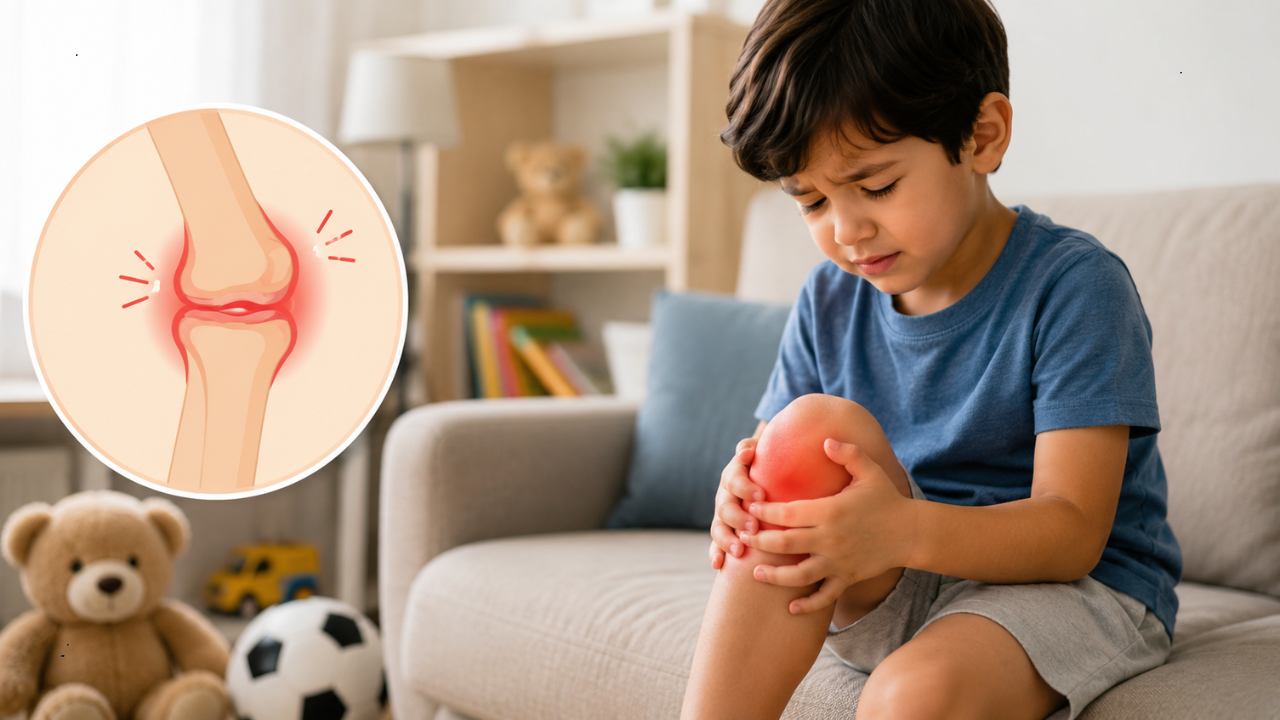
Arthritis is often associated with ageing, but it can also affect children. The most common form of chronic arthritis in children under 16, including those as young as 1, is Juvenile Idiopathic Arthritis (JIA).Because its early symptoms can be subtle, JIA often goes unrecognized, delaying diagnosis and increasing the risk of joint and growth-plate damage.Children May Not Say They Are In PainYoung children may not know how to describe joint pain. Instead, they may change their behavior to avoid discomfort, making it important for parents to notice changes in movement and activity.A toddler may limp, take longer to get ready or become less active, Dr. Rashmi Jinnakeri, Consultant Pediatrician, Apollo Hospital, Bengaluru, told HealthandMe. These signs may be mistaken for a viral infection, growing pains or simple clumsiness.Also read: Too Much Cow’s Milk Linked To Severe Iron Deficiency In Toddlers, Including Three DeathsSigns Parents Should Watch ForUnlike an injury, JIA symptoms tend to persist, Dr. Chirag Rajkumar Kopp, Consultant – Clinical Immunology & Rheumatology, Ramaiah Memorial Hospital, told HealthandMe.Parents should watch for:Joint pain or swelling lasting more than six weeksMorning stiffness that improves during the dayNeck or lower back pain with stiffnessAn unexplained limpRecurrent fever without an obvious causeSkin rashesRed eyes or sensitivity to lightSome children may also develop uveitis, or inflammation inside the eye, without obvious symptoms. Routine eye examinations are therefore important. Other subtle signs include:Morning sluggishness: A child who normally wakes up energetic may suddenly take much longer to get out of bed, get dressed or start moving. Similar stiffness or sluggishness may occur after an afternoon nap. This can be one of the more subtle signs of JIA in young children.Sudden clumsiness: Parents may notice a child dropping objects, tripping, coloring messily or struggling with buttons and zips. Subtle limping after waking may also occur and can improve as the day progresses.Avoiding play and physical activity:Children may begin avoiding sports, physical education or activities they once enjoyed. A child who previously loved running and jumping may increasingly prefer to sit or find reasons not to participate.Going back on milestones: Some toddlers may show regression in movement. A child who was walking may start crawling again or frequently ask to be carried. Mild swelling, particularly around a knee, can also be overlooked. If only one joint is affected, parents may assume the child bumped it while playing.Fatigue, fever and rashes: Some children may appear unusually tired, have low energy or repeatedly say they cannot walk. Fleeting rashes with fever may be mistaken for viral infections. Repeated low- or high-grade fever without cough, cold or vomiting can also occur.Read More: 'Let's Fix Our Food': India Launches New Policy To Fight Childhood Obesity, Boost NutritionGrowing Pains vs Juvenile Arthritis?Children may describe both conditions simply as “leg pain”, making the distinction difficult, Dr. Rashmi said.Growing PainsUsually occur later in the day after physical activityOften affect the thighs, calves or shinsMay improve with massageDo not cause joint swelling or rednessAre usually gone by morningJuvenile ArthritisIs often worse in the morningCauses joint-related pain and stiffnessMay cause swelling or rednessCan improve with movementPersists over time, potentially for six weeks or longerEarly Diagnosis MattersJIA occurs when the immune system mistakenly attacks healthy joints, causing inflammation. The exact cause is not known.“When this goes unrecognized for too long, the effects don't simply fade with time. Joint damage can become permanent; a child's growth can be affected, and the disability that follows may last well into adulthood,” Dr. Chirag said.Early treatment with disease-modifying antirheumatic drugs (DMARDs) and, when needed, biologic therapy can control inflammation and help prevent lasting damage. With early recognition and treatment, most children can achieve symptom control and continue to run, play and grow without limitation.