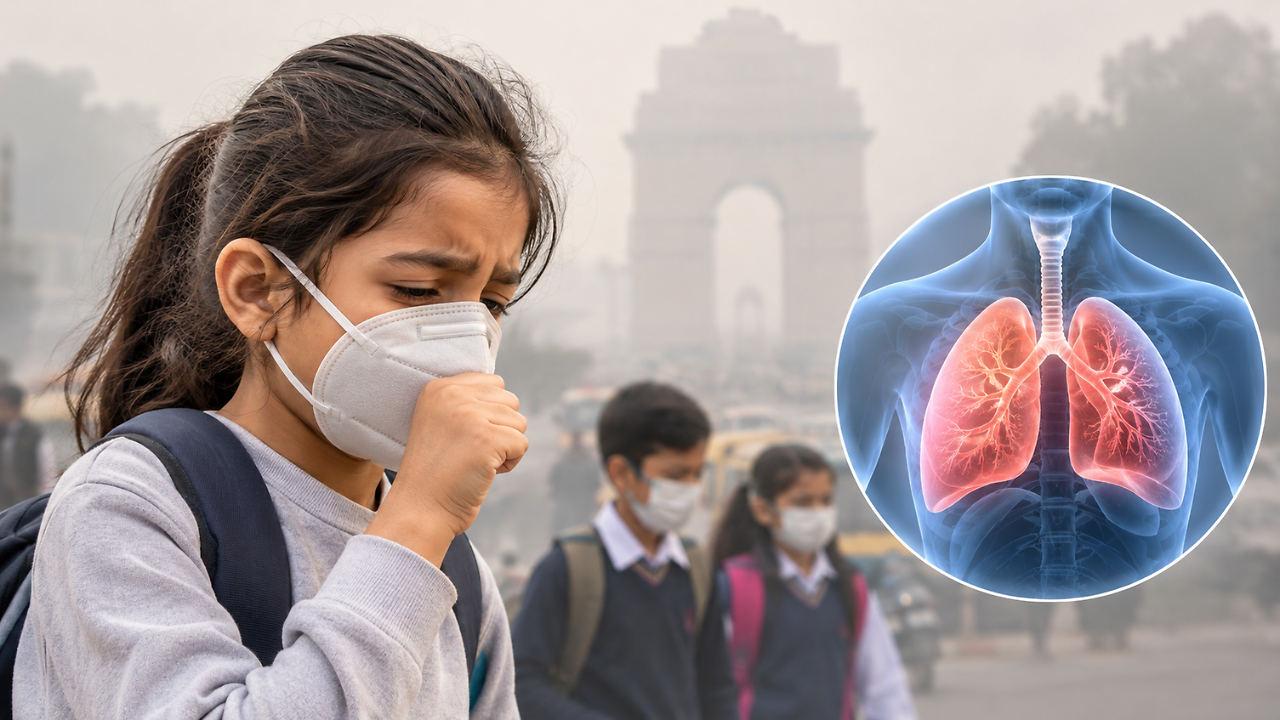
Delhi's air quality remained in the 'very poor' category on Tuesday, with the Air Quality Index (AQI) at 304 around 7:15 am, according to Central Pollution Control Board (CPCB) data. Following Diwali celebrations on November 8, PM2.5 concentrations in several parts of the capital exceeded 66 times the World Health Organization's (WHO) recommended 24-hour guideline, according to The Hindu. Beyond immediate respiratory problems, repeated exposure to high PM2.5 levels could impair children's lung development and reduce their maximum lung capacity in adulthood, experts warn. How Does PM2.5 Affect Children's Developing Lungs? Also read: Delhi Pollution: Is Your Child's Cough Or Wheezing A Warning Sign? When Should Parents Worry?Delhi's pollution is expected to persist, with cracker emissions, stubble burning and geographical factors contributing to recurring PM2.5 spikes. This raises concerns about the long-term effects of repeated exposure on children's developing lungs. "Childhood is a critical period when airways expand, lung tissue develops and the tiny air sacs responsible for oxygen exchange mature," Dr Neetu Jain, Senior Consultant, Pulmonology, Critical Care and Sleep Medicine, PSRI Hospital, told HealthandMe. Dr Manav Manchanda, Director of Respiratory and Sleep Medicine at Asian Hospital, said fine particles can penetrate deep into children's lungs, triggering inflammation, oxidative stress and irritation of the respiratory lining. Repeated inflammation may affect lung growth, resulting in lower lung function than a child might otherwise have achieved. "This does not mean every exposed child will develop permanent damage, but repeated exposure over several winters can potentially reduce their respiratory reserve," Dr Neetu said. Which Children Are Most Vulnerable? Also read: Delhi's 'Severe' AQI: Is Your Sore Throat More Than Pollution Irritation? When To See A DoctorLung development begins before birth and continues through infancy, childhood and adolescence. Dr Neetu explained that exposure to air pollution during pregnancy can affect respiratory development. Infancy and early childhood are particularly important as the lungs undergo rapid structural growth, including the development of alveoli. Lung development continues through adolescence, with lung function generally reaching its peak in early adulthood. Puberty is another important developmental window. Dr Manav told HealthandMe that infants and preschoolers are especially vulnerable because their respiratory and immune defence systems are still developing. They also breathe more air relative to their body weight than adults, increasing their exposure to pollutants. School-going children and adolescents are also at risk as their lungs continue to grow and outdoor activities add to their exposure. Can Pollution Affect Children's Lungs Without Symptoms? Read More: Air Pollution In Delhi: Experts Warn Of Red Eyes, Itching, Watering In ChildrenPollution-related changes in lung function may not produce immediate symptoms. Red flags parents should watch for include: Reduced exercise tolerance. Getting tired more quickly while playing. Occasional or recurring coughing. Taking longer to recover after physical activity. Breathlessness or wheezing. The absence of obvious symptoms does not necessarily mean a child's lungs are unaffected. Spirometry, where age-appropriate, can help assess lung function. However, testing should be based on symptoms and a paediatrician's assessment rather than routinely recommended for every healthy child. Can the Effects On Lung Development Be Reversed? According to the experts, the recovery depends on the duration and intensity of exposure, the child's age and the nature of the lung-function changes. Airway irritation and inflammation may improve when exposure is reduced. Children also retain some capacity for lung growth and adaptation. However, recovery may not always be complete. Changes to lung development during critical growth periods may persist into adulthood. People who enter adulthood with lower-than-expected peak lung function may have less respiratory reserve as lung function naturally declines with age. How Can Parents And Schools Protect Children's Lungs? Reducing children's exposure to polluted air is particularly important during severe pollution episodes. Children with asthma or other respiratory conditions should follow their prescribed treatment plans. Other measures include: Limit outdoor activities: Shift running, cycling and strenuous exercise indoors when pollution levels are severe. Modify school activities: Suspend outdoor assemblies, sports and physical education when air quality deteriorates. Improve indoor air quality: Properly sized HEPA air purifiers can help reduce indoor particulate matter when maintained correctly. Avoid indoor pollutants: Smoking, incense, mosquito coils and aerosol sprays can add to indoor pollution. Use protective masks: Appropriately fitted N95 masks can reduce inhalation of fine particles in children who can wear them safely. Watch for symptoms: Persistent coughing, wheezing, breathlessness, chest tightness or unusual fatigue should prompt medical evaluation.