
- Health Conditions A-Z
- Health & Wellness
- Nutrition
- Fitness
- Health News
- Ayurveda
- Videos
- Medicine A-Z
- Parenting
Trump Orders Return Of School Exercise Challenge After A Decade In US: What Is The Presidential Fitness Test?

Credits: Canva
In a move that has already sparked national debate, President Donald Trump signed an executive order reinstating the once-standard fitness benchmark for American students. The announcement, made alongside professional athletes like golfer Bryson DeChambeau and NFL star Harrison Butker, marks the revival of a decades-old program once intended to promote physical excellence in youth—but which has since drawn criticism for its mental and physical demands.
This return isn’t just about nostalgia. It’s part of a broader initiative that ties into Trump’s sports-focused agenda during his second term and America's preparation to host major sporting events such as the 2025 Ryder Cup, the 2026 FIFA World Cup, and the 2028 Summer Olympics. The rollout of the revived test will be overseen by Health and Human Services Secretary Robert F. Kennedy Jr., who has been vocal about what he calls the “childhood chronic disease crisis.”
The newly revived test is part of the “Make America Healthy Again” agenda championed by Kennedy. His May report emphasizes troubling trends: declining youth activity, climbing obesity rates, and increased incidence of chronic diseases in children. The executive order claims that these trends “weaken our economy, military readiness, academic performance, and national morale.”
Trump’s order reestablishes the President’s Council on Sports, Fitness, and Nutrition, instructing it to develop updated test criteria. It will partner with athletes, sports organizations, and public figures to create what the administration calls a “culture of strength and excellence.”
According to the order, declining fitness among American youth is “a threat to the vitality and longevity of our country,” particularly as the nation approaches its 250th birthday in 2026.
What Was the Presidential Fitness Test?
To understand why this announcement is stirring such heated debate, it's worth revisiting what the test actually involved.
The original Presidential Fitness Test was formalized in 1966 under President Lyndon B. Johnson but was rooted in a much earlier concern about American children's physical fitness. In the 1950s, orthopedic surgeon Hans Kraus and exercise expert Bonnie Prudden found that nearly 60% of American children failed their six-part strength and flexibility test—compared to fewer than 10% of European children. Their findings shocked President Eisenhower and led to the creation of the President’s Council on Youth Fitness.
Over time, the test evolved into a yearly challenge for students aged 6 to 17, usually featuring:
- A one-mile run to measure cardiovascular endurance
- Sit-ups performed within one minute
- Pull-ups or push-ups to test upper body strength
- Sit-and-reach flexibility assessments
- Shuttle run drills to evaluate agility
Students who scored at or above the 85th percentile received the prestigious Presidential Physical Fitness Award. Others received participation certificates.
Why It Was Scrapped in 2012?
Despite its long-standing legacy, the Presidential Fitness Test was phased out during the Obama administration. It was replaced by the Presidential Youth Fitness Program, which emphasized personal health goals over athletic performance. The change was backed by growing concerns around mental health, body image, and the test's "one-size-fits-all" approach.
Educators and health professionals had begun to criticize the test as an outdated model that humiliated students rather than encouraged them. The Centers for Disease Control and Prevention (CDC) reported that even while the test was in place, obesity rates continued to rise—from 13% in 1960 to 34% in 2008—calling into question its effectiveness.
Instead, the new program focused on achievable, individualized goals and health improvements, guided by modern science rather than outdated percentile charts.
Why Bring Presidential Fitness Test Back Now?
So why return to a system that was largely discredited? According to the administration, the decision is tied to more than just fitness—it’s about national identity.
The upcoming 250th anniversary of the United States and its hosting of global sporting events create a symbolic moment to spotlight strength, unity, and youth development. Trump’s team sees physical fitness as an avenue for national pride and global competitiveness, especially as statistics continue to show American youth falling behind in basic health markers.
Secretary Kennedy has also argued that the current generation is experiencing an unprecedented rise in chronic disease, inactivity, and poor dietary habits—problems he believes need stronger interventions than what current programs provide.
Although the exact criteria for the new test haven’t been released, the White House says it will retain some traditional components while modernizing the structure. DeChambeau, now chairing the President’s Council on Sports, Fitness, and Nutrition, has hinted that flexibility, endurance, and strength will remain central to the updated test.
Implementation may begin as early as the next academic year, although many details—such as whether participation will be mandatory, how the test will account for students with disabilities, and what changes might be made to avoid previous mental health criticisms—remain unclear.
Is This A Fitness Test or a Cultural Flashpoint?
For many, this isn’t just a test—it’s a reflection of deeper cultural tensions. Supporters argue the return of the Presidential Fitness Test is a much-needed wake-up call for a generation growing increasingly sedentary and disconnected from physical activity. Critics, however, see it as a regressive move that prioritizes performance over wellbeing.
Organizations like the American Academy of Pediatrics and National Association for Sport and Physical Education have yet to weigh in formally, but past criticism suggests skepticism. Questions remain about the scientific basis of the test, its potential mental health effects, and whether it will be implemented fairly across diverse school populations.
Bringing back the Presidential Fitness Test might appeal to those nostalgic for dodgeball days and presidential awards, but it also reopens debates that never really went away. At its best, the test was a motivator and a symbol of excellence. At its worst, it was a public performance of failure for students who didn’t fit the mold.
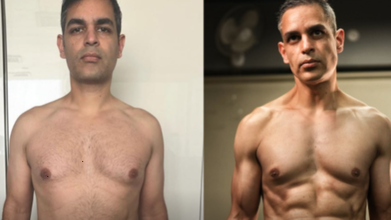
3Ts That Helped Ankur Warikoo Achieve Only 13% Body Fat At 45
Credits: Instagram
Ankur Warikoo, entrepreneur, who has gained fame with his to-the-point practical and solution oriented videos on Instagram, recently talked about his fitness journey and diet routine which helped him achieve only 13 per cent body fat at the age of 45. "The exact method that got me 13 per cent at the age of 45. No steroids, no shortcuts, not AI. The 3T formula got me here, starting with the one most people skip," said Warikoo in his Instagram post.
What Are The 3Ts That Helped Ankur Warikoo Achieve Only 13 per cent fat at 45?
“The only way to lose fat is through a calorie deficit (consume fewer calories than you burn). Many track their calorie-out (how much they burn, through a smart watch or ring). But very few track their calorie-in (how much they eat),” he said.
This is why, T-1 is Track. This phase aims at tracking what you eat and keeping a check on your calorie intake.
Warikoo said that he brough his calorie intake to 1,600 to 1,800. He started with a 500 calorie deficit every day and continued till 7,500 every two weeks to lose 1 kg. Then repeated the same routine. He also increased his protein intake. In a deficit, you lose muscle and fat. Protein replenishes the muscle. Without it, you just end up skinny,” he said.
What His Diet Looked Like
9.30 am – 1 scoop whey protein, creatine, 1 walnut, 4 almonds, 4 cashews, 5-6 raisins
11 am – 200 grams paneer/tofu/tempeh/ or dal chilla. Rarely eggs
1 pm – Fruit
4 pm – 2 rotis (emmer wheat/jowar/soya bean) sabzi+ dal+ low fat yogurt
6.30 pm – 1 scoop whey protein with curd
“I didn’t cut out chhole bhature (my favourite). Had mithai – quite often. The goal wasn’t perfection. It was to reach the two-week deficit,” said Warikoo.
The Second T is for Training
Warikoo's training schedule looked like this:
Tennis – 6 days a week, 1 hour (cardio sorted)
Weights – 6 days a week, 45 minutes
Every day: 2 exercises * 3 body parts = 6 exercises
10-12 reps
3 sets
“Didn’t get bored,” he shared.
The 3rd T stands for Transformation
He said he tracked his daily weight and weekly measurements to document his transformation and the progress he had been making. He said that he also "sent pictures to my trainer for accountability. Ate mostly the same meals. Boring works," he said.
What Do Experts Say?
Experts have noted that a diet, especially like Warikoo's which is mostly vegetarian, excels in sustainability. Furthermore, his diet was balanced with protein, macros from dal, tofu and Greek yogurt. He also did resistance training to preserve lean mass which is a common mid-age related condition that could lead to sarcopenia.
Experts also point out that while tracking weight and measures are great notifiers of tracking health, one should understand that losing weight is not everything. This is why getting blood work at frequent intervals could tell you more than your dropping weight.
India For The First Time Has Guidelines On Muscle Loss
Credits: Canva
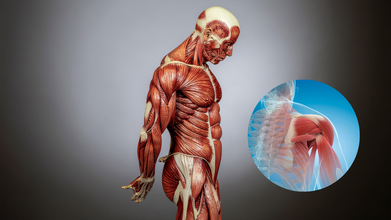
Mobility and independence are two things that keep people healthy, however, with age, as bones weaken and muscle is lost, elderly become more dependent. This condition is called sarcopenia, or age-related muscle loss. India is finally focusing on this and have now new guidelines to warn people against it.
The Geriatric Society of India released country's first 'Indian Guidelines for the Evaluation and Management of Sarcopenia'. These guidelines are a combination of recommendations by experts across multiple specialties, including geriatric medicine, orthopedics, endocrinology, physiotherapy and nutrition. These guidelines aim to help doctors detect and treat muscle loss early. The aim is to not let elderly compromise with their independence.
Also Read: Bruce Willis Health Update: His Death News Is A Hoax; 'He's Still Alive And Well'
What Is Sarcopenia?
Sarcopenia literally translates to 'loss of flesh'. Medically, it refers to gradual decline in muscle mass, strength and physical function with aging. While it is often overlooked, it is also the major reason for many fractures and hospitalizations of older adults, and sometimes, even death.
India is expected to have around 319 million people aged over 60 by 2050, which is one-fifth of the population. It could be concerning as they are at risk of sarcopenia. Studies have also shown that the number has increased from 8-18 per cent to 25-40 per cent adults, especially hospitalization cases. Experts point out that those with chronic diseases like diabetes are at a higher risk.
What Are The First Indian Guidelines On Muscle Loss or Sarcopenia?
Dr OP Sharma, who led guidelines said that muscle health is most important for healthy aging. "Strength preserves dignity. Early detection saves independence," he said. Dr Sharma also noted that the sedentary lifestyle, poor nutrition and chronic illnesses are accelerating this condition among seniors.
The guidelines also advise doctors to look for warning signs in patients, which include weak grip strength, slower walking speed, or difficulty getting up from a chair. There are also screening tools like SARC-F questionnaire, which could help identify those at risk.
The ray of hope here is that sarcopenia could be prevented or slowed that too with simple lifestyle changes.
What Lifestyle Changes Could Prevent Sarcopenia?
- Strength training exercises
- Adequate protein consumption
- Correcting deficiency including vitamin D and calcium
Doctors are also advising to eat a balanced diet, which includes protein, fats, green vegetables, and pulses. Dr Raju Vaishya of Indraprastha Apollo Hospitals said, "India is a sarcopenic nation". He pointed that everyone needs to be aware about muscle health, however this awareness remains low in the country.
Dr Randeep Guleria said the guidelines aim to brings muscle health into routine medical care. "They bridge science with clinical wisdom, making sarcopenia visible in everyday practice."
Can Just 10 Minutes of Exercise Reduce Depression?
Credit: Canva
A new Nature Human Behaviour (2026) study suggests that single-session psychological exercises lasting less than 10 minutes can lead to measurable decreases in depression symptoms even one month later.
Depression is one of the most common mental health disorders in the world. Every year, hundreds of millions of people suffer from depression, and many are unable to get therapy because of cost, stigma and the dearth of mental-health professionals.
Symptoms include excessive sadness, depression often includes fatigue, changes in appetite, sleep disturbances, difficulty concentrating and feelings of hopelessness. Treatment requires professional guidance for diagnosis and management.
A 10-Minute Intervention With Lasting Effects
Researchers conducted one of the largest randomized controlled trials testing short mental-health exercises and recruited 7,505 adults in the United States who were suffering from symptoms of depression and randomly assigned them to one of several short digital interventions or to a control group.All the brief interventions took less than 10 minutes to complete and were designed to teach practical coping skills that are commonly used in psychotherapy. Some exercises helped participants to reframe negative thoughts, while others focused on motivation, goal-setting or making sense of things by helping others. Participants completed surveys measuring their well-being immediately after the session and again one month later.
The results were striking: while many exercises boosted motivation and hope immediately, two interventions - Interactive Cognitive Reappraisal and Finding Focus - showed measurable reductions in depression symptoms even after a month. On average, participants experienced about a four percent greater reduction in depression scores compared with the control group.
Although the improvement may appear small, researchers note that brief, scalable interventions could reach millions of people who currently lack access to mental-health care as they can be completed in a few minutes and delivered online, these exercises may allow people to take initial steps toward better mental health, especially those waiting for professional help or unwilling to ask for help.
The scientists also stressed that these activities are not intended to substitute for therapy, but should be seen as readily available tools to help with emotional health.
Exercise and Mental Health: A Growing Body of Evidence
Previous research also shows that a quick burst of activity can make you feel better from other research too. A British Journal of Health Psychology 2024 study found that just 10 minutes of daily mindfulness practice significantly improved well-being and reduced symptoms of depression and anxiety among more than 1,200 participants from 91 countries.
Similarly, the US National Institutes of Health (2019) reviews suggest that the physical activity itself may help improve mood and depressive symptoms, strengthening the relationship between movement and mental health.
Collectively, these findings suggest that even small doses of mental or physical activity may lead to psychological benefits.
A Small Step That Can Make a Difference
Depression can make people feel trapped and out of control. The good news of the new research is that it suggests that big changes aren’t always necessary to move forward.
Sometimes, doing a small task, like spending 10 minutes learning a new coping skill or doing a quick mental exercise, is enough to change the way you think and gradually improve mood.
As researchers investigate these brief interventions, one thing is becoming clear: when it comes to mental health, few minutes matter more than we think.
- Follow Us :


© 2024 Bennett, Coleman & Company Limited