
- Health Conditions A-Z
- Health & Wellness
- Nutrition
- Fitness
- Health News
- Ayurveda
- Videos
- Medicine A-Z
- Parenting
Can You Do HIIT Workout Everyday?

Credit: Canva
We are always told to exercise and keep ourselves healthy. Some people explain how even exercising can become an addiction at times. It is almost like a ‘fix’ they need, even if they are sick and their bodies are not being able to handle it. Exercising, when made into a habit, can be a great blessing, but too much of anything should be avoided. High-intensity workouts are a great way to reach your goals and improve your health, but can you do it every day? While you may think all you need to do is exercise to make your body healthy, you may end up hurting it in a different way. Think of it this way, when you are exercising your body is going through a lot of wear and tear, if you do not give it the appropriate rest, it won’t be able to recover from the previous fatigue. So, you have to be careful with what you are doing and how much! While it is a good mindset, thinking you have to push past your limits to be better, it can become toxic if not reigned in.
High-intensity interval training (HIIT) is a type of workout with short bursts of hard exercise followed by easy recovery. It's great because it doesn't take much time, which is perfect if you're busy. HIIT can make your heart and metabolism stronger, help your brain work better, and even lower your chances of getting sick. You can do HIIT with almost any exercise, like running, biking, or swimming, and it's good for everyone, no matter how fit you are.
Is It Safe to Do HIIT Workouts Every Day?
Because HIIT is so intense, you shouldn't do it every single day. Your body needs time to rest and recover. Experts explain that you should wait at least a day between HIIT workouts. If you don't rest enough, you'll get super tired, your muscles will be really sore, and you might even stop seeing results. It could also mess with your hormones and make you not want to work out anymore. Professionals suggest doing HIIT two or three times a week for 20-30 minutes each time, with a day or two of rest in between. She also thinks it's good to mix in easy exercise like walking or yoga, and also do some strength training.
Bad Things About Too Much HIIT
If you do too much HIIT, you'll get really tired and might even get hurt. According to experts it's important to be consistent with exercise, but that means resting too. If you don't take breaks, you could get injured and then have to stop exercising for even longer. Too much HIIT can also raise your cortisol levels, which can make you tired, moody, and anxious, and even make it harder for your body to fight off sickness. She says rest is super important to keep cortisol levels healthy. Also, doing only HIIT can get boring. It's best to mix it up with strength training, easy exercise, and HIIT for the best results.
Most people can do HIIT, but it's always a good idea to talk to your doctor before starting any new workout, especially if you have health problems. Experts say people with heart problems should definitely talk to their doctor before trying HIIT. Once your doctor says it's okay, make sure you warm up properly. If you're new to HIIT, it's a good idea to work with a trainer to make sure you're doing the exercises correctly so you don't get hurt. HIIT has lots of benefits, but don't overdo it! Too much can lead to injuries, tiredness, and burnout. So, do HIIT a few times a week and you'll get the best results.
High BP? This Ancient Chinese Practice May Be As Good As Brisk Walking
Credit: iStock
High blood pressure (BP) has become a public health problem that is driving cardiovascular diseases like heart attacks and strokes globally. While medications are important to keep hypertension under control, lifestyle changes and healthy practices are also crucial.
Several global health guidelines recommend regular physical activity, but adhering to exercise programs daily becomes a challenge for many people. But in the overtly busy schedules, sparing 10 minutes for an exercise regimen can be easier than travelling to the gym.
A large randomized clinical trial, published in the Journal of the American College of Cardiology (JACC), has proved that a traditional Chinese mind-body practice — baduanjin — may help lower blood pressure, that too, without any equipment.
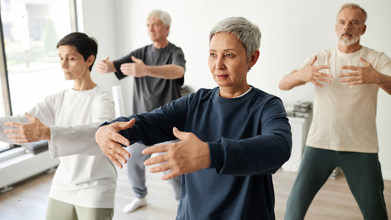
Baduanjin is a slow, structured movement, focused on deep breathing and meditation.
Importantly, the clinical trial proved that the ancient Chinese technique could lower BP as effectively as brisk walking.
In people practicing baduanjin, BP reductions were seen after three months and were sustained for one year.
"Given its simplicity, safety, and ease with which one can maintain long-term adherence, baduanjin can be implemented as an effective, accessible, and scalable lifestyle intervention for individuals trying to reduce their blood pressure," said Jing Li, Director, National Center for Cardiovascular Diseases in Beijing, China.
Baduanjin: The 10 Minute Routine
Baduanjin is a standardized eight-movement sequence that integrates aerobic, isometric, flexibility, and mind-body components.
It has been in practice for centuries and commonly performed in community settings across China. The routine typically takes 10–15 minutes and requires no equipment and only minimal initial instruction.
Because it is low- to moderate-intensity, it is considered safe and accessible for many adults.
Also read: Cardiovascular Diseases Lead As India’s Top Killer: US Cardiologist Points Out Risk Factors
The Clinical Trial
A team of Chinese researchers led the first large, multicenter randomized trial to look at the impact of baduanjin on blood pressure.
They followed 216 participants, aged 40 years or older, across seven communities to determine changes in 24-hour systolic BP from baseline to 12 and 52 weeks.
Compared to people indulging in self-directed exercise, practicing baduanjin five days a week reduced
- systolic blood pressure by approximately 3 mg Hg
- systolic blood pressure by 5 mg Hg.
Notably, the benefits were sustained even without ongoing monitoring, a key challenge for many lifestyle interventions that struggle to maintain long-term adherence outside structured programs.
"Baduanjin has been practiced in China for over 800 years, and this study demonstrates how ancient, accessible, low-cost
approaches can be validated through high-quality randomized research," said Harlan M. Krumholz, Editor-in-Chief of JACC and the Harold H. Hines, Jr Professor at the Yale School of Medicine.
"The blood pressure effect size is similar to that seen in landmark drug trials, but achieved without medication, cost, or side effects. This makes it highly scalable for community-based prevention, including in resource-limited settings," they added.
Also read: AHA Cholesterol Guidelines 2026: How Indians Can Improve Heart Health
How To Practice Baduanjin
- Stand upright with your feet shoulder-width apart and keep your movements slow and controlled.
- Coordinate each motion with steady, deep breathing, inhaling and exhaling smoothly as you move.
- Move through the traditional eight postures in sequence, focusing on posture, balance, and relaxation rather than speed or force.
- Practice for about 10 to 15 minutes a day in a quiet space, maintaining calm attention throughout.
No Time for the Gym? Short Bursts of Intense Activity Daily May Cut Risk of 8 Diseases and Death
Credit: Canva
If you believe only gym workouts matter, you might be mistaken. While gyms offer a structured space to exercise, busy schedules often lead many to skip workouts—and feel guilty about it.
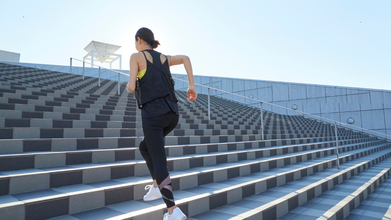
However, a new study suggests that even short bursts of vigorous everyday activity—such as running to catch a bus or climbing stairs quickly—can significantly reduce the risk of several major diseases and even lower the risk of death.
The research, based on nearly 96,000 people and published in the European Heart Journal, found that just a few minutes of intense activity each day was linked to a lower risk of:
- Major cardiovascular disease
- Irregular heartbeat
- Type 2 Diabetes
- Immune-mediated inflammatory diseases
- Liver disease
- Chronic respiratory diseases
- Chronic kidney disease
- Dementia
“We know that physical activity reduces the risk of chronic disease and premature death, and there is growing evidence that vigorous activity provides greater health benefits per minute than moderate activity,” said Minxue Shen from the Xiangya School of Public Health, Central South University, China.
Also read:Just Twice A Week At-home Resistance Training Enough To Build Muscle, Reveal New Guidelines
Longer Workouts or Intense Bursts?
To explore whether exercising more intensely offers greater benefits than simply exercising longer, the researchers followed 96,408 participants for seven years.
Each person wore a wrist-based accelerometer to track movement, including short bursts of activity often overlooked.
The findings showed that compared to those who did no vigorous activity, participants with the highest levels had:
- 63 percent lower risk of dementia
- 60 percent lower risk of type 2 diabetes
- 46 percent lower risk of death
“Our findings suggest that adding short bursts of activity that make you slightly breathless—like climbing stairs quickly or walking briskly between tasks—can have substantial health benefits,” Shen said.
“Even 15–20 minutes per week, just a few minutes a day, can make a meaningful difference,” the Professor added.
Also read: Exercising Could Make Your Brain Younger, Says Doctor
Is Vigorous Activity Safe for Everyone?
The World Health Organization (WHO) recommends that adults (18–64) perform at least 150–300 minutes of moderate-intensity aerobic physical activity, or 75–150 minutes of vigorous-intensity activity per week.
The new study suggests that intensity also plays a key role—and may vary depending on the disease being prevented.
The researchers noted that these findings could help shape more personalised exercise recommendations in the future. However, they cautioned that vigorous activity may not be suitable for everyone, particularly:
- Older adults
- People with certain underlying medical conditions.
IPL 2026: Rohit Sharma's Transformation Impresses Nita Ambani; Fitness Secrets Revealed

Rohit Sharma also smashed his fastest IPL 50 on Sunday against KKR.
IPL 2026 is back, and for fans of cricket, it is the most amazing and eagerly awaited time of the year. Eight exceptional teams, an incredible line-up of cricketing sensations from all over the world, and an unforgettable clash of titans — IPL deserves all the hype it gets. And after last night's incredible battle between Kolkata Knight Riders and Mumbai Indians, former captain Rohit Sharma also deserves all the hype he is getting. Not only did the Hitman score his fastest IPL 50, but he also managed to impress everyone with his transformation. Nita Ambani, Chairperson and founder of the Reliance Foundation and Dhirubhai Ambani International School, and a director of Reliance Industries (owner of the Mumbai Indians team too), was awestruck to see a fitter version of Sharma.
Read more: Checking BMI For Body Weight? It Can Wrongly Mark You As Overweight or Obese, Says Study
When Nita Ambani did not recognise Rohit Sharma
In a recent video shared on the Instagram page of Mumbai Indians, Nita Ambani is seen meeting the squad as they were training ahead of the 2026 IPL. As she encounters Sharma, she says, "My God, Rohit, I didn’t recognise you! You look like a young boy."
Rohit Sharma, now 38, will be turning 39 on April 30, but to a fan's eye, he seems to be ageing in reverse. On May 7, 2025, Sharma announced his retirement from Test cricket. Earlier in 2024, he announced his retirement from T20Is after the 2024 World Cup win. Since then, he has focused primarily on ODIs and, as it turns out, on becoming a fitter version of his current self.
Read more: Exercising Could Make Your Brain Younger, Says Doctor
A fitter Rohit Sharma since retirement
Rohit Sharma smashed an impressive 78 off 38 balls in last night's match against KKR, and perhaps his success can be credited to his recent transformation. His physical transformation took place ahead of the Vijay Hazare Trophy, and he lost an impressive 11 kilos before returning to the game. But what his fans loved most is that he was never really lagging because of the extra weight — he was always fit, quick and proactive, but now he is a lot leaner on the outside. How did the former skipper achieve this goal? Let’s find out:
- Hydration: For Sharma, fitness has to start with hydration, and this involves drinking plenty of water throughout the day in various forms — protein shakes, green tea and carrot juice.
- High-protein meals: According to TheHealthSite, Sharma switched to a high-protein diet, which is one of the most important steps in a weight-loss journey. This means foods like eggs, oats, legumes, millet rotis, brown rice, grilled chicken and salads dominated his diet routine.
- Workout regime: A workout regimen need not be about the kind of exercise one does, but also the timings. Reports suggest that Sharma kick-started his days with 30 minutes of cycling, followed by a core workout. And the best part — he relied on morning workouts for optimal results, as during the early hours of the day, scientists say it is the best time to break a sweat.
Cardio workouts like interval training, running and cycling help build stamina and endurance — these help ensure peak performance during stressful matches.
- Follow Us :


© 2024 Bennett, Coleman & Company Limited