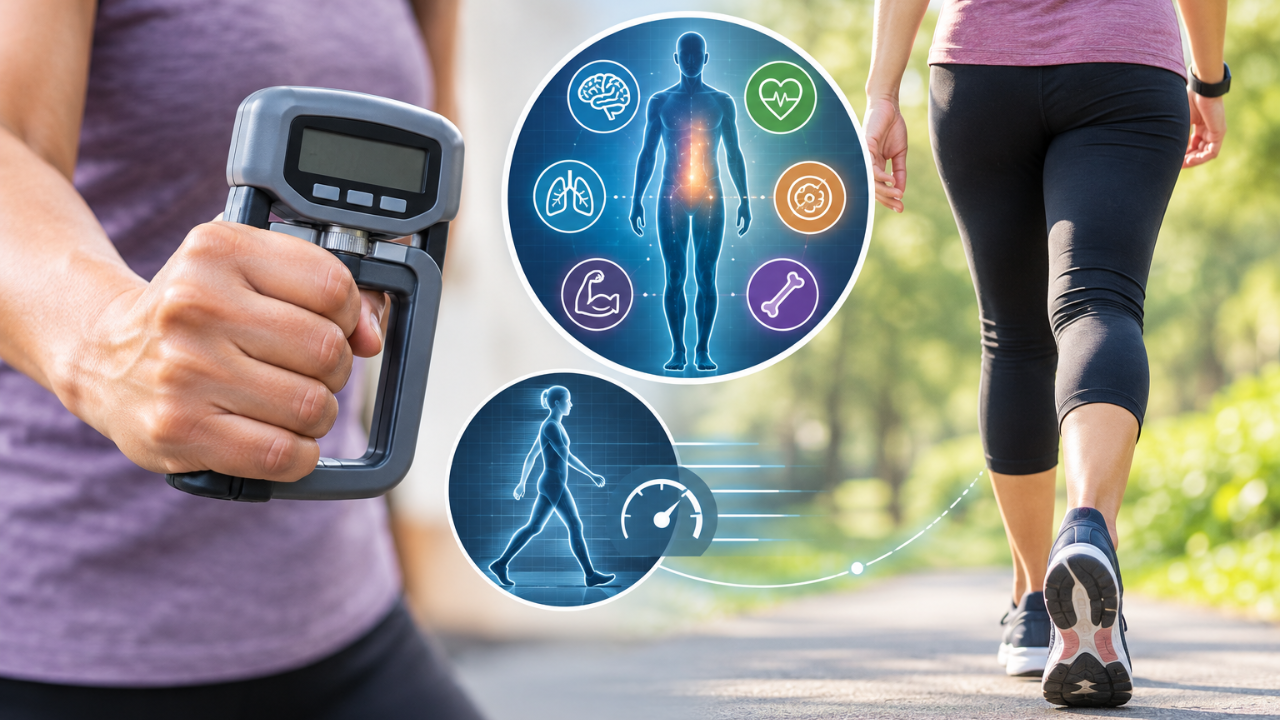
Your date of birth indicates your chronological age, but it may not reflect the actual picture of how your body is ageing. According to Dr Prateek Sharma, professor of medicine at the University of Kansas, simple measures like grip strength, walking speed and VO₂ max could help assess a person’s biological age and life span. Speaking at a session on Longevity in the Indian Context: Diet, Supplements and Myths, Sharma said the focus is gradually shifting from simply asking how long people live to how many years they can remain healthy and functional. He said, “Soon, biological age will be measured through indicators such as epigenetics, grip strength, gait and VO2 max, rather than chronological age.” Biological Age Is Not Equal To Actual Age Chronological age is the number of years that passed since you were born. Biological age, on the other hand, captures how your well body is functioning as years pass and how quickly it may be ageing. Two people who are both 50 may have very different levels of muscle strength, cardiovascular fitness, metabolic health, and mobility. Factors That Shape Healthy Ageing Dr. Sharma says that apart from genes, lifestyle and environment factors play a key role in healthy ageing. He said, “Genes are important. Genes load the gun, but environment and lifestyle are the ones that pull the trigger as well.” He added that factors including diet, sleep, physical activity and environment can substantially influence healthy ageing.Also read: French Court Links Flight Attendant’s Breast Cancer To Workplace Radiation; How Does Flying Increase Cancer Risk? What Grip Strength Can Tell About Your Biological Age? Grip strength is more than a measure of how tightly you can squeeze something. It provides an accessible indicator of overall muscle strength and physical function. Lower grip strength has often been associated with conditions including frailty and sarcopenia. Additionally, research has linked poor grip strength with higher risks of hospitalisation and mortality. A 2024 review described handgrip strength as a potentially useful health biomarker, although the measurement also needs to account for factors like age, sex and complete body size. It is important to note that there is no single grip-strength number that can tell everyone their biological age.Also read: Study Finds The Wealthiest Americans Had Higher Mortality Than The Poorest Europeans Walking Speed Can Measure Healthy Ageing The way a person walks can also provide signs about their physical function. Gait speed reflects how multiple systems work together. These systems include muscle strength, balance, coordination, cardiovascular fitness and neurological function. A slow walking pace can therefore sometimes be an early sign of declining physical function and poor biological age. Despite promising findings, expert caution that mobility tests are not sureshot ways for predicting lifespan. They are better considered as screening tools that can alert doctors to possible health issues that require further assessment. Auriel Willette, an expert in brain ageing from Rutgers University said, “A poor or declining result is a reason for a health professional to investigate why function is changing, rather than gauging how long someone will live.” Grip strength and gait are greatly influenced by age, body composition, injuries, neurological conditions, physical activity, overall fitness, and other lifestyle factors. A temporary decline may not necessarily mean a person is ageing rapidly. Doctors can potentially use these findings to measures the loss of strength or mobility early. It could help them decide when interventions like exercise, nutrition and treatment of underlying health problems may help.