
- Health Conditions A-Z
- Health & Wellness
- Nutrition
- Fitness
- Health News
- Ayurveda
- Videos
- Medicine A-Z
- Parenting
Is Pilates Good For Older People? How Does It Benefit Them
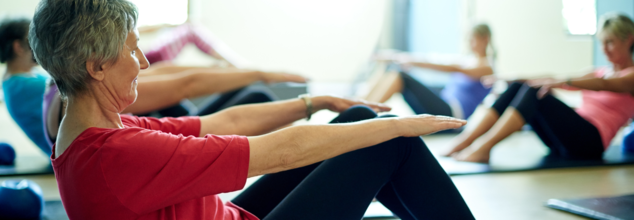
Pilates for older people (Credit-Canva)
When we think about exercises for older people, we often picture them going on walks, light cycling or water aerobics. While all of these are great choices have you ever wondered what other exercises older people can venture into? In today’s day and age, any type of exercise is accessible through the internet and videos online but choosing one can be difficult when you have certain limitations. One such exercise that is adaptable and has a place for everyone is Pilates! Pilates is a low-impact exercise method that offers numerous benefits for older adults, including improved bone health, strength, mobility, posture, mood, and even cognitive function. It focuses on aligning and strengthening the body's structure through controlled movements. It recently caught the attention of many fitness freaks and rose to become one of the most popular exercises. Regardless of your current fitness level, Pilates can be adapted to meet your individual needs. With a wide range of targets, you can try Pilates to lose weight, build resilience, build muscle definition and much more.
Some Considerations For Older Adults
Consult your physician before starting Pilates. Beginning with one-on-one sessions with a qualified instructor is highly recommended, allowing for personalized guidance and modifications. Sometimes even we ourselves do not know our limits, so one wrong move could cause severe pain, or even cause long-lasting damage. Group classes specifically designed for older adults are also a good option. Certain Pilates exercises, particularly those involving excessive twisting, flexion (like crunches), and loaded flexion (like rolling on the back), should be avoided by individuals with low bone density or osteoporosis. If done right, here are the benefits of Pilates for older people.
Strengthening Bones
Pilates, especially using equipment like the Reformer, can help maintain bone density, crucial for preventing osteoporosis. This weight-bearing exercise supports bone health, particularly for postmenopausal women.
Improving Posture
Pilates emphasizes alignment and balance, counteracting poor posture and slouching that can result from bone loss. By strengthening and increasing muscle suppleness, it promotes better posture and joint health.
Enhancing Balance
Pilates strengthens core, hips, feet, and ankles, improving balance and coordination essential for daily activities. This reduces the risk of falls and fractures while promoting better movement habits.
Increasing Mobility
Pilates balances strength and flexibility, improving range of motion. Studies show that even six weeks of Pilates can enhance mobility and functional movement in older adults, easing daily tasks and reducing fall risk.
Elevating Mood
As a mindful practice integrating breath and movement, Pilates calms the nervous system and promotes self-awareness. Research suggests it can positively impact mental health, reducing anxiety and depression, especially in group settings.
Supporting Cognitive Function
Regular Pilates practice can improve cognitive function, including memory. Studies have shown improvements in both immediate and recall memory in postmenopausal women following a 12-week Pilates program.
Reducing Back Pain
By strengthening the core, Pilates provides natural support for the spine, reducing back pain. Research indicates that consistent Pilates practice can effectively alleviate chronic lower back pain, often within three months.
3Ts That Helped Ankur Warikoo Achieve Only 13% Body Fat At 45
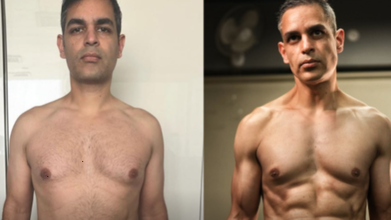
Credits: Instagram
Ankur Warikoo, entrepreneur, who has gained fame with his to-the-point practical and solution oriented videos on Instagram, recently talked about his fitness journey and diet routine which helped him achieve only 13 per cent body fat at the age of 45. "The exact method that got me 13 per cent at the age of 45. No steroids, no shortcuts, not AI. The 3T formula got me here, starting with the one most people skip," said Warikoo in his Instagram post.
What Are The 3Ts That Helped Ankur Warikoo Achieve Only 13 per cent fat at 45?
“The only way to lose fat is through a calorie deficit (consume fewer calories than you burn). Many track their calorie-out (how much they burn, through a smart watch or ring). But very few track their calorie-in (how much they eat),” he said.
This is why, T-1 is Track. This phase aims at tracking what you eat and keeping a check on your calorie intake.
Warikoo said that he brough his calorie intake to 1,600 to 1,800. He started with a 500 calorie deficit every day and continued till 7,500 every two weeks to lose 1 kg. Then repeated the same routine. He also increased his protein intake. In a deficit, you lose muscle and fat. Protein replenishes the muscle. Without it, you just end up skinny,” he said.
What His Diet Looked Like
9.30 am – 1 scoop whey protein, creatine, 1 walnut, 4 almonds, 4 cashews, 5-6 raisins
11 am – 200 grams paneer/tofu/tempeh/ or dal chilla. Rarely eggs
1 pm – Fruit
4 pm – 2 rotis (emmer wheat/jowar/soya bean) sabzi+ dal+ low fat yogurt
6.30 pm – 1 scoop whey protein with curd
“I didn’t cut out chhole bhature (my favourite). Had mithai – quite often. The goal wasn’t perfection. It was to reach the two-week deficit,” said Warikoo.
The Second T is for Training
Warikoo's training schedule looked like this:
Tennis – 6 days a week, 1 hour (cardio sorted)
Weights – 6 days a week, 45 minutes
Every day: 2 exercises * 3 body parts = 6 exercises
10-12 reps
3 sets
“Didn’t get bored,” he shared.
The 3rd T stands for Transformation
He said he tracked his daily weight and weekly measurements to document his transformation and the progress he had been making. He said that he also "sent pictures to my trainer for accountability. Ate mostly the same meals. Boring works," he said.
What Do Experts Say?
Experts have noted that a diet, especially like Warikoo's which is mostly vegetarian, excels in sustainability. Furthermore, his diet was balanced with protein, macros from dal, tofu and Greek yogurt. He also did resistance training to preserve lean mass which is a common mid-age related condition that could lead to sarcopenia.
Experts also point out that while tracking weight and measures are great notifiers of tracking health, one should understand that losing weight is not everything. This is why getting blood work at frequent intervals could tell you more than your dropping weight.
India For The First Time Has Guidelines On Muscle Loss
Credits: Canva
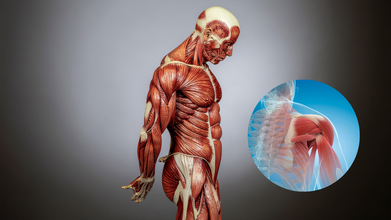
Mobility and independence are two things that keep people healthy, however, with age, as bones weaken and muscle is lost, elderly become more dependent. This condition is called sarcopenia, or age-related muscle loss. India is finally focusing on this and have now new guidelines to warn people against it.
The Geriatric Society of India released country's first 'Indian Guidelines for the Evaluation and Management of Sarcopenia'. These guidelines are a combination of recommendations by experts across multiple specialties, including geriatric medicine, orthopedics, endocrinology, physiotherapy and nutrition. These guidelines aim to help doctors detect and treat muscle loss early. The aim is to not let elderly compromise with their independence.
Also Read: Bruce Willis Health Update: His Death News Is A Hoax; 'He's Still Alive And Well'
What Is Sarcopenia?
Sarcopenia literally translates to 'loss of flesh'. Medically, it refers to gradual decline in muscle mass, strength and physical function with aging. While it is often overlooked, it is also the major reason for many fractures and hospitalizations of older adults, and sometimes, even death.
India is expected to have around 319 million people aged over 60 by 2050, which is one-fifth of the population. It could be concerning as they are at risk of sarcopenia. Studies have also shown that the number has increased from 8-18 per cent to 25-40 per cent adults, especially hospitalization cases. Experts point out that those with chronic diseases like diabetes are at a higher risk.
What Are The First Indian Guidelines On Muscle Loss or Sarcopenia?
Dr OP Sharma, who led guidelines said that muscle health is most important for healthy aging. "Strength preserves dignity. Early detection saves independence," he said. Dr Sharma also noted that the sedentary lifestyle, poor nutrition and chronic illnesses are accelerating this condition among seniors.
The guidelines also advise doctors to look for warning signs in patients, which include weak grip strength, slower walking speed, or difficulty getting up from a chair. There are also screening tools like SARC-F questionnaire, which could help identify those at risk.
The ray of hope here is that sarcopenia could be prevented or slowed that too with simple lifestyle changes.
What Lifestyle Changes Could Prevent Sarcopenia?
- Strength training exercises
- Adequate protein consumption
- Correcting deficiency including vitamin D and calcium
Doctors are also advising to eat a balanced diet, which includes protein, fats, green vegetables, and pulses. Dr Raju Vaishya of Indraprastha Apollo Hospitals said, "India is a sarcopenic nation". He pointed that everyone needs to be aware about muscle health, however this awareness remains low in the country.
Dr Randeep Guleria said the guidelines aim to brings muscle health into routine medical care. "They bridge science with clinical wisdom, making sarcopenia visible in everyday practice."
Can Just 10 Minutes of Exercise Reduce Depression?

Credit: Canva
A new Nature Human Behaviour (2026) study suggests that single-session psychological exercises lasting less than 10 minutes can lead to measurable decreases in depression symptoms even one month later.
Depression is one of the most common mental health disorders in the world. Every year, hundreds of millions of people suffer from depression, and many are unable to get therapy because of cost, stigma and the dearth of mental-health professionals.
Symptoms include excessive sadness, depression often includes fatigue, changes in appetite, sleep disturbances, difficulty concentrating and feelings of hopelessness. Treatment requires professional guidance for diagnosis and management.
A 10-Minute Intervention With Lasting Effects
Researchers conducted one of the largest randomized controlled trials testing short mental-health exercises and recruited 7,505 adults in the United States who were suffering from symptoms of depression and randomly assigned them to one of several short digital interventions or to a control group.All the brief interventions took less than 10 minutes to complete and were designed to teach practical coping skills that are commonly used in psychotherapy. Some exercises helped participants to reframe negative thoughts, while others focused on motivation, goal-setting or making sense of things by helping others. Participants completed surveys measuring their well-being immediately after the session and again one month later.
The results were striking: while many exercises boosted motivation and hope immediately, two interventions - Interactive Cognitive Reappraisal and Finding Focus - showed measurable reductions in depression symptoms even after a month. On average, participants experienced about a four percent greater reduction in depression scores compared with the control group.
Although the improvement may appear small, researchers note that brief, scalable interventions could reach millions of people who currently lack access to mental-health care as they can be completed in a few minutes and delivered online, these exercises may allow people to take initial steps toward better mental health, especially those waiting for professional help or unwilling to ask for help.
The scientists also stressed that these activities are not intended to substitute for therapy, but should be seen as readily available tools to help with emotional health.
Exercise and Mental Health: A Growing Body of Evidence
Previous research also shows that a quick burst of activity can make you feel better from other research too. A British Journal of Health Psychology 2024 study found that just 10 minutes of daily mindfulness practice significantly improved well-being and reduced symptoms of depression and anxiety among more than 1,200 participants from 91 countries.
Similarly, the US National Institutes of Health (2019) reviews suggest that the physical activity itself may help improve mood and depressive symptoms, strengthening the relationship between movement and mental health.
Collectively, these findings suggest that even small doses of mental or physical activity may lead to psychological benefits.
A Small Step That Can Make a Difference
Depression can make people feel trapped and out of control. The good news of the new research is that it suggests that big changes aren’t always necessary to move forward.
Sometimes, doing a small task, like spending 10 minutes learning a new coping skill or doing a quick mental exercise, is enough to change the way you think and gradually improve mood.
As researchers investigate these brief interventions, one thing is becoming clear: when it comes to mental health, few minutes matter more than we think.
- Follow Us :


© 2024 Bennett, Coleman & Company Limited