
- Health Conditions A-Z
- Health & Wellness
- Nutrition
- Fitness
- Health News
- Ayurveda
- Videos
- Medicine A-Z
- Parenting
What Could The Cracking Of Your Joints And Knuckles Mean?
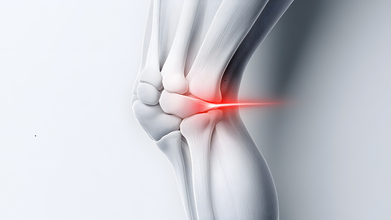
Credits: Canva
If your knees crack when you stand up or your back lets out a dramatic pop during a morning stretch, you’re definitely not alone. These sounds, medically known as crepitus, are incredibly common. For most people, they are harmless and simply part of how the body moves. Still, those noises can be unsettling, especially when they happen often. So what’s really going on inside your joints, and how do you know when it’s time to pay attention?
Joints are where two bones meet, allowing movement and flexibility. As they move, it’s normal for them to make sounds. Most of the time, these noises are nothing to worry about. But in some cases, they can signal wear and tear or an underlying issue that deserves a closer look.
What Causes Joints to Crack and Pop?
There isn’t just one reason joints make noise. Several everyday processes inside the body can create pops, clicks, or cracks.
Gas bubbles in joint fluid
One of the most common causes is gas escaping from synovial fluid, the liquid that lubricates your joints. This fluid contains gases like oxygen and carbon dioxide. When you move suddenly, tiny gas bubbles can form and collapse, creating a popping sound. This is completely normal and does not damage the joint.
Tendons and ligaments shifting
Tendons and ligaments help stabilize joints. Sometimes, they slide over a bone and snap back into place during movement. This can cause clicking or popping, especially in the knees, shoulders, and ankles. It’s often noticed during exercise or when you change positions quickly.
Cartilage wear over time
Cartilage cushions the ends of bones and prevents friction. With age, overuse, or repetitive strain, cartilage can thin out. When that happens, joint surfaces may rub more than usual, leading to grinding or grating sounds. This can be an early sign of osteoarthritis, especially if discomfort is also present.
Tight muscles and limited flexibility
After long periods of sitting or intense workouts, muscles and tendons can tighten. As they move over bones, they may create soft snapping or clicking sounds. This is common in people with sedentary routines or those who repeat the same movements daily.
When Should Joint Noises Raise Concern?
Most cracking and popping is harmless, but certain signs suggest it’s time to be cautious.
Pain, swelling, or warmth around a joint may point to inflammation, ligament injury, or arthritis. A sudden loud crack followed by pain or instability could indicate a tear, particularly in the knee. If popping is paired with stiffness or locking, it may be related to meniscus problems or other structural issues. Joint noises that begin after an injury, such as a fall or sports impact, should always be evaluated.
Does Cracking Joints Cause Arthritis?
Despite what many people were told growing up, cracking your knuckles does not cause arthritis. Research has found no direct link between joint cracking and arthritis development. While excessive cracking might cause mild swelling or temporary discomfort, it does not damage the joints or lead to arthritis.
How to Reduce Joint Popping?
If joint noises bother you, small lifestyle changes can help. Regular movement keeps joints flexible and well-lubricated. Stretching tight muscles and strengthening the muscles around joints can reduce strain. Maintaining a healthy weight lowers pressure on knees and hips. Proper warm-ups, hydration, and a nutrient-rich diet also support joint health.
When To See A Doctor?
Joint sounds alone are usually harmless. But if they come with pain, swelling, stiffness, or reduced movement, it’s wise to consult a healthcare professional. Early evaluation can prevent further damage and help you stay mobile and comfortable in the long run.
What Is Oscar's Best Actor Michael B Jordan's Fitness Regime?
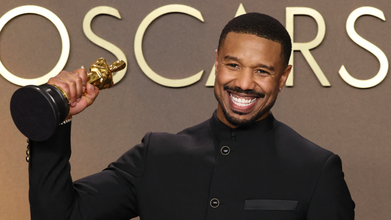
Credits: Instagram
Michael B. Jordan’s fitness and physical transformation have returned to the spotlight after the actor won Best Actor at the 2026 Academy Awards for his performance in Sinners.
The win has renewed public interest in the intense training routines and disciplined lifestyle that have shaped his on-screen presence over the past decade.
Known for roles that demand significant physical conditioning, Jordan has repeatedly transformed his body for films such as 'Creed', 'Black Panther' and 'Without Remorse'.
Fitness experts often cite his training approach as an example of how targeted exercise, structured nutrition and recovery practices can dramatically alter body composition over time.
Early Fitness: Athletic But Not Muscular
Although Jordan is now known for his muscular build, he did not begin his career with a highly developed physique. As a teenager, he was active in sports, particularly basketball, which provided a baseline level of fitness. However, his build was naturally slim.
Jordan has previously explained that his perspective on fitness changed when he began working on television projects such as 'Friday Night Lights'. At that point, he realized that physical appearance could play an important role in casting, marketing and character development.
According to his long-time trainer Corey Calliet, Jordan initially struggled with strength training when they first began working together. Early sessions reportedly revealed limited upper body strength and difficulty gaining muscle mass.
This is not unusual from a physiological perspective. Individuals with naturally fast metabolisms often find it difficult to gain muscle because their bodies burn calories quickly. To overcome this, Jordan gradually increased both his training intensity and calorie intake.
Role-Specific Training Approaches
One of the most distinctive aspects of Jordan’s fitness strategy is that his workouts are tailored to each role rather than following a single fixed program.
For the 'Creed' film series, his training focused on developing the physique and performance capacity of a professional boxer. This meant a heavy emphasis on boxing drills, endurance training, and cardiovascular conditioning.
Cardiovascular conditioning refers to exercises that strengthen the heart and lungs while improving the body’s ability to deliver oxygen to muscles during physical activity. Boxing training typically includes activities such as skipping, sparring, pad work and high-intensity interval training.
In contrast, Jordan’s preparation for 'Black Panther' required a different approach. For this role, the goal was not simply athletic performance but a visually powerful physique suited to a comic-book antagonist. Trainer Corey Calliet therefore introduced a bodybuilding-focused routine aimed at increasing muscle size and definition.
Bodybuilding training involves targeted resistance exercises designed to stimulate muscle growth, also known as hypertrophy. These routines often focus on isolating specific muscle groups such as the chest, arms, and legs.
High-Intensity Training And Consistency
Jordan’s preparation for physically demanding roles has often involved extremely intensive training schedules. During the filming of 'Creed', he reportedly trained two to three times per day, six days a week.
This level of frequency is common among professional athletes preparing for competition. The routine typically combines strength training, skill-based practice and endurance workouts.
High-intensity interval training, often abbreviated as HIIT, also played an important role in his program. HIIT involves short bursts of intense exercise followed by brief recovery periods. Research shows that this form of training can improve cardiovascular fitness, burn fat, and increase metabolic efficiency.
Jordan has noted that maintaining such a schedule consistently for several months can lead to significant changes in body composition, including increased muscle mass and reduced body fat.
Special Focus On Nutrition And Diet
Exercise alone cannot produce dramatic physical changes without appropriate nutrition. During times, when Jordan needs to increase muscle mass, he reportedly consumes three to six meals per day.
These meals typically include lean proteins such as chicken or fish, complex carbohydrates such as brown rice or sweet potatoes, and vegetables that provide vitamins and fibre.
Protein is especially important because it supplies the amino acids required for muscle repair and growth after strength training. Between film projects, Jordan relaxes his diet slightly but still maintains general healthy eating habits. He has previously mentioned allowing himself an occasional cheat meal while practicing moderation overall.
Recovery And Long-Term Health
In recent years, Jordan has placed greater emphasis on recovery practices. These include stretching, meditation and breathing exercises performed each morning.
Stretching helps improve flexibility and reduce the risk of muscle injuries. Meditation and controlled breathing are often used to manage stress and support mental wellbeing.
Recovery is increasingly recognised as a critical component of athletic performance. Without adequate rest and muscle recovery, intense training can lead to fatigue, injury, and reduced physical performance.
Jordan has also said that he now incorporates lighter forms of physical activity between film projects, including swimming, sports and playing with family members.
A Holistic Approach To Fitness
Michael B. Jordan’s physical transformation over the years reflects a structured approach that combines training, nutrition, and recovery. Rather than relying on a single workout formula, his fitness strategy adapts to the demands of each role while maintaining long-term health.
With his 2026 Oscar win bringing renewed attention to his career, his disciplined fitness regimen has once again become a topic of interest. For many observers, Jordan’s journey illustrates how consistent habits and scientifically informed training methods can gradually reshape the body over time.
3Ts That Helped Ankur Warikoo Achieve Only 13% Body Fat At 45
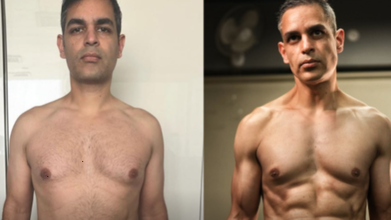
Credits: Instagram
Ankur Warikoo, entrepreneur, who has gained fame with his to-the-point practical and solution oriented videos on Instagram, recently talked about his fitness journey and diet routine which helped him achieve only 13 per cent body fat at the age of 45. "The exact method that got me 13 per cent at the age of 45. No steroids, no shortcuts, not AI. The 3T formula got me here, starting with the one most people skip," said Warikoo in his Instagram post.
What Are The 3Ts That Helped Ankur Warikoo Achieve Only 13 per cent fat at 45?
“The only way to lose fat is through a calorie deficit (consume fewer calories than you burn). Many track their calorie-out (how much they burn, through a smart watch or ring). But very few track their calorie-in (how much they eat),” he said.
This is why, T-1 is Track. This phase aims at tracking what you eat and keeping a check on your calorie intake.
Warikoo said that he brough his calorie intake to 1,600 to 1,800. He started with a 500 calorie deficit every day and continued till 7,500 every two weeks to lose 1 kg. Then repeated the same routine. He also increased his protein intake. In a deficit, you lose muscle and fat. Protein replenishes the muscle. Without it, you just end up skinny,” he said.
What His Diet Looked Like
9.30 am – 1 scoop whey protein, creatine, 1 walnut, 4 almonds, 4 cashews, 5-6 raisins
11 am – 200 grams paneer/tofu/tempeh/ or dal chilla. Rarely eggs
1 pm – Fruit
4 pm – 2 rotis (emmer wheat/jowar/soya bean) sabzi+ dal+ low fat yogurt
6.30 pm – 1 scoop whey protein with curd
“I didn’t cut out chhole bhature (my favourite). Had mithai – quite often. The goal wasn’t perfection. It was to reach the two-week deficit,” said Warikoo.
The Second T is for Training
Warikoo's training schedule looked like this:
Tennis – 6 days a week, 1 hour (cardio sorted)
Weights – 6 days a week, 45 minutes
Every day: 2 exercises * 3 body parts = 6 exercises
10-12 reps
3 sets
“Didn’t get bored,” he shared.
The 3rd T stands for Transformation
He said he tracked his daily weight and weekly measurements to document his transformation and the progress he had been making. He said that he also "sent pictures to my trainer for accountability. Ate mostly the same meals. Boring works," he said.
What Do Experts Say?
Experts have noted that a diet, especially like Warikoo's which is mostly vegetarian, excels in sustainability. Furthermore, his diet was balanced with protein, macros from dal, tofu and Greek yogurt. He also did resistance training to preserve lean mass which is a common mid-age related condition that could lead to sarcopenia.
Experts also point out that while tracking weight and measures are great notifiers of tracking health, one should understand that losing weight is not everything. This is why getting blood work at frequent intervals could tell you more than your dropping weight.
India For The First Time Has Guidelines On Muscle Loss
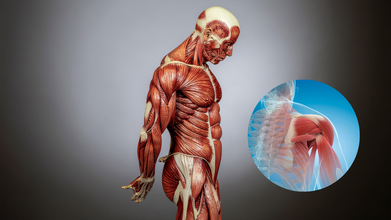
Credits: Canva
Mobility and independence are two things that keep people healthy, however, with age, as bones weaken and muscle is lost, elderly become more dependent. This condition is called sarcopenia, or age-related muscle loss. India is finally focusing on this and have now new guidelines to warn people against it.
The Geriatric Society of India released country's first 'Indian Guidelines for the Evaluation and Management of Sarcopenia'. These guidelines are a combination of recommendations by experts across multiple specialties, including geriatric medicine, orthopedics, endocrinology, physiotherapy and nutrition. These guidelines aim to help doctors detect and treat muscle loss early. The aim is to not let elderly compromise with their independence.
Also Read: Bruce Willis Health Update: His Death News Is A Hoax; 'He's Still Alive And Well'
What Is Sarcopenia?
Sarcopenia literally translates to 'loss of flesh'. Medically, it refers to gradual decline in muscle mass, strength and physical function with aging. While it is often overlooked, it is also the major reason for many fractures and hospitalizations of older adults, and sometimes, even death.
India is expected to have around 319 million people aged over 60 by 2050, which is one-fifth of the population. It could be concerning as they are at risk of sarcopenia. Studies have also shown that the number has increased from 8-18 per cent to 25-40 per cent adults, especially hospitalization cases. Experts point out that those with chronic diseases like diabetes are at a higher risk.
What Are The First Indian Guidelines On Muscle Loss or Sarcopenia?
Dr OP Sharma, who led guidelines said that muscle health is most important for healthy aging. "Strength preserves dignity. Early detection saves independence," he said. Dr Sharma also noted that the sedentary lifestyle, poor nutrition and chronic illnesses are accelerating this condition among seniors.
The guidelines also advise doctors to look for warning signs in patients, which include weak grip strength, slower walking speed, or difficulty getting up from a chair. There are also screening tools like SARC-F questionnaire, which could help identify those at risk.
The ray of hope here is that sarcopenia could be prevented or slowed that too with simple lifestyle changes.
What Lifestyle Changes Could Prevent Sarcopenia?
- Strength training exercises
- Adequate protein consumption
- Correcting deficiency including vitamin D and calcium
Doctors are also advising to eat a balanced diet, which includes protein, fats, green vegetables, and pulses. Dr Raju Vaishya of Indraprastha Apollo Hospitals said, "India is a sarcopenic nation". He pointed that everyone needs to be aware about muscle health, however this awareness remains low in the country.
Dr Randeep Guleria said the guidelines aim to brings muscle health into routine medical care. "They bridge science with clinical wisdom, making sarcopenia visible in everyday practice."
- Follow Us :


© 2024 Bennett, Coleman & Company Limited