
- Health Conditions A-Z
- Health & Wellness
- Nutrition
- Fitness
- Health News
- Ayurveda
- Videos
- Medicine A-Z
- Parenting
Can CRISPR Cure HIV? Scientists Say Virus Removed From Cells In New Research
Credits: Canva
Since the beginning of the HIV epidemic, scientists, doctors, and public health experts have spent decades trying to understand the virus and control its spread. Modern treatments now allow people living with HIV to reduce the virus in their bodies to undetectable levels, helping them stay healthy while also preventing transmission to others. Still, these treatments do not eliminate the virus entirely. Now, new research exploring the use of CRISPR gene-editing technology has shown promising results. This raises a question that has lingered for years: are we any closer to a cure for HIV?
What Is CRISPR?
CRISPR, short for Clustered Regularly Interspaced Short Palindromic Repeats, is a powerful gene-editing tool adapted from a natural defense system found in bacteria. It works by acting like precise molecular scissors that can cut, remove, or alter specific sections of DNA inside living cells. Scientists use a guide RNA to direct an enzyme, such as Cas9, to a targeted stretch of genetic material, allowing them to make exact changes.
According to the National Human Genome Research Institute, CRISPR has transformed genetic research because it is faster, more accurate, and more affordable than older gene-editing methods, with applications across medicine, science, and agriculture.
CRISPR Slices HIV Out Of Infected Cells Completely
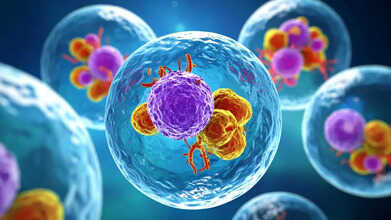
Researchers at Amsterdam UMC have used Nobel Prize-winning CRISPR gene-editing tools to remove HIV DNA from infected T cells. Their work focused on targeting the virus where it hides inside immune cells known as reservoirs. By attacking parts of the HIV genome that remain stable across different strains, the researchers were able to target the virus in several types of cells, as per BBC.
In laboratory studies, the team successfully eliminated HIV from T cells that typically allow the virus to resurface once antiretroviral treatment is stopped. Unlike current HIV medications, which keep the virus under control but do not remove it, CRISPR physically cuts the viral DNA out of dormant reservoir cells. These hidden cells have been one of the biggest obstacles to finding a cure for HIV for decades.
How CRISPR Works Against HIV
According to the National Institutes of Health, CRISPR can fight HIV in several ways.
Removing the virus: CRISPR can cut out HIV DNA that has integrated into a person’s own genetic material, effectively removing the virus from the cell. This approach has been demonstrated in studies highlighted by the NIH, the World Economic Forum, and other research bodies.
Blocking viral activity: The technology can also disrupt viral genes or target host cell receptors, such as CCR5, which HIV needs to enter cells. This helps prevent new infections from taking hold.
Multiple-target strategies: Scientists are developing approaches that use more than one guide RNA to attack different parts of the virus at the same time. This reduces the chances of HIV mutating and escaping treatment, according to reports from the NIH, Aidsmap, and the World Economic Forum.
Study Details And Key Findings
Led by Dr Elena Herrera-Carrillo, the research team tested a CRISPR-Cas system using two guide RNAs aimed at conserved regions of the HIV genome. By focusing on these shared genetic sequences, the scientists hoped to create a treatment effective against many HIV variants. One major challenge they identified was the size of the delivery system used to transport the CRISPR components into cells. The vector carrying the gene-editing tools was initially too large.
To address this, the team tested different methods to shrink the CRISPR cassette and improve delivery. They compared several CRISPR-Cas systems derived from different bacteria in HIV-infected CD4+ T cells. Among them, saCas9 showed especially strong results. With one guide RNA, it completely shut down HIV activity, and with two guide RNAs, it fully removed viral DNA from the cells.
Reducing the vector size improved delivery efficiency, and the researchers were also able to target hidden HIV reservoir cells by focusing on proteins found on the surface of CD4+ and CD32a+ cells.
The researchers stated: “We have developed an effective combined CRISPR approach that attacks HIV in different cell types and in the locations where it hides. We also showed that these treatments can be delivered specifically to the cells that matter. This work marks an important step toward designing a cure strategy.”
What Happens Next?
Looking ahead, the authors explained that their next goal is to improve how the treatment is delivered so it reaches most HIV reservoir cells in the body. They plan to combine CRISPR-based therapies with receptor-targeting tools and move into preclinical testing to closely examine safety and effectiveness.
They added: “This will help ensure that CRISPR-Cas is delivered mainly to reservoir cells while avoiding healthy cells. Our aim is to make the system as safe as possible for future use in patients. Finding the right balance between effectiveness and safety is essential. Only then can clinical trials begin to explore whether this cure strategy can disable HIV reservoirs in humans.”
As India Faces Flu Vaccine Shortage Amid H1N1 Surge, ICMR Recommends Alternative: Expert Explains If You Should Take It

Credit: AI
With H1N1 outbreak expanding in Delhi, India is witnessing an overwhelming increase in seasonal influenza cases. To compound to the public health issue, the flu vaccine that best matches the viruses currently circulating in the country is facing a supply shortage.
Therefore, the Indian Council of Medical Research (ICMR) has advised that another seasonal influenza vaccine can be used temporarily until the one preferred becomes available again.
The ICMR recommendation comes after influenza surveillance found that viruses circulating in India have a closer match with the strains included in this year’s Northern Hemisphere (NH) vaccine.
However, the Southern Hemisphere (SH) vaccine, which is available in India, can still provide protection against several viruses circulating in the country.
Why Is There A Shortage Of Flu Vaccine In The First Place?
According to ICMR, the NH vaccine would be the ideal choice because its composition closely matches the influenza viruses currently detected in India.
ICMR said, “Since the surveillance data indicates close resemblance of the circulating influenza strains in India with the Northern Hemisphere recommendations of WHO, it would be ideal to administer the NH vaccine.”
“However, in view of non-availability of NH vaccine, the available SH vaccine may be used, and SH vaccine be replaced with NH vaccine as soon as it becomes available,” it added.
According to several reports, the shortage is starting to affect hospital supplies, including government supply of the preferred vaccine.
The surge in demand, production timelines, limited imports and redistribution of vaccines globally could be the factors driving the shortage currently.
Also read: ICMR Study Shows Pune Dengue Mosquitoes Resistant To Insecticides: What It Means for Public Health
Does The Available Southern Hemisphere Vaccine Protect Against H1N1?
The current H1N1 virus circulating in India can be tackled by both the NH and SH vaccines. The difference is primarily in the strains of the other influenza viruses they target, particularly H3N2 and influenza B.
ICMR surveillance has detected H1N1, H3N2 and influenza B viruses circulating in India. The NH vaccine contains versions of H3N2 and influenza B that more closely match the strains currently being detected.
India's National Centre for Disease Control has also previously advised that when the latest recommended seasonal formulation is unavailable, the latest available trivalent or quadrivalent influenza vaccine may be used.
Also read: 98 Years After Penicillin, Are We Running Out Of Effective Antibiotics?
Should You Wait For The Preferred Vaccine?
People who are at higher risk of severe influenza, doctors say that said it may not be necessary to remain unvaccinated while waiting for the NH vaccine.
These include older adults, young children, pregnant women and people with chronic illnesses or weak immune system. Influenza can cause complications like pneumonia and can worsen existing medical conditions in vulnerable people.
HealthandMe spoke to Dr. Divya K S, Infectious Disease Specialist at Apollo Hospitals, Seshadripuram, Bangalore, about the efficacy of SH vaccine on H1N1. The doctor also explained if one should wait for NH vaccine.
The doctor explains, “People should take the Southern Hemisphere vaccine which is available for now rather than wait. Because waiting now means leaving people with no protection at all while active flu season is on. Bothe the vaccines do have some components in common. So taking the SH vaccine does give protection
The expert also clarified if SH vaccine offers complete adequate coverage on current H1N1 strain.
She added, “On H1N1 specifically, the SH vaccine offers full expected protection, because the H1N1 strain — A/Missouri/11/2025-like virus — is identical in both the NH and SH formulations this season. it is H3N2. B/Victoria strains that are different from the NH vaccine.”
India's influenza surveillance network continually tracks circulating strains and helps determine which vaccine is likely to offer the best match. This year's ICMR assessment is why the NH formulation is preferred, but the SH vaccine still remains a practical alternative while supplies are limited. Experts recommend taking it instead of staying unprotected.
Can India Prevent Rabies Deaths By Vaccinating Dogs? Lancet Study Says Kerala May Reach Near-Zero Deaths In 3 Years
Credit: iStock
One of the most effective ways to prevent rabies deaths could be by vaccinating dogs rather than just people before they are bitten. A new study published in The Lancet Regional Health – Southeast Asia modelled different strategies in Kerala for eradicating human rabies deaths between 2026 and 2035.
The study found that mass vaccination of dogs could bring the annual rabies deaths among people in Kerala close to zero within about three years even if 70% of the dog population were vaccinated.
On the other hand, vaccinating children before exposure to rabies was projected to prevent relatively few additional deaths at substantially higher cost.
India carries one of the worst largest rabies burdens. That's why the study could point towards a feasible and practical solution to eradicate the deadly infection.
Could Vaccinating Dogs Help?
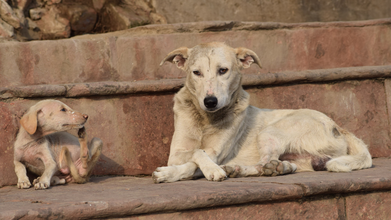
Most human rabies deaths in India are linked to bites from infected dogs. This means that the disease can be tackled at its source by reducing transmission among dogs.
India records an estimated 9.1 million animal bites every year, with more than three-quarters caused by dogs. A 2024 estimate from the Indian Council of Medical Research's National Institute of Epidemiology estimates India's annual human rabies deaths to be about 5,726, which is an alarming public health issue.
The study puts emphasis on the fact that vaccinating a person after a bite protects that individual, whereas, vaccinating dogs reduces the probability that an infected dog will transmit rabies to many people in the first place.
About The Study
Researchers from the University of Glasgow, Kerala's health and animal-husbandry departments, Kerala University of Health Sciences and the London School of Economics and Political Science used mathematical modelling to compare different strategies to combat rabies in Kerala.
One strategy was routine pre-exposure prophylaxis (PrEP) for children. Another focused on mass dog vaccination, while the model also considered improvements to post-exposure prophylaxis (PEP), the treatment given after a potentially rabid bite.
The researchers found that adding routine childhood PrEP provided minimal additional protection, preventing fewer than 10 deaths on average over a decade, while costing considerably more than strategies focused on controlling rabies transmission among dogs.
The model estimated that achieving 70% vaccination coverage among dogs could reduce annual human rabies deaths in Kerala to near zero within approximately three years.
Also read: Abhayrab Rabies Vaccine Batch Found Misbranded, ‘Not Of Standard Quality’: DCGI Alerts States
India's Alarming Rabies Situation
One of the study's striking findings was about the size of Kerala's stray-dog population. The researchers' modelling suggested that the state's actual stray-dog population could be around five times higher than official census estimates.
If vaccination programmes are based on an underestimated dog population, authorities could believe they have reached adequate coverage while a large proportion of dogs remain unvaccinated. That creates what epidemiologists call an immunity gap, allowing rabies transmission to continue.
Additionally, dog vaccination does not make human post-exposure treatment unnecessary. If a person is bitten or scratched by an animal that could have rabies, the wound should be washed thoroughly with soap and running water and medical care should be sought immediately.
Depending on the exposure, PEP can include rabies vaccine and rabies immunoglobulin (RIG). This is particularly important because rabies becomes extremely difficult to treat once symptoms begin.
The study also found that improving timely access to PEP could prevent more deaths than expanding routine pre-exposure vaccination of children.
Richard Branson’s Wife’s Death Highlights Blood Clot Risk After Fractures: Was Her Pulmonary Embolism Preventable?

Credit: X
The death of Lady Joan Branson, wife of billionaire entrepreneur Sir Richard Branson, has highlighted the risk of a blood clot after fractures that travels to the lungs.
Lady Branson, 80, died at Lister Hospital in London in November 2025 after being admitted following a fall at her home on Necker Island. An inquest heard that she had developed a deep vein thrombosis (DVT) and subsequently suffered a massive pulmonary embolism (PE).
The coroner, Professor Fiona Wilcox, concluded that her death could probably have been prevented if anti-clotting treatment had been given earlier. She said: “If this lady had been given [anti-clotting medication] early on ... her death, on the balance of probability, would have been prevented.”
What exactly happens after a fracture that can make a blood clot so dangerous?
Fracture Increases The Risk Of Blood Clots
A fracture can trigger several conditions that encourage the development of venous thromboembolism (VTE), the collective term for DVT and PE.
First, injury itself activates the body's clotting system. The body naturally increases clot formation after tissue damage to prevent bleeding.
Second, a person with a fracture may become significantly less mobile. When the leg muscles are not moving normally, the muscle pump that helps push blood through the veins becomes less effective. Blood can therefore pool in the deep veins, particularly in the legs. Hospitalisation, surgery, older age, previous blood clots and certain medical conditions can add further risk.
A clot that remains in a leg vein can cause swelling and pain. But when part of it breaks and gets away, it can travel through the bloodstream to the lungs, leading to a pulmonary embolism.
Also read: 9/11 Toxic Air Exposed Thousands: What New Records Reveal 25 Years Later
How Does A DVT Become A Pulmonary Embolism?
A clot forming in a deep vein, usually in the leg, can detach and travel through the veins into the right side of the heart. From there, it can enter the pulmonary arteries, which carry blood to the lungs.
If the clot is large enough, it can obstruct blood flow through the lungs and suddenly increase pressure on the right side of the heart.
A large or massive PE can therefore cause severe breathlessness, low blood pressure, cardiac arrest and sudden death.
This is why PE can sometimes appear dramatically, even when the original DVT produced few obvious symptoms.
Could Blood-Thinning Medication Have Prevented Lady Branson’s Death?
According to the inquest, Lady Branson had a history of blood clots dating back to 2010, and doctors heard evidence that she had previously used anti-clotting injections.
However, she was not given enoxaparin, a low-molecular-weight heparin commonly used to prevent or treat harmful blood clots, during her hospital stay.
One doctor, Dr Inaki Bovill, told the inquest that a venous thromboembolism risk assessment should have been carried out and that the medication should have been prescribed. He said: “It is to my great regret that I did not.”
Another doctor, Dr George Adams, a consultant haematologist at Imperial College London, told the inquest that earlier anticoagulation would have made cardiac arrest less likely in her particular case.
Lady Branson's daughter, Dr Holly Branson, disputed the suggestion that her mother had refused the injections because of previous pain or bruising. She told the inquest that this was “not consistent with my knowledge of her usual practice or attitude.”
What Are The Warning Signs Of A Blood Clot?
A DVT can cause:
- Swelling, usually in one leg
- Pain or tenderness in the calf or thigh
- Warmth or redness over the affected area
A PE may cause:
- Sudden unexplained breathlessness
- Chest pain, particularly pain that worsens when breathing
- Rapid heartbeat or breathing
- Coughing up blood
- Dizziness, fainting or collapse
- Follow Us :


© $2026 Times Horizon Private Limited