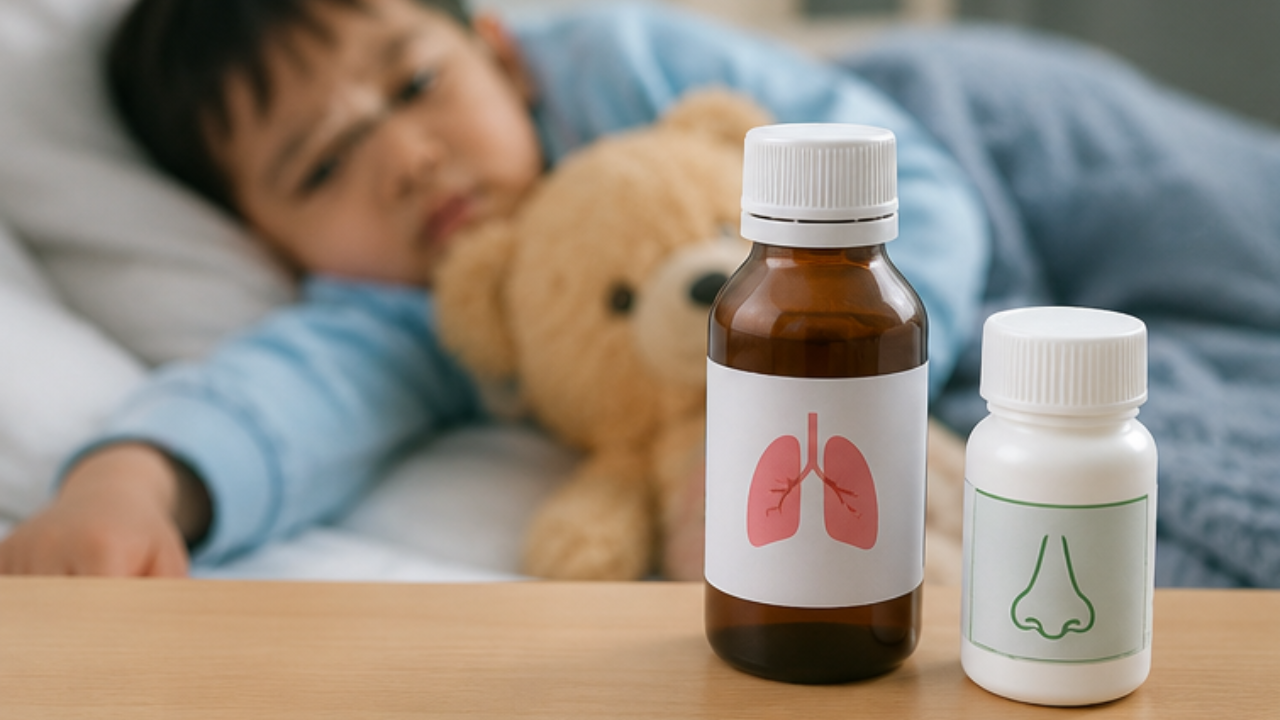
The Centre has tightened restrictions on certain cough and cold medicines for children below four years, citing potential health risks associated with a specific drug combination in children. The Union Health Ministry has restricted the manufacture, sale and distribution of fixed-dose combinations (FDCs) containing chlorpheniramine maleate and phenylephrine hydrochloride for children under four. Manufacturers have also been instructed to carry a clear warning stating that the medicine “shall not be used in children below four years of age.” The decision follows recommendations from an expert committee and the Drugs Technical Advisory Board (DTAB), which reviewed the safety of the combination in young children. Why These Medicines Have Been Restricted? Chlorpheniramine is an antihistamine, while phenylephrine is a decongestant. The combination is used to relieve symptoms like blocked or runny nose, sneezing and watery eyes caused by colds, flu and allergies. However, young children can respond differently to medicines than adults, and dosing errors or adverse effects can result in more serious effects in this age group. The Health Ministry’s expert committee concluded that the combination could pose potential health risks in children below four, particularly when safer alternatives are available. The latest directive therefore requires manufacturers to clearly communicate the age restriction rather than putting the onus on parents. Also read: FSSAI Orders Halt Of Ghee Sales Amid Adulteration Crackdown: How To Spot Fake Ghee & Its Effects On Your HealthCough And Cold Medicines Are Not Always Needed In Young Children A common cold is usually caused by a virus, meaning antibiotics do not treat it. In many children, symptoms improve with supportive care such as adequate fluids, rest and measures recommended by a paediatrician. Combination cough and cold products can contain several active ingredients, increasing the possibility of incorrect dosing and side effects if parents give more than one medicine containing the same ingredient. This is particularly important for young children because their medication doses are generally calculated according to age and/or body weight. Also read: Shigellosis Cases In Kerala Raise AMR Concern: All About Complications Due To Drug-Resistant ShigellaRestriction Comes Amid Wider Scrutiny Of Cough Medicines The government has been tightening oversight of paediatric medicines following serious concerns surrounding cough syrups in India. In June, the Centre removed cough syrups from an exemption that had allowed certain products to be sold through retail outlets in smaller villages without the same pharmacy restrictions. Cough syrups in those settings must now be sold through licensed pharmacies. What Parents Should Do? Parents should avoid giving children under four any medicine containing this combination unless specifically advised by a qualified healthcare professional. Before giving a cough or cold medicine to a child, parents should:Check the active ingredients, not just the brand name.Follow the dose prescribed by a paediatrician.Avoid combining multiple cold medicines without medical advice.Use the measuring device supplied with liquid medicines rather than household spoons.Never give a medicine prescribed for another child.Seek medical attention if a child’s symptoms are severe, persistent or worsening. The government has emphasised that safer alternatives are available, while the latest restriction is intended to reduce avoidable medication-related risks in young children.