
- Health Conditions A-Z
- Health & Wellness
- Nutrition
- Fitness
- Health News
- Ayurveda
- Videos
- Medicine A-Z
- Parenting
Colorectal Cancer Is The Leading Cause Of Cancer Death In American Men Under 50
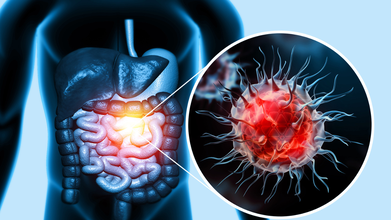
Credits: iStock
Colorectal cancer is the leading cause of cancer deaths in American under 50. A new study from the American Cancer Society revealed that while the deaths by various cancers in Americans under age 50 have fell overall, a notable exception rose in colorectal cancer deaths. The study analyzed over 1.2 million deaths from cancer between 1990 and 2023. The researchers found that colorectal cancer deaths increased a little over 1% annually. This has made it the top cause of cancer death in men and women combined. The findings are published in the peer-reviewed medical journal JAMA.
Other causes of cancer deaths in people under 50, including leukemia and breast cancer, decreased up to 6% annually. The chief science officer of the American Cancer Society, also an oncologist, Dr William Dahut said better treatment is helping people live longer. Speaking to ABC News, he said, "My sense is, if you would break down the improvements, more than half of it is certainly due to better therapies."
Decrease In Tobacco Use = Decrease In Lung Cancer
He also said that there has been a decrease in tobacco use, which has helped drive a 5.7% annual decline in lung cancer deaths. In 1990, lung cancer was the leading cause of cancer death among people under 50, but now it ranks fourth.
What Other Cancer Deaths Decreased
While the study showed that more women are diagnosed with breast cancer, the deaths have decreased by an average of 1.4% per year. However, it continues to remain the leading cause of cancer death in younger women.
Cervical cancer deaths too decreased about half a percentage every year. This is the third leading cause of cancer deaths in young women.
“I think there’s a good chance we see dramatic decreases [in cervical cancer deaths], assuming vaccination rates continue,” Dr. Dahut predicted
Read: Colon Cancer Is The Third Most Common Cancer In Men: Symptoms, Treatment And Prevention
What Is Colorectal Cancer?
The American Cancer Society notes that colorectal cancer is a cancer that starts in the colon or the rectum. Colorectal cancer impacts around 1.9 million people every year, noted the World Health Organization (WHO) as per its 2022 data.
It is a disease of large bowel and a type of cancer that originates from the rectum or colon. A person's colon, cecum, rectum and anus make up the large intestine.
The ileocecal valve that is located at the opening between the ileum and the large intestine controls the flow of chyme from the small intestine to the large intestine. It happens when abnormal cells invade the wall of the rectum and neighboring tissue. These are called polyps or growths in the inner lining of the colon.
Experts are concerned about the rising colorectal cancer deaths in young Americans, mostly because they are unsure of why is this happening. However, Dahut said, "It didn’t totally surprise me, although I would have to say it’s moving a little more quickly than I anticipated. It’s going to be linked to either environmental [causes] or a lifestyle.”
Also Read: An Oncologist's Food Guide To Lower Your Risk Of Colorectal Cancer
Dahut also noted that doctors should regularly recommend screening for the disease and following up with the symptoms, even in middle-aged parents. This is more important as more than 75% of new colorectal cancer diagnoses in young patients are found in later stages. “Lots of folks in their 40s do not necessarily have a primary care doctor telling them to get the screening – men in particular,” he said.
Lori Coble, Woman Who Lost Her 3 Kids In A Car Accident Dies Of Brain Cancer
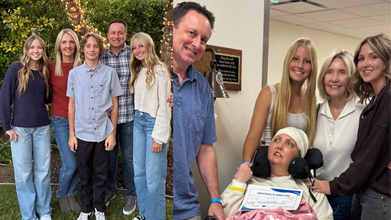
Credits: Lori Coble, Instagram
Lori Coble died of brain cancer at 48. Mom of teenage triplets, who had lost her first three children in a car accident died on Wednesday, January 21, confirmed a family friend to PEOPLE. She told PEOPLE "Lori passed away last night surrounded by her family."
In 2007, Lori lost her three children Kyle Christopher, 5, Emma Lynn 4, and Katie Gene, 2, in a car crash. While she and her husband Chris spent months coping up, they had triplets the year after the accident. Each carried an older sibling's middle name: Jake Christopher, Ahley Lyn, Ellie Gene.
Lori Coble's Brain Cancer Diagnosis
In June 2025, Chris noticed something was wrong with his wife, as she was "getting more clumsy". She would run into walls, stub her toe on chairs, or drop drinking glasses on the floor. By early July, stroke like symptoms too appeared. In a previous interview with PEOPLE, he said, "Her mouth started to droop a little bit. It became too much to ignore."
By July, Lori was diagnosed with a large and aggressive stage 4 glioblastoma or brain cancer. "I was hoping we were done with the life changing, life altering disasters when life as you knew it yesterday is gone," Chris said. He said he started mourning loss of his wife the day she got diagnosed.
"I didn’t have a lot of hope at the outset — and that weighed heavily on me. I was really upset, mad, angry. How could this be happening to us again?”
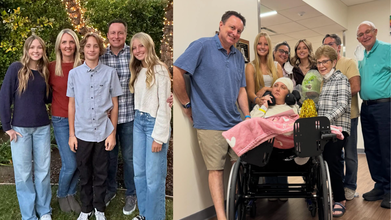
While Lori had two surgeries to remove the tumor in the period of next few months, the second surgery was invasive and caused her to lose control of her left side. Few days after, she had a stroke and was placed in a medically induced coma. She was in the hospital for 40 days. After she regained her strength, she returned home, and started radiation and chemotherapy. The treatment however made her more tired and impacted her speech. She was getting worse by every passing day.
It was in mid-November when Lori was again in the hospital, this time in the ER, and doctors discovered a brain infection and advised on surgery. "You feel like she's just being tortured. I'm not sure that the treatment for cancer in this situation is any better than the disease itself.”
She also suffered with a lung infection and pneumonia and was brought back in the hospital. She was finally brought home for hospice care.
What Is Glioblastoma?
As per MD Anderson Cancer Center, glioblastoma is the most common and most aggressive form of primary brain cancer. In US, every year, around 12,000 new cases are detected. All glioblastomas are classified as grade IV tumors, which means they contain the most abnormal looking cells that grow rapidly.
Glioblastoma develops from star-shaped brain cells known as astrocytes, which play a key role in nourishing the brain and shielding it from harmful substances in the bloodstream.
Astrocytes belong to a larger group called glial cells. These cells support the brain’s structure, supply nutrients, protect neurons, and help maintain a stable chemical balance in the brain.
The tumour most often forms near the front of the brain or close to its lower regions, though it can arise anywhere. The frontal lobe controls speech, movement, behaviour, and memory, while the temporal lobe is involved in memory formation, language, and processing sensory information such as sound and sight.
Andhra Pradesh May Ban Social Media for Under-16s To Protect Teenagers
Credit: Canva
Andhra Pradesh may soon follow Australia's steps and ban social media for teenagers under the age of 16 in the state.
Nara Lokesh, Information Technology, Electronics and Communications, Real Time Governance and Human Resources Development Minister for Andhra Pradesh, told Bloomberg at the World Economic Forum 2026 Annual Meeting in Davos, Switzerland: "As a state, we are studying Australia’s under-16 law, and yes, I believe we need to create a strong legal enactment.
"Youngsters below a certain age should not be on such platforms, as they do not fully understand the content they are exposed to. Thus, a strong legal framework may be required."
Also Read: Chikungunya Spreads Across Tamil Nadu: All You Need To Know
TDP national spokesperson Deepak Reddy supported Lokesh's claim and stated: "Children below a certain age are not emotionally mature enough to comprehend the negative and harmful content that is freely available online. That is why the Andhra government is studying global best practices and examining Australia's under-16 social media law."
If implemented successfully, Andhra Pradesh would be the first Indian state to issue the ban and could pave the way for other states to consider such policies. State officials are yet to clarify when the rule will be implemented and if any fines will be attached to it.
Is Any Other State Considering a Ban?
While hearing a write petition in December 2025, the Madras High Court has asked the Union Government to look for possibilities in passing a legislation similar to the ban of under 16s using social media.The petition was to emphasize on the awareness of the stakeholders and parental windows in the device that could control the menace of pornographic material which is easily accessible to children. The court asked Centre to order internet provider service companies to provide a 'Parental Window' to prevent children from accessing such content.
The Madurai Bench of Justices G Jayachandran and KK Ramakrishnan told the authorities of child rights to accelerate this matter. The bench also noted that children could only be prevented from consuming such content only if there is a parental control app on the device.
Judges also noted that parents have a higher responsibility in this, as children are highly vulnerable to such content.
READ MORE: Australia Social Media Ban Explained: Why Government Plans to Restrict Accounts of Under-16s
What Did Australia Do?
To protect the mental health of children, Australia has successfully banned several social media apps including Facebook, Instagram, Snapchat, Threads, TikTok, X, YouTube, Reddit, and streaming platforms Kick and Twitch.
YouTube Kids, Google Classroom and WhatsApp are not covered under this rule as they do not fit those criteria.
While anyone under 16 will be still able to watch most of the content without logging in, however, they cannot have an account on it. Critics are urging the government to widen the ban to include online gaming platforms such as Roblox and Discord, which are currently not covered.
The government says that it will also reduce the negative impact of social media's "design features that encourage [young people] to spend more time on screens, while also serving up content that can harm their health and wellbeing".
A government study which was commissioned in 2025 found that 96% of children aged 10 to 15 used social media, and that seven out of 10 of them were exposed to harmful content. These content were misogynistic and violent in its nature, furthermore, content promoted eating disorders and suicide.
Children and parents will not be punished for infringing the ban, instead, social media companies will face fines of up to A$49.5m, which is equivalent of US$32m for serious or repeated breaches.
Chikungunya Spreads Across Tamil Nadu: All You Need To Know

Credit: Canva
The Directorate of Public Health and Preventive Medicine (DPH) has issued a statewide alert across Tamil Nadu due to a sudden uptick in chikungunya cases in multiple cities.
Cases have been reported across Chennai, Villupuram, Tenkasi, Theni, Cuddalore, Chengalpattu, Kancheepuram and Ariyalur. It remains unknown how many people have been affected and if any deaths have occurred.
Caused by the chikungunya virus, chikungunya virus disease (CHIKVD) is spread by the bite of infected mosquitoes (Aedes aegypti and Aedes albopictus) to humans. The illness usually starts with flu-like symptoms including fever, chills, headache, nausea, vomiting, joint pain and rashes.
Also Read: This Is Why Emmanuel Macron Wore Sunglasses At Davos
Typically, the illness has no clear no symptoms, especially in children and can easily be misdiagnosed as dengue and Zika. While there are no specific antiviral treatments for chikungunya virus infections, medications such as antipyretic and analgesic medications (such as paracetamol) for fever and pain can be used to ease the pain.
Most patients recover completely from the infection, but occasional cases of eye, heart, and neurological complications have been previously been reported with CHIKV infections.
What Are Tamil Nadu Officials Doing To Contain Cases?
To improve virus containment, health officials across the state have been instructed to collect sufficient blood samples in fever-prone areas and ensure laboratory confirmation using IgM ELISA tests, which can detect recent or acute viral infections.Authorities have also emphasized that all government and private hospitals as well as diagnostic laboratories, need to timely report cases to ensure the infection does not spread . Any delay in reporting, officials noted, could allow the virus to spread rapidly within communities.
On the local level, district entomologists and health inspectors have been told to eliminate stagnant water in artificial containers and conduct weekly mass-cleaning drives in high-risk areas.
The DPH has also ordered that all designated dengue and chikungunya wards in hospitals be kept mosquito-free, with adequate bed strength and sufficient mosquito nets for patients.
READ MORE: What Is Chikungunya And How Can It Be Prevented?
Can Chikungunya Spread Easily?
While the illness does not spread directly from person-to-person through touching or coughing; however, in some rare cases, mother-to-baby transmission during childbirth is possible and infected individuals should avoid further bites to prevent spreading the virus.Cases typically emerge mostly in the Americas, Asia and Africa and occasionally in Europe. However, nearly 30,000 CHIKVD cases have been recorded, including 83 associated deaths from 12 countries namely from China, Singapore, Pakistan, France, Argentina, Brazil and Mexico, marking it as one of the biggest outbreaks in the world.
- Follow Us :


© 2024 Bennett, Coleman & Company Limited