
- Health Conditions A-Z
- Health & Wellness
- Nutrition
- Fitness
- Health News
- Ayurveda
- Videos
- Medicine A-Z
- Parenting
Could A Daily Pill Restore Brain Function After Stroke? Scientists Test Bold New Treatment

Credits: iStock/Canva
Stroke remains one of the leading causes of disability worldwide, often leaving survivors with long-term challenges in movement, memory, and speech. Traditional rehabilitation can alleviate symptoms, but progress is slow and limited for most patients. Researchers are now investigating a game-changer, a pill that could stimulate the brain to regenerate itself. Early studies indicate that approved drugs for other diseases can be repurposed to stimulate sleeping repair processes, providing a new avenue for recovery that previously was not possible. Successful use of this method could reframe the way physicians treat stroke victims and transform the future of neurorehabilitation.
For years, doctors and scientists knew that if damaged, the brain had little to no regeneration capacity. Stroke victims and head injury patients were too often doomed to a lifetime struggle with dysfunctional movement, memory loss, or difficulty speaking. Today, new research contradicts the long-standing principle. A pill in development may activate the brain's ability to heal itself, giving hope to millions of people around the globe.
Strokes, which happen as a result of interrupted blood flow to areas of the brain, continue to be among the major causes of long-term disability. Brain cells are killed through the resulting damage, and survivors are left with physical and mental difficulties that are notoriously hard to reverse. Conventional rehabilitation involves physical therapy and changes in lifestyle, but gains are slow and partial.
"Previously, the medical community believed that adult brains were incapable of producing new neurons after severe damage," describe neurologists who are knowledgeable about the study. "This pill contradicts that by stimulating directly involved pathways to neurogenesis."
The treatment, which comes from adapting already proven drugs like Maraviroc—already approved for other diseases—is aimed at molecular mechanisms thought to induce the birth of new brain cells and fix faulty circuits. If successful, it may significantly lower reliance on resource-intensive rehab programs.
How Does The Stroke Recovery Pill Work?
At the core of this innovation is the capability to "turn on" latent genes that stimulate neural repair. Recent stories in Futurism have reported that researchers, using animal models, have shown that activation of these pathways not only repaired faulty neural connections but also recovered movement and memory.
Initial experiments are exploring whether the same effects are possible in humans. Stroke patients are being treated with controlled quantities of the pill, and scientists monitor changes in brain plasticity, motor function, and cognitive abilities. The potential to restore lost capabilities via medication has generated guarded optimism among scientists.
“The early data is promising, but we’re just beginning to understand the scope of what this drug can achieve,” said one of the study’s lead researchers. “The ultimate goal is to complement or even replace traditional rehabilitation therapies.”
Optimism there is, despite challenges. Converting animal experiments to human triumphs has long been filled with stumbling blocks. Results vary considerably from person to person based on the magnitude of the brain injury and how quickly postinjury care is initiated.
Existing trials, some of which are closely monitored by The New York Times, are intended to test both safety and efficacy. Though Maraviroc has an established record of safety in its current uses, application to brain repair introduces new risks. Overactivating brain function, for instance, may precipitate seizures or other unexpected side effects.
Regulatory agencies such as the FDA are keeping close tabs. Any such breakthrough therapy will need to meet strict safety criteria before becoming widely available. Experts warn that although the prospect of a pill that can restore lost brain function has revolutionary appeal, the only course is thorough testing.
How Does The Pill Impact Brain Healing and Health?
The potential for this research goes far beyond recovery from stroke. Traumatic brain injuries caused by automobile accidents, sports injuries, or war may someday be cured with similar regenerative approaches. Researchers are also investigating whether stimulating neurogenesis could help degenerative diseases like Alzheimer's or Parkinson's disease.
New Atlas reports indicate that marrying molecular therapies with current medical devices might optimize the recovery. For instance, Stanford researchers developing clot-removing technology envision a future when physical interventions are wedded with drugs that activate the brain's inherent repair function.
The drugs industry is already monitoring the situation. With millions globally suffering from neurological conditions, the potential is huge. However, experts stress that scientific support, rather than commercial motives, should be the driving force behind the development.
For patients, a chance at a pill that will trigger brain regeneration is nothing less than revolutionary. Consider a stroke victim able to walk without a decade of agonizing therapy, or a college athlete recovering from a head injury without enduring deficits.
But whereas the promise is revolutionary, neurologists caution patience. "We're in the beginning stages," said one clinical scientist. "The science is good, the trials have started, but it will take years to be sure if this is the tipping point we all hope it will be."
The economic stakes are equally high. Stroke rehabilitation alone costs billions annually in healthcare expenses. If a pill could accelerate recovery and reduce long-term dependency, it could reshape not only medicine but healthcare systems globally.
The road from bench to bedside is long, but hopefully, it is getting shorter. A placebo-controlled, randomized trial in Canada is ongoing, and the last results are likely to be available in approximately two years. Those results will give more definite answers on whether or not brain regeneration via medication is indeed achievable.
FDA Recalls High Blood Pressure Medication, Here's Why
Credits: iStock
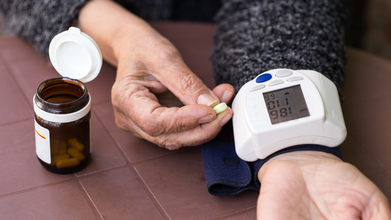
A commonly prescribed blood pressure medication is being pulled from shelves after routine testing revealed possible contamination with another drug. Glenmark Pharmaceuticals Inc., which has its U.S. headquarters in Elmwood Park, New Jersey, has voluntarily recalled more than eleven thousand bottles of bisoprolol fumarate and hydrochlorothiazide tablets, sold under the brand name Ziac. The recall was announced in an online report published by the U.S. Food and Drug Administration.
Why the Drug Was Recalled
According to the FDA, reserve sample testing detected traces of ezetimibe, a medication used to treat high cholesterol. Glenmark manufactures both drugs, and officials say the presence of ezetimibe suggests the tablets may have been cross contaminated during production. The recall affects the 2.5 milligram and 6.25 milligram strengths of the medication, which is used to treat hypertension by helping the heart beat more normally, reducing fluid retention and relaxing blood vessels.
The recall has been classified as Class III, which is the lowest risk category. This means that although the product violates FDA standards, the agency does not expect the contaminated tablets to pose serious or immediate health risks. Class III recalls generally involve issues that are unlikely to cause adverse health consequences. However, the FDA still requires the manufacturer to remove the affected lots from circulation.
Products and Lots Included
The recall covers several bottle sizes packaged for the U.S. market. The affected National Drug Codes are:
- 30 count bottles, NDC 68462 878 30
- 100 count bottles, NDC 68462 878 01
- 500 count bottles, NDC 68462 878 05
According to the FDA report, the impacted lots include Lot 17232401, which has an expiration date of November 2025, and Lot 17240974, which expires in May 2026. The tablets were manufactured in Madhya Pradesh, India for Glenmark’s U.S. division. In total, more than eleven thousand bottles are part of the recall.
What Patients Should Know
Neither Glenmark Pharmaceuticals nor the FDA has issued specific instructions for patients who may have the recalled medication at home. However, standard guidance from GoodRx and other pharmacy resources advises patients to take a few simple steps. Individuals should check the lot number on their medication bottle and compare it with the recalled lots. If the numbers match, patients are encouraged to contact their pharmacist or prescriber to discuss next steps. Most pharmacists will recommend safely discarding the recalled medication and arranging for a replacement prescription.
While the contamination involves only trace amounts of another drug and is not expected to cause serious harm, health experts note that taking medication that has been compromised in any way is not advisable. Patients who rely on bisoprolol fumarate and hydrochlorothiazide for blood pressure control should not stop treatment abruptly without consulting their healthcare provider.
Understanding the Medication
Bisoprolol and hydrochlorothiazide is a combination drug that lowers blood pressure by blocking beta 1 receptors in the heart, increasing urination to remove excess sodium and water, and relaxing blood vessels. It is commonly prescribed to reduce the risk of heart attacks and strokes in patients with hypertension.
With the recall in place, patients are encouraged to stay alert, review their medication labels and reach out to their healthcare team if they believe they have received an affected batch.
Trump Administration Deadnames Transgender Former HHS Officer Rachel Levine in Official Portrait
Credits: iStock
It is no news that ever since the President Donald Trump's administration has signed in, transgenders have seemed to lost their rights, with their research being removed, defunded, and now the administration has changed the name of transgender health leader on her official portrait. The new name used is her head name.
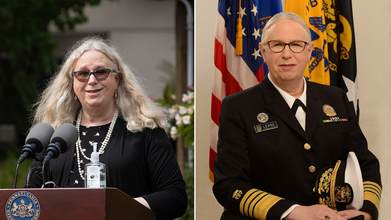
The person in question is Adm. Rachel Levine, who made history in 2021 when she was sworn in as the assistant secretary for health at the Department of Health and Human Services under former President Joe Biden. Levin was nation's highest ranking and openly transgender federal official. Her portrait hands in the HHS office, along with pictures of other federal officials who have led the US Public Health Corps. However, recently, especially after the US government went on a shutdown, HHS has removed Levine's name from her portrait and replaced it with her dead name, reported NPR.
As per the GLAAD, formerly Gay & Lesbian Alliance Against Defamation, a major LGBTQ media advocacy organization, the act of revealing or using a transgender person's birth name without their permission is known as deadnaming.
What Does Levine Say On The Act Of Deadnaming Her?
Adrian Shanker, a former deputy assistant secretary for health policy in the Biden administration and Levine's current spokesperson told the NPR that this act is of "bigotry against her".
“During the federal shutdown, the current leadership of the Office of the Assistant Secretary for Health changed Admiral Levine's photo to remove her current legal name and use a prior name," Shanker told the outlet.
As per Levine, it was a “great honor to serve in the United States Public Health Service Commissioned Corps.” In a statement to The Independent, she said, "My focus has been and continues to be on public health and health equity. I am not going to comment on this type of petty action.”
While the HHS spokesperson Andrew Nixon told that the agency's priority "is ensuring that the information presented internally and externally by HHS reflects gold standard science. We remain committed to reversing harmful policies enacted by Levine and ensuring that biological reality guides our approach to public health," in a statement to NPR.
Trump Administration Against Transgender
Over the last year, Trump administration has rolled back many rights of transgender people.
The U.S. Department of Health and Human Services (HHS) released new definitions for 'sex,' 'man,' and 'woman', an action that has provoked widespread discussion in health, scientific and policy communities. While proponents believe the revisions bring back biological truth, opponents caution that they will weaken science and harm healthcare policies. On February 19, HHS Secretary Robert F. Kennedy Jr. released new federal guidelines that strictly define sex as an unchanging biological category based on reproductive function. The memo claims that sex is genetically determined at birth and does not change throughout life, making it clear that biological sex cannot be altered by medical treatment or self-identification.
The government of the United States abruptly terminated at least 68 grants which were awarded to 46 institutions. This was a total of $40 million in funding. These grants were supporting research which was related to LGBTQ health, and included HIV prevention, youth suicide, cancer and bone health. While some of these funds have already been used, at least $1.36 million was withdrawn from future support. This figure is also an undercount, as estimates were available only for a portion of the cancelled grants.
A new law in South Dakota has restricted transgender people's use of communal facilities in public schools and state-owned buildings. This was implemented from July 1 2025.
The Centers for Disease Control and Prevention (CDC) retracted references to transgender people, gender identity, and equity from its website. This change followed the executive order and a directive from the Federal Office of Personnel Management instructing agencies to eliminate taxpayer-funded programs reflecting "gender ideology". The guidelines issues on Wednesday asked to end "all agency programs that use taxpayer money to promote or reflect gender ideology", and was signed by President Trump.
Family Doctors Say Mental Health Is Over-Diagnosed and Under-Treated

Credits: iStock
According to a latest BBC report, GPs think that many people in England are being over diagnosed with mental health problems. Being stressed does not mean an illness. As per the commonly held view by family doctors, the society tends to over medicalize normal life stresses. However, the doctors are also concerned about the difficulty for the patients who actually have a mental health condition.
Earlier this week, the Health Secretary launched an independent review to understand why more people in England are seeking mental health, ADHD and autism services, and to identify where support is currently falling short.
BBC News sent a questionnaire to more than 5,000 GPs in England to understand their experiences supporting patients with mental health concerns. The 752 responses that came back show just how complicated and emotionally heavy this workload has become for many family doctors.
Of those who took part, 442 GPs said they believed over-diagnosis was a problem. Most felt mental health issues were being slightly over-diagnosed rather than significantly. At the same time, 81 GPs felt the opposite and said under-diagnosis was still a real concern.
Concerns about Limited Support
Over-diagnosis was far from the only issue. Many GPs told us they were deeply worried about the lack of meaningful support available for patients who come to them in distress. The questionnaire included both multiple-choice questions and an open invitation to leave anonymous comments, which many used to explain their frustrations.
One of the most common sentiments was summed up by a GP who said, “Life being stressful is not an illness.” Another reflected on how much expectations have changed, noting that society seems to have forgotten that heartbreak and grief are painful but still part of normal life. Another GP argued that labels like anxiety or depression risk medicalizing everyday emotional struggles, and this could pull resources away from people facing severe and complex needs.
A small number were openly critical of certain patients, with one describing them as “dishonest and narcissistic” and taking advantage of a system that is free at the point of use.
Rising Need Across Age Groups
According to NHS England, one in five adults lives with a common mental health condition. The rate is even higher among young people, where it rises to one in four for those aged 16 to 24.
GPs who responded to the questionnaire identified young adults between 19 and 34 as the age group most in need of mental health support. Some felt young people have become less resilient since the pandemic, with a stronger focus on seeking a diagnosis instead of learning coping strategies. Others disagreed and said the real problem was that services have become increasingly hesitant to assess and diagnose people when needed.
A Growing Workload for GPs
There are nearly 40,000 fully qualified GPs in England. While the responses cannot represent every doctor across the country, they do reveal clear patterns. Almost all GPs with more than five years of experience said the amount of time they now spend on mental health has risen sharply.
They pointed to three main reasons for this increase:
- Supporting patients who are unable to access good quality mental health services elsewhere
- Helping people whose mental health is affected by practical issues like housing, employment or financial pressure
- Seeing patients who believe they have a mental health condition when they may be dealing with normal life challenges
Earlier this year, the Health Secretary said mental health conditions were being over-diagnosed and too many people were being written off. He has since acknowledged that his comments were divisive and did not reflect the full complexity of the situation.
Demand That Services Cannot Meet
It is estimated that 2.5 million people in England have ADHD, including many without a formal diagnosis. Some NHS ADHD services have already stopped accepting new patients because they cannot cope with the demand. Many individuals have told the BBC just how difficult it has become to find proper assessment and care.
Overall, most GPs agreed that the system is not keeping up. Of the 752 respondents, 508 said there was rarely or never enough good quality mental health support for adults in their area. An even larger number, 640, said they were worried about getting young patients the help they need.
One GP called the state of mental health support “a national tragedy”. Another described the situation for children starkly: “A child literally needs to be holding a knife to be taken seriously and the second that knife is put down, services disengage.”
The Pressure to Prescribe
GPs were also asked whether they prescribe medication because they worry patients will not get other types of support, like talking therapies, quickly enough. The most common answer was yes, and that they do this routinely. One GP admitted they often reach for antidepressants even though they know it may only offer short-term relief and does little to prevent future episodes.
Professor Victoria Tzortziou Brown, chair of the Royal College of GPs, said family doctors face a difficult balance. Patients increasingly expect a diagnosis, yet not every emotional difficulty meets the criteria for one. She added that society needs to be careful not to medicalize the full range of normal feelings but also must avoid dismissing genuine concerns.
- Follow Us :


© 2024 Bennett, Coleman & Company Limited