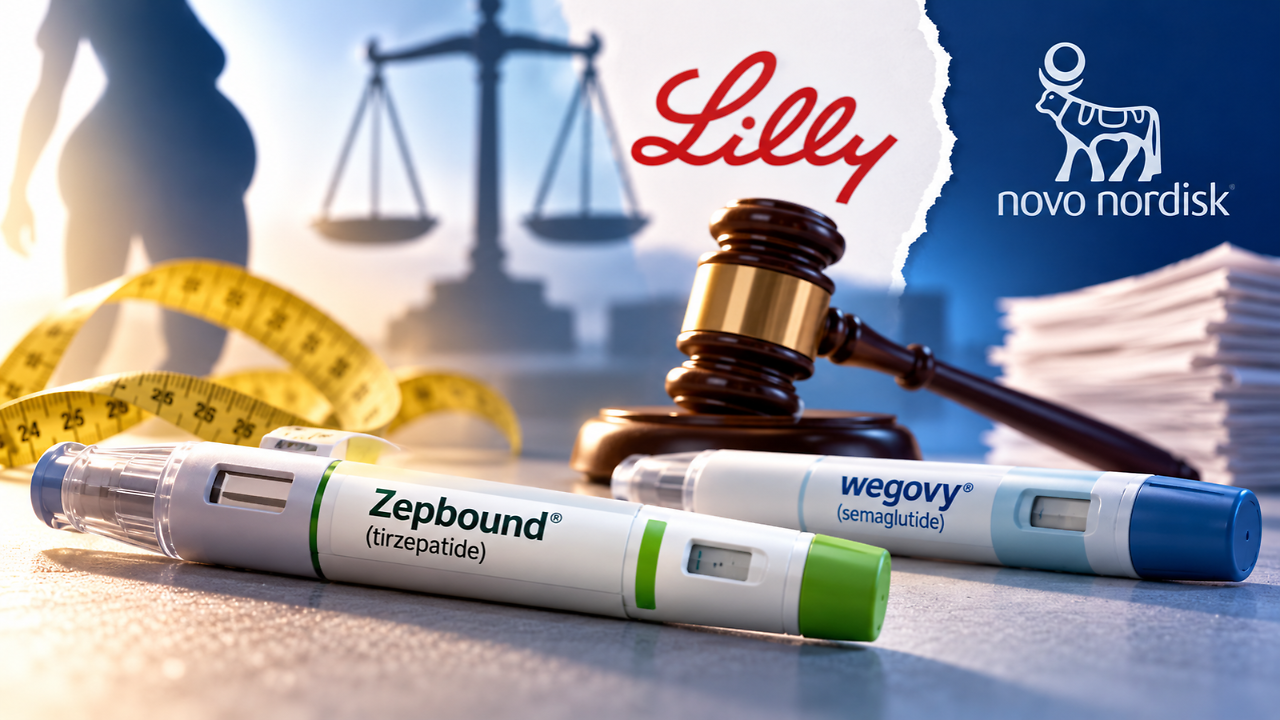
There’s a new update in Novo Nordisk Vs Eli Lilly lawsuit over weight loss ads. On Monday, a US judge ruled in favour of Eli Lilly, rejecting Novo Nordisk’s request to block the Zepbound maker’s advertisements. The Danish drugmaker claimed that those advertisements were false and misleading, which affected markets with tens of billions of dollars of annual sales.Eli Lilly Can Continue Running Ads Amid Novo Nordisk’s LawsuitUS District Judge Zahid Quraishi in Trenton, New Jersey, said that Novo Nordisk must not receive a preliminary injunction, as they have failed to prove that Eli Lilly's ads threatened their sales, marred its goodwill, or caused irreparable damage to clinical reputation.Talking about Novo Nordisk's claim of irreparable harm, Quraishi said they were "inadequate to warrant the extraordinary relief it seeks." Quraishi also said that Novo Nordisk's case is "less than persuasive" based on a "very preliminary record.” Not considering these merits, the judge passed the ruling after a two-day hearing in August.In his 25-page decision, Quraishi said that even though Novo Nordisk's witnesses were reliable, Eli Lilly's ads had a negligible market impact between April and July. The judge also said that Novo Nordisk's business remained stable.The judge also said that monetary compensation could help Novo Nordisk if it faces any "nontrivial harm" due to absence of injunction.Novo Nordisk had reported combined sales of about $32 billion for obesity medicines and Ozempic in 2025, according to the court papers. The drugmaker intends to regain market share in the United States for its injectable obesity drugs, a market that could exceed $100 billion by the end of the decade.According to Reuters, Novo Nordisk said, “While we are disappointed with the court’s decision, today's ruling did not decide the question of whether Lilly's advertising is false and misleading, and this litigation is still ongoing. Everyone deserves clear, accurate and up-to-date information when making decisions about their health.”Denying any wrongdoing, Eli Lilly said it welcomed the court’s decision.Also read: GLP-1 Drugs Ozempic, Zepbound Use Rises 24-Fold Among American Women After ChildbirthWhat Is The Lawsuit About? In July, Danish drugmaker Novo Nordisk had filed a lawsuit against Eli Lilly in the US District Court in New Jersey, alleging the company violated federal and state false advertising and unfair competition laws, including the Lanham Act, through nationwide advertising campaigns for its obesity drug Zepbound and diabetes treatment Mounjaro, according to media reports.Alleging that Eli Lilly’s ads used outdated comparisons,Novo claims Lilly's advertisements:Compared the highest approved doses of Zepbound and Mounjaro with lower doses of Novo's Wegovy and Ozempic.Omitted data on the newer 7.2 mg dose of Wegovy, which, as per Novo, delivers greater weight loss.Relied on older clinical trial data that no longer reflects current approved dosing.Eli Lilly rejected the allegations, saying its advertisements accurately reflect findings from its SURMOUNT-5 clinical trial. According to the company:The study, completed in 2024, compared 10 mg and 15 mg doses of Zepbound with 1.7 mg and 2.4 mg doses of Wegovy.Novo's 7.2 mg Wegovy received US FDA approval only in March 2026, after the trial had concluded. More About GLP-1 TherapiesAlso read: Eli Lilly's Experimental GLP-1 Pill Shows Promising Weight LossIn December 2025, the World Health Organization (WHO) issued its first guideline on the use of GLP-1 therapies for obesity, describing the condition as a chronic, relapsing disease affecting more than 1 billion people worldwide. It recommends GLP-1 therapies may be used for long-term obesity treatment in adults, excluding pregnant women. Treatment should be combined with structured lifestyle interventions, including a healthy diet, regular physical activity, and behavioral support to improve outcomes.Dr. Vivek Bindal, Principal Director & Head at Max Institute of Minimal Access, Bariatric & Robotic Surgery, said, “Newer anti-obesity medicines, including GLP-1-based and related therapies, have significantly expanded the options available to patients. They can support meaningful weight loss and improve metabolic health when combined with appropriate nutrition, physical activity and behavioural support.”