
- Health Conditions A-Z
- Health & Wellness
- Nutrition
- Fitness
- Health News
- Ayurveda
- Videos
- Medicine A-Z
- Parenting
Fact Check: Does Ja Morant Have Lung Cancer?

Credits: Wikimedia Commons
Does Ja Morant have lung cancer? Recently, the Memphis Grizzlies star's health status has become a heated topic, with many speculating whether he has lung cancer. This all started with unfounded rumors on TikTok that suggested that he was diagnosed with lung cancer. This alarmed many fans.
Fact Check: Does Ja Morant Have Lung Cancer?
The lung cancer rumors were sparked by a fake video, which was posted by a user named Templex. The video features a fraudulent tweet by Morant's father that claimed that Morant would have to miss an entire season due to lung cancer diagnosis. The tweet also referenced a Bible verse.
The video garnered over 10,000 views and got nearly 4k likes. The misinformation is what led to the fans believing that he had cancer. However, the creator later expressed doubts about the authenticity of the claims. While some prayed for his recovery, other criticized Templex for spreading false information.
Another doctored screenshot of the tweet from January 26 read: "Just got the toughest news of my life, lung cancer. I won't be playing this season, but I am trusting God through it all". It also features a verse from Psalm 28:7. However, no such tweet was posted on X when Health and Me checked Morant's X account. This further confirms that the news is not authentic.
While Morant does not have lung cancer, as no verified sources have confirmed the news and the creator himself too questioned the authenticity of the video. Morant did undergo health checks due to his ulnar collateral ligament injury to his left elbow during a game against the Atlanta Hawks. The Grizzlies later said, on January 24, that he is expected to make a full recovery and will be re-evaluated in about three weeks.
Before that, Morant had missed six straight games with a right calf contusion. Altogether, he has been unavailable for 25 of the team’s 45 games this season, leaving many fans frustrated as they wait to see him back on the court.
What Is Lung Cancer?
Lung cancer is a malignant growth that begins in the tissues of the lungs, usually from DNA damage in the cells lining the airways, which then grow uncontrollably to form tumors. Smoking is a major contributor, but other factors such as exposure to radon, asbestos, or inherited genetic conditions can also play a role.
Symptoms often include a persistent cough, chest pain, and difficulty breathing. Lung cancer is mainly classified into two types: Non-Small Cell Lung Cancer (NSCLC) and Small Cell Lung Cancer (SCLC), according to the Cleveland Clinic.
Types Of Lung Cancer
Although many cancers can develop in the lungs, the term “lung cancer” usually refers to two main types: non-small cell and small cell lung cancer.
Non-Small Cell Lung Cancer (NSCLC)
NSCLC is the most common form, accounting for more than 80% of lung cancer cases. Common subtypes include adenocarcinoma and squamous cell carcinoma, while adenosquamous carcinoma and sarcomatoid carcinoma are less frequent forms of NSCLC.
Small Cell Lung Cancer (SCLC)
SCLC tends to grow more quickly and is more challenging to treat than NSCLC. It is often detected as a small tumor that has already spread to other areas of the body. Types of SCLC include small cell carcinoma (also known as oat cell carcinoma) and combined small cell carcinoma.
Icotyde: US FDA Approves Johnson & Johnson's Pill For Psoriasis
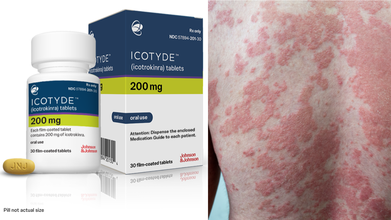
Credit: J&J/Canva
The US Food and Drug Administration has approved Johnson & Johnson's once-daily pill for psoriasis -- a chronic skin disease.
Icotyde is an interleukin-23 (IL-23) receptor antagonist approved for the treatment of moderate-to-severe plaque psoriasis in adults and pediatric patients 12 years of age and older.
Psoriasis is an autoimmune condition that causes rough patches of skin. The new once-daily pill has been found safe and also delivers complete skin clearance.
Also Read: Why Regulatory Clarity Is Important for Safe Aesthetic Procedures in India
In the statement, J&J said that the approval will lead to a first-line systemic treatment of plaque psoriasis with a targeted oral peptide.
“Icotyde delivers something unique in psoriasis treatment – combining skin clearance with a favorable safety profile in a once‑daily pill, making it an easy addition to a patient’s routine,” said Linda Stein Gold, Director of Dermatology Clinical Research at Henry Ford Health.
The novel pill also aligns with the recent International Psoriasis Council guidance that suggests transitioning to systemic therapy if two cycles of topical medications applied for four weeks fail to bring meaningful improvement.
Icotyde will prove to be “a potential game‑changer for many adult and adolescent patients”, Gold said.
The FDA’s approval is based on an unprecedented body of evidence from the phase three clinical trial, which simultaneously evaluated Icotyde in adults and adolescents, and found it a safe and effective oral pill, and also better than injectables and topical creams.
According to analysts from Wall Street, Icotyde has "blockbuster potential," and the once-daily medication could capture significant market share from injectables like Skyrizi and J&J's own Tremfya, Reuters reported.
J&J is also studying the drug, chemically known as icotrokinra, for ulcerative colitis, psoriatic arthritis, and Crohn's disease.
What Is Psoriasis?
Psoriasis develops when the body makes skin cells too quickly. It causes skin cells to pile up and form visible patches or spots on the skin, which may be itchy or painful.
The condition, however, is not contagious.
According to the National Psoriasis Foundation, the skin disease affects 8 million Americans and more than 125 million people worldwide.
The condition impacts physical comfort and quality of life, especially when lesions are on visible or sensitive areas.
The plaques typically appear as raised patches with a silvery white buildup of dead skin cells or scales. They can appear anywhere on the body, although they most often appear on the scalp, knees, elbows, and torso.
Who Can Use Icotyde
Icotyde is currently approved in the US for the treatment of people with moderate-to-severe plaque. It can be used by
- adults, and pediatric patients 12 years of age and older
- who weigh at least 40 kg.
Ohio TikTok Star Rachel Tussey Dies After Cosmetic Surgery Complications

Credit: Gofundme.com
Rachel Tussey, a 47- year-old TikTok influencer from the US state of Ohio, has reportedly died following complications from the cosmetic “mommy makeover” surgery.
The “mommy makeover” tummy tuck procedure left Rachel's brain dead and was later pulled from life support, the New York Post reported.
Her death was confirmed by her husband, Jeremy Tussey, on March 18 through an update shared on a GoFundMe page created to support the family.
What Happened To TikTok Star Rachel Tussey
Rachel, with more than 27,000 TikTok followers, described herself as “over 40 & fabulous”. She had been documenting her story and her preparations, excitement, as well as her fear, ahead of the upcoming abdominoplasty procedure.
In her last video posted on the day of her surgery on February 25, she told her followers that she had “waited a really long time for” the procedure.
“I’m in good hands. I know God’s got my back. Let’s do this,” an enthusiastic Tussey dressed in a hospital gown said in the video.
While her surgery was successful, her husband was also able to speak with her briefly afterward. However, Jeremy informed his wife's followers that her face had gone pale, and later became unresponsive. Cincinnati.com reported.
Did Rachel Tussey Die Due to Medical Neglect?
In the GoFundMe page, Jeremy cited “medical neglect” that led to complications.
“Following the procedure, she suffered severe brain damage after extended loss of oxygen and was placed on a ventilator under sedation,” he said.
In his TikTok post, Jeremy told her followers that he believes the dose of painkillers given to his wife at the surgery center was too high.
“To me, it looks like incompetency. Somebody dropped the ball here,” the grieving husband said. “Somebody dropped the ball and killed my wife.”
Due to “very minimal brain activity”, on March 5, Jeremy took the “heartbreaking decision to remove her from life support”.
“Rachel was an amazing wife, mother, and person who touched so many lives. We will carry her memory with us always,” the page said.
She is survived by her husband and three children.
What Is Abdominoplasty?
The abdominoplasty, commonly referred to as a "tummy tuck", is a plastic surgery procedure that helps reduce excess skin and fat around the abdomen.
While it is not a weight loss solution, the procedure can help flatten the stomach and also tighten the abdominal muscles, and give an aesthetic look.
Plastic surgeons performed over 160,000 tummy tuck (abdominoplasty) procedures in the United States in 2022.
It is commonly preferred by:
- men and women desiring aesthetic improvement of the abdomen,
- women with significant skin and abdominal wall laxity following multiple pregnancies,
- bariatric patients who have excessive skin following significant weight loss.
However, patients undergoing the surgical procedure must have a good nutritional status, as well as optimal overall medical health.
Patients with a higher body mass index (BMI) and diabetes mellitus may be at significant risk post-surgery.
UK Meningitis Outbreak: Cases Rise To 20; 9-month-old Baby Battles For Life In Intensive Care

Credit: Canva
The “unprecedented” wave of meningitis outbreak in the UK's Kent, which claimed two lives, has risen to 20 cases, according to health officials.
While almost all cases have been linked to those who visited the Club Chemistry nightclub in Canterbury between March 5 and 7, a 9-month-old baby from Folkestone is reportedly battling for life in the intensive care unit.
The UK Health Security Agency (UKHSA), in a statement, noted that it is aware of a baby with confirmed Meningococcal group B infection who is not currently linked to the outbreak. The agency said it will continue to investigate the case.
The baby Nala-Rose Fletcher, from Folkestone, is currently in intensive care at Evelina London Children’s Hospital. According to doctors, she will be permanently affected by the infection, the Independent.co.uk reported.
Meanwhile, another university in the city confirmed a case of meningitis on Wednesday. The student at Canterbury Christ Church is believed to be a man who was at the nightclub and part of the 20 known cases.
“We have reached out to support the individual directly, and student wellbeing and support are reaching out and making themselves available to support fellow students more widely,” Canterbury Christ Church University said in a statement.
“We have followed UKHSA advice and informed the limited number of close contacts of the individual that they should receive precautionary antibiotics, if they have not done so already,” it added.
The Meningitis Outbreak May Have Contained
The UK health officials believe that the “unprecedented” wave of meningitis outbreak may have been “contained” as no new cluster of cases has been reported.
Health officials from the NHS, the UKHSA, and county council public health staff tackling the outbreak noted that the 20 people diagnosed with the illness have not infected anyone outside the area, the Guardian reported.
“We may have contained it. There are no cases popping up elsewhere that we know of – no cases that we know of outside the cluster – or not yet anyway,” said an official involved in the multi-agency response.
Notably, the officials have identified the outbreaks linked to a known strain of meningitis B, the report said. Six of the nine confirmed cases are group B (MenB), the agency added.
UKHSA In Prompt Action
The UKHSA has been prompt in action since the outbreak first began in Kent.
“As of 5 pm on 17 March, 9 laboratory cases are confirmed, and 11 notifications remain under investigation, bringing the total to 20. Six of the confirmed cases are confirmed to be group B meningococcal disease,” the agency said.
A 21-year-old student at the University of Kent and a teenage student at a school in the town of Faversham have died in the outbreak.
The agency has also rolled out the MenB vaccine to 5,000 students living in the University of Kent halls of residence in Canterbury.
In addition, over 2,500 doses of antibiotics -- the most effective treatment to limit the spread of invasive meningococcal disease -- has been given to students, close contacts, and others, including some of those who attended Club Chemistry between March 5 and 7.
Further, calling the illness in the Kent outbreak “severe, with rapid deterioration”, the UKHSA has issued an urgent alert to all NHS doctors in England. It advised the healthcare workers to to look for meningitis symptoms and to wear personal protective equipment before giving suspected patients antibiotics.
What is Meningococcal disease?
Caused by meningococcal bacteria, the meningococcal disease leads to inflammation of the lining of the brain also called as meningitis. The condition can also lead to sepsis or blood poisoning.
As the onset can be sudden, knowing the signs and symptoms and acting quickly is important.
Common symptoms include:
- rash
- sudden onset of high fever
- severe and worsening headache
- vomiting and diarrhoea
- joint and muscle pain
- seizures
- Follow Us :


© 2024 Bennett, Coleman & Company Limited