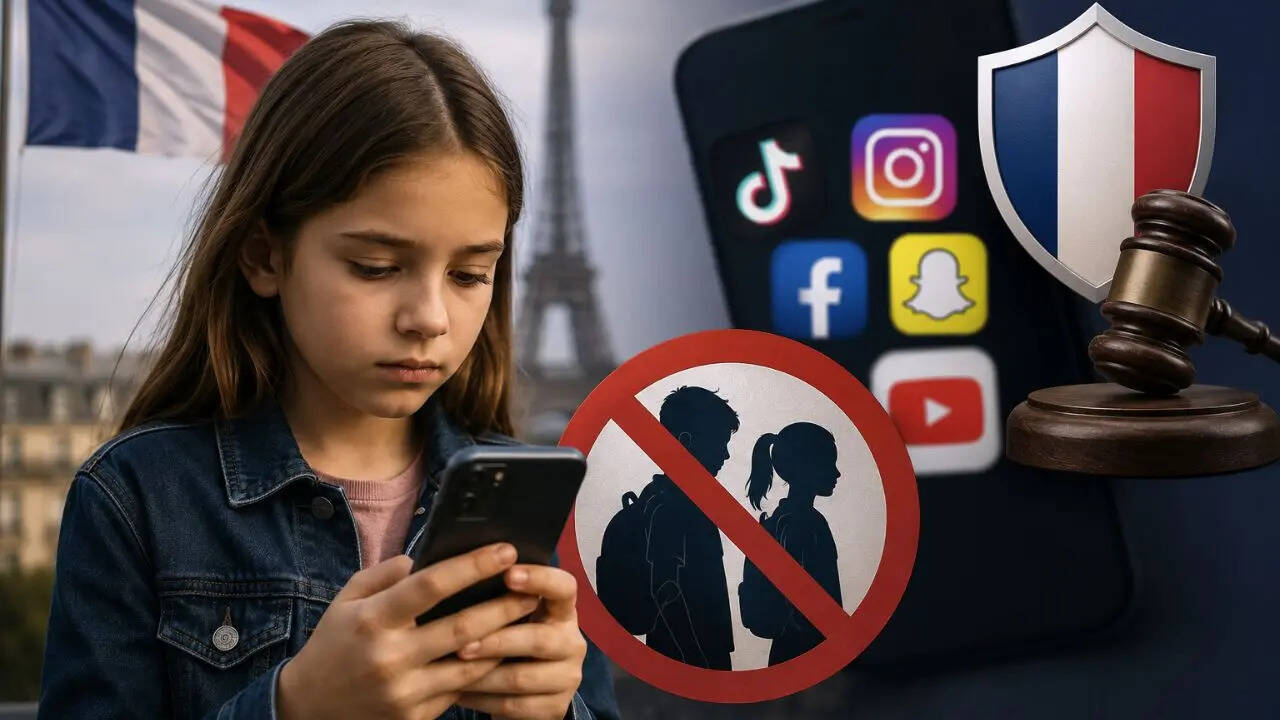
France has passed landmark legislation banning children under the age of 15 from accessing social media, becoming the first country in the European Union to adopt the policy. The move comes amid growing global concern over the impact of social media on young people's mental health, online safety, and overall well-being. The law, approved by both houses of the French Parliament on July 21, is expected to come into force on September 1, 2026, before the start of the new school year. The move arrives after months of debate over increasing rates of cyberbullying, excessive screen time, exposure to harmful online content, and the effects of social media on children's mental health. France Bans Social Media For Children Under 15 Children younger than 15 will no longer be allowed to create or maintain accounts on social media platforms. Tech companies operating these platforms will be required to implement watertight age-verification systems as well as remove existing accounts belonging to underage users. French President Emmanuel Macron who has repeatedly voiced concerns about the effects of excessive screen time and social media on children and adolescents, described the legislation as "a major step towards protecting our children" and said the aim is to help young people grow into "responsible citizens" in an increasingly digital world. The legislation is aimed at reducing risks associated with: Anxiety and depressionCyberbullyingSelf-harm and suicide-related contentSleep disruptionExposure to inappropriate or harmful materialSocial media addictionAlso read: Rain = No Playground; How Reduced Outdoor Activity During Monsoon Affects Children's Immunity, Weight & Mental HealthAlthough the law has received political support, experts say implementation may prove challenging. Technology companies have long argued that verifying users' ages at a large scale is technically complex and raises concerns over data protection. The legislation may also face legal scrutiny regarding compatibility with European Union digital regulations and constitutional protections before full implementation. France is not the first nation to tighten restrictions on children's social media use. Australia became the first country to introduce a nationwide ban for children under 16 on platforms like Facebook, Snapchat, TikTok and YouTube. Several European nations, including Greece, Germany, Denmark and Spain, are considering similar measures. Can A Social Media Ban Positively Impact Children's Mental Health? HealthandMe spoke to Dr. Nivedha P, MD Psychiatry, Athulya Geriatric Care Hospital, about the impact social media has on young, developing brains and if a ban can truly improve their mental health. She says, "As a psychiatrist, I understand why countries are becoming concerned. Today, children are growing up in a digital world, and social media has become a part of their everyday life. But at the same time, we’re seeing more anxiety, low self-esteem, sleep problems, cyberbullying, and even symptoms of depression among young people. So, the concern is definitely real. Talking about if a social media ban for pre-pubescents and teenagers could help, she says that a ban alone is not enough to regulate screen time among children.Also read: Babies Without Vitamin K Shot At Higher Risk Of Brain Bleeding: Study She explains, "It may help to some extent because it reduces early exposure during a very sensitive stage of brain development. But I don’t think a ban alone is the answer." The expert says that technology isn’t going anywhere. The goal shouldn’t be to make children afraid of technology, but to help them become emotionally mature enough to use it wisely. The best approach, according to her, is a combination of sensible regulations, parental guidance, digital literacy, and creating safe online spaces. She adds, "If a child doesn’t learn how to use technology in a healthy way, they’ll eventually face the same challenges when they gain access later. So, instead of only saying ‘don’t use social media,’ we should also teach children how to use it responsibly." The Quality Of Offline Life Matters According to the expert, parents also have a huge role in ensuring children do not get addicted to social media. Many children don’t need more screen time, they need more conversations, more play, more family time, and adults who model healthy digital habits. Dr. Nivedha says, "We often focus on what children are doing online, but we should also ask what kind of offline life we’re creating for them." At the end of the day, protecting children’s mental health is not just the responsibility of governments. It’s a shared responsibility between parents, schools, healthcare professionals, technology companies and society as a whole. She adds, "A ban may buy us some time, but what truly protects a child’s mental health is teaching them emotional resilience, healthy relationships and responsible digital habits."