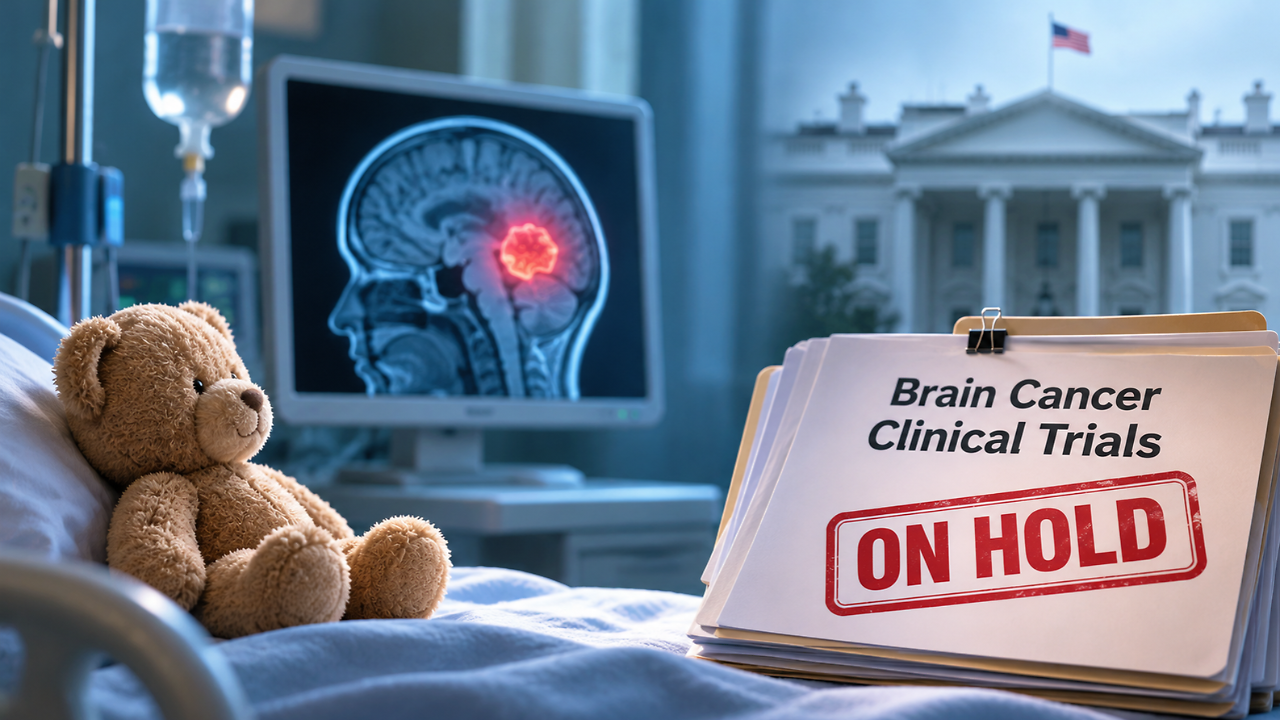
Clinical trials investigating experimental treatments for rare, aggressive childhood brain cancers have been disrupted after the closure of a US research consortium that was in operation for 27 years. The shutdown of the Pediatric Brain Tumor Consortium (PBTC), after the National Cancer Institute (NCI) declined to renew its funding, has caused significant delays and rendered desperate families searching for alternative treatment options.The consortium was composed of 16 leading children's hospitals and academic medical centres across the US, aiming to investigate new treatments for aggressive brain tumours, including diffuse intrinsic pontine glioma (DIPG) and ependymoma.The NCI informed consortium leaders about the decision in August 2025, ending its approximately $4 million annual grant. Eight ongoing clinical trials were subsequently halted, according to The New York Times.The consortium formally dissolved in September 2026. Researchers say the disruption has affected not only ongoing studies but also the infrastructure and resources needed to develop new treatments for childhood brain cancers.DIPG Is One Of The Most Aggressive Childhood Brain CancersAlso read: Losing Balance While Walking? Doctors Explain When It Could Be A Neurological Warning SignDIPG is a rare, aggressive brain tumour that usually affects children between four and 10 years of age. It develops in the pons, a part of the brainstem which is responsible for essential functions like breathing, heart rate, coordination and balance.Since the tumour grows within critical brain tissue and spreads through the brainstem, it cannot be removed through surgery. Clinicians describe it “like sand in grass”. Radiation therapy is commonly used to fight the tumour but its benefits are temporary. There is currently no established treatment. The average survival after diagnosis is approximately nine to 12 months.With limited treatment options, clinical trials investigating experimental therapies are a need of the hour for children suffering from DIPG.Research And Clinical Trials That Were Affected Due To Funding ClosureAlso read: AIIMS Delhi Performs India's First Open Fetal Surgery To Repair Spina Bifida The closure disrupted several studies exploring experimental treatments for childhood brain tumours.One of the affected studies, PBTC-059, was a Phase 1 trial investigating CAR-T cell therapy in children with ependymoma. CAR-T therapy entails modifying a patient's immune cells to identify and attack cancer cells.Another study, PBTC-N14, was discontinued too. Researchers at Memorial Sloan Kettering Cancer Center were investigating whether cerebrospinal fluid samples could provide genetic information similar to that obtained through an invasive brain biopsy, reducing the need for surgery in some children.Researchers were also exploring other experimental options for DIPG, including cancer vaccines and devices that can deliver electrical stimulation to the brain.According to the NCI's updated information, some paused trials are expected to reopen to patient enrolment in late 2026 or early 2027. But the interruption has created a significant gap and delay for families who were previously able to access these trials.27 Years Of Research Data At StakeAlso read: Beth Dobbin's Myalgic Encephalomyelitis Campaign Gains Support From 360 Sportspeople: Why Are They Urging UK PM To Act? The consequences of the consortium's closure extend well beyond clinical trial enrolment and patient welfare. At St. Jude Children's Research Hospital, 27 years of research data involving more than 2,000 children with rare brain tumours had to be archived. Hundreds of biological samples, including tumour tissue, blood and spinal fluid collected from patients, also had to be returned to hospitals or destroyed if they could not be retained.Researchers have raised concerns that losing the consortium's dedicated infrastructure and centralised data-access system could make it harder for scientists to resume these studies and build on previous findings.Ira Dunkel, a paediatric oncologist at Memorial Sloan Kettering Cancer Center and former chair of the consortium, described the closure as “catastrophic” and one of the worst professional moments of his career.Why Did The US Government Shut Down PBTC? The NCI said the decision was taken to improve efficiency by moving the consortium's data into the larger Pediatric Early Phase Clinical Trials Network. The institute also said enrolment in some consortium studies had slowed. But researchers argued that the smaller patient populations and the highly targeted nature of experimental treatments make specialised research areas particularly important.After the decision, NCI announced that approximately $4 million would be allocated to the larger network to strengthen paediatric brain tumour research and accelerate Phase 1 clinical trials.The $4 million grant also seemed insufficient compared to the $732 million that the NIH spends annually on childhood cancer. But according to Dunkel, it was “hugely important”. But researchers and patient support groups have questioned whether the larger network can immediately and effectively replace the consortium's specialised expertise, proven collaborations and research infrastructure.A bipartisan group of lawmakers from New York called wrote to Health and Human Services Secretary Robert F. Kennedy Jr., urging to reverse the decision. “We cannot afford to take this step backward,” the group said. Families dealing with aggressive childhood brain cancers are helpless in the light of consortium closure. With some children having less than a year after diagnosis, such setbacks mean losing access to potentially life-saving or extending experimental treatment opportunities that may not become available again in time.