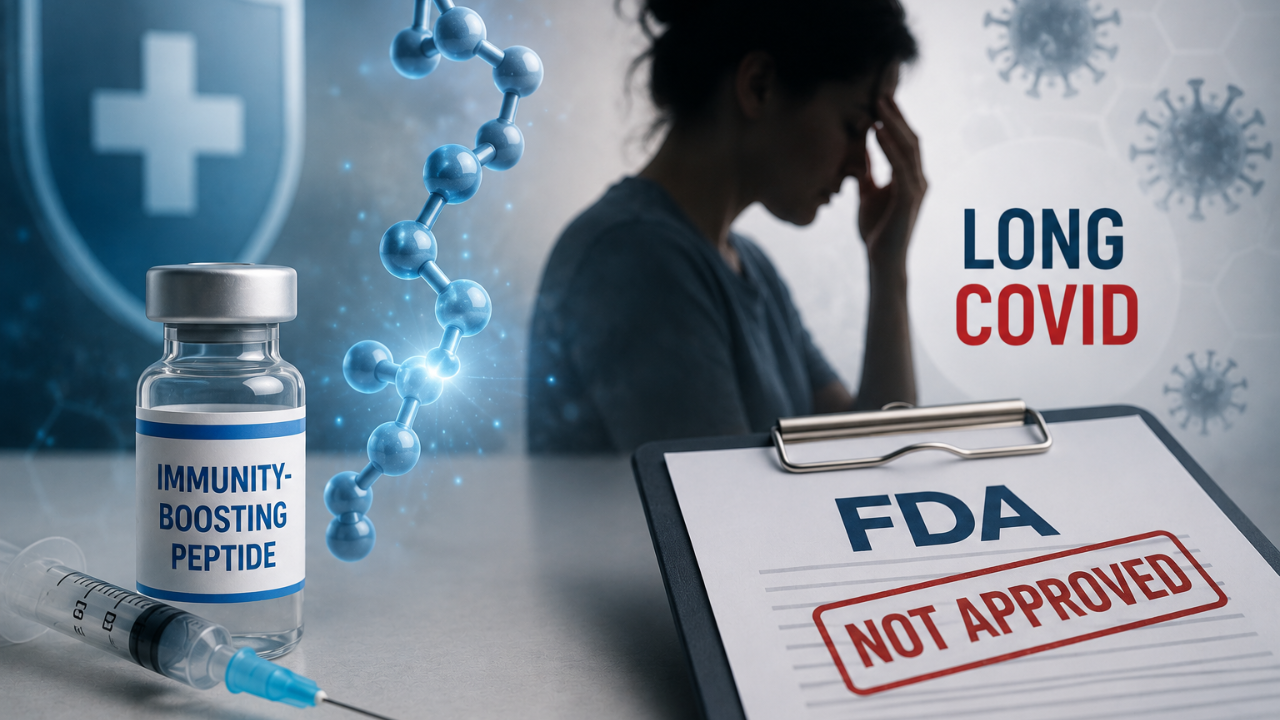
An immunity-enhancing peptide that has been used in more than 30 countries has gained attention as a possible treatment for Long COVID. But in the US, the peptide, thymosin alpha-1 remains unapproved. The FDA raising concerns about how the synthetic peptide is developed, formulated and dosed. Thymosin alpha-1, also known as Tα1 or thymalfasin, is a 28-amino-acid peptide originally derived from the thymus. It is designed to modify the immune response rather than simply suppress inflammation. Research suggests it can enhance T-cell activity and antibody responses, which has made it particularly interesting in conditions involving immune dysfunction. Peptide And Long COVID Connection Long COVID, also known as post-acute sequelae of SARS-CoV-2 infection, has been associated with persistent immunity-related abnormalities in some patients. Research has found that Tα1 may help restore aspects of immune balance in people with post-acute COVID-19. A 2023 study found that the peptide improved immune homeostasis in blood cells from people with Long COVID. Its effects are particularly evident among patients with more severe initial disease and certain persistent symptoms. The proposed idea is that rather than simply treating individual symptoms such as fatigue or brain fog, Tα1 could potentially correct some of immune abnormalities underlying them. The Long COVID findings are still largely based on laboratory and early-stage research. They do not yet establish that injections of Tα1 improve Long COVID symptoms in a large, well-controlled patient population.Also read: Diabetics Must Undergo Retinal Screening To Protect Eye Health: AIIMS Doctors So Why Hasn’t The FDA Approved It? Tα1 has been studied for several conditions, and it is approved in many countries. But FDA approval requires evidence for a specific product, formulation, dose, safety profile and effectiveness. In the US, thymosin alpha-1 is not FDA-approved for Long COVID or another general medical condition. The FDA has also raised specific concerns about compounded Tα1. In a 2024 review, the agency evaluated proposed injectable Tα1 products and highlighted concerns including product stability, concentration and the possibility of immune reactions caused by peptide aggregation. The proposed 3 mg/mL formulation also differed from the 2 mg/mL concentration used in clinical studies reviewed by the agency. Another crucial distinction is that the biological activity in a peptide does not mean that a particular manufactured product is safe and effective at a specific dose.Also read: Early Trial Examines A One-Time Treatment That Could Replace Statins To Manage High Cholesterol: Study Is The Peptide Truly Capable Of Treating Long COVID? Some research regarding the peptide’s efficacy on Long COVID is encouraging, but the evidence remains limited. Studies of Tα1 in acute COVID-19 have also produced mixed results. One clinical study found that it did not alter disease progression or mortality in non-severe COVID-19, although it shortened viral RNA shedding and hospital stay. Other research has suggested potential benefits in severe disease, but these studies have limitations. That uncertainty matters even more for Long COVID, where symptoms can vary dramatically between patients and the biological mechanisms remain incompletely understood. The FDA’s decision does not mean research into Tα1 has been halted. A US clinical trial is currently evaluating thymalfasin as an immune-response enhancer given around COVID-19 vaccination, with the study assessing safety and whether it can improve