
- Health Conditions A-Z
- Health & Wellness
- Nutrition
- Fitness
- Health News
- Ayurveda
- Videos
- Medicine A-Z
- Parenting
Is Ozempic Really Safe? Health Canada Logs Nearly 12,000 Side Secondary Effect Cases
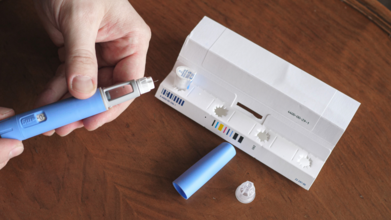
Credits: Canva
Canada’s leading drug regulator is facing a growing wave of concern over the popular diabetes and weight-loss medication Ozempic, after thousands of reports of adverse effects, some of them being severe, were recorded nationwide.
A Surge in Reports
Health Canada confirmed it has received 11,707 individual reports of adverse reactions linked to drugs containing semaglutide, including Ozempic, Rybelsus, and Wegovy, since their introduction to the Canadian market seven years ago.
The agency has collected 2,706 separate reports detailing these side effects, about half coming from health professionals and half from patients, according to data obtained by Le Journal de Montréal.
Also Read: World Suicide Prevention Day 2025: Theme, History, And Significance
The reported issues range from relatively mild gastrointestinal discomfort to severe events such as poisoning, vision loss, and psychiatric disorders. Gastrointestinal complaints alone account for one-third of the reports — highlighting how common nausea, vomiting, and constipation are among users.
Patients Speak Out
For patients like Liliana Mejia, the experience was devastating.
“It was horrible,” she told Le Journal. “Everything made me want to vomit, my vision was blurred, [I was] tired and constipated for 10 days.”
She stopped using the drug after a little over a year but says she wishes she had been warned about the potential impact earlier. “I don’t think we talk about it enough,” Mejia added.
Her story mirrors that of many Canadians now speaking out about their struggles.
Powerful But Not Risk-Free
Ozempic was originally designed as a treatment for type 2 diabetes but has skyrocketed in popularity due to its ability to suppress appetite, leading to rapid weight loss.
“It’s a powerful and effective drug that has many benefits, but also side effects that need to be managed,” explained Dr. Rémi Rabasa-Lhoret, endocrinologist and researcher, in comments to Le Journal.
He emphasized that the reports do not necessarily prove a direct cause-and-effect relationship between Ozempic and the complications, but said that listening to patients is crucial. “It requires proper medical monitoring,” he noted, stressing that it should not be used casually or without supervision.
Psychiatric Concerns and Risky Trends
Among the most worrying findings are the psychiatric problems reported by patients, 470 cases have been logged so far. Dr. Rabasa-Lhoret said he has seen patients spiral into eating disorders such as anorexia due to overuse of the drug.
He also pointed to the unprecedented demand for Ozempic, comparing the craze to the hype around Viagra when it first launched. “Many people have started prescribing it without providing proper support to patients,” he lamented, adding that the rise of online pharmacies has made it dangerously easy to obtain the drug without adequate oversight.
Vision Loss and Rare Neuropathies
One of the most troubling side effects being investigated is non-arteritic anterior ischemic optic neuropathy (NAION), a rare condition that can lead to permanent vision loss.
Jacques Pépin, 69, of Repentigny, Quebec, believes Ozempic played a role in the two strokes he suffered in his eyes over the past year.
“I wouldn’t have taken it if I had known,” Pépin told Le Journal.
He has now lost much of his sight and says he can no longer drive, read, or enjoy his favorite hobby — building model airplanes. “I break glasses, I have no balance,” he said, describing how the vision loss has upended his life.
Health Canada has logged 10 cases of NAION and is currently “reviewing relevant preliminary information on the potential risk.” Novo Nordisk, the drug’s manufacturer, denies a causal link, though its European labels are being updated to include NAION as a potential adverse reaction.
Balancing Benefits and Risks
Despite the concerning data, experts caution against panic. Sherbrooke endocrinologist Dr. André Carpentier told Le Journal that while the list of side effects can seem alarming, the drug’s benefits, from controlling diabetes to protecting heart and kidney health, are significant and must be weighed carefully against the risks.
“The link with Ozempic is difficult to establish beyond doubt,” Dr. Carpentier said, noting that certain complications, like sudden drops in blood sugar, can themselves trigger issues like vision problems.
Health Canada continues to collect and analyze data, and experts stress that the key is proper prescription, patient education, and close monitoring. For patients like Mejia and Pépin, however, the damage is already done, and their stories are sparking calls for more transparency about what users can expect before starting these medications.
Kent Uni Meningitis Outbreak Caused By Less-Targeted Strain B

Credits: Canva
A deadly meningitis outbreak in Kent has claimed two young lives and left several others seriously ill, prompting health authorities to urgently warn students and young people in the area.
According to reports, the outbreak involves invasive meningitis, a severe infection that spreads quickly and can become life threatening within hours. One of the victims was a student at the University of Kent, while the other was a Year 13 pupil from Faversham. Most of the affected individuals are between 18 and 21 years old, and several are university students.
Health officials say at least 11 people from the Canterbury area have been hospitalized and are currently receiving treatment.
The UK Health Security Agency (UKHSA) has begun contacting more than 30,000 students, staff members, and their families to inform them about the outbreak and the precautions being taken.
Read: Meningitis Outbreak: University of Kent Student Among Two Who Died of the ‘Invasive’ Disease
Strain B Identified As The Cause
Government scientists have now confirmed that the outbreak is caused by meningococcal strain B, a type of bacteria that many young people have not been vaccinated against.
Gayatri Amirthalingam, deputy director of immunization and vaccine preventable diseases at the UKHSA, said laboratory testing identified the strain responsible for the cluster of infections.
She explained that teenagers in the UK usually receive a meningococcal vaccine around the age of 13 or 14, but that vaccine protects against strains A, C, W, and Y, not strain B.
This means many teenagers and young adults remain vulnerable unless they received the meningitis B vaccine privately.
Why Many Young People Are Not Vaccinated
The meningitis B vaccine was introduced into the UK’s National Health Service routine immunization schedule for babies in 2015.
As a result, people born before 2015 would not have received the vaccine through the public programme. Some may have chosen to get it privately, but many did not.
Private vaccination can cost between £100 and £120 per dose in the UK, and a full course generally requires two doses.
Experts say this gap in vaccination coverage may partly explain why university-age students are susceptible during outbreaks.
Antibiotics Being Offered As Preventive Measure
Health authorities are urging anyone who may have been exposed to the infection to take preventive antibiotics immediately. UKHSA has specifically advised people who visited Club Chemistry in Canterbury between 5 and 7 March to come forward for antibiotic treatment as a precaution.
Officials say taking antibiotics quickly can help stop the bacteria from developing into disease and also prevent it from spreading to others. Amirthalingam reassured students that those who have received antibiotics can safely travel home and be around family members.
Can Sharing Vapes Spread The Infection?
The disease spreads mainly through close contact, including activities where saliva is shared. Amirthalingam noted that sharing vapes can be one possible route of transmission, although it is not the only one.
Experts say anything that goes into the mouth, including drinks, cigarettes, or vapes, can potentially pass bacteria from one person to another.
Because meningococcal bacteria can live in the throat and nose, close social contact among students often increases the risk during outbreaks.
What Is Meningitis?
Meningitis is an infection that causes inflammation of the meninges, the protective membranes surrounding the brain and spinal cord.
The illness is most often caused by bacterial or viral infections, although fungal and other causes are also possible.
Symptoms can include fever, headache, stiff neck, confusion, and sensitivity to light. In severe cases, bacterial meningitis can lead to hearing loss, neurological complications, or death if treatment is delayed.
Doctors stress that early recognition and immediate medical care are critical because the condition can worsen rapidly within a few hours.
AIIMS Delhi Sets Up Team To Process India's First Ever Passive Euthanasia For Harish Rana

"God asks no man whether he will accept life. That is not the choice. You must take it. The only choice is how."
This is what Justice JB Pardiwala said, quoting Henry Ward Beecher to allow India's first ever passive euthanasia for Harish Rana. AIIMS Delhi has now started protocols to implement the Supreme Court verdict for Harish Rana's passive euthanasia. Sources and several reports have mentioned that the process could take two to three weeks.
How Is AIIMS Delhi Preparing For Passive Euthanasia?
A specialized team headed by professor and head of the department of anesthesia and palliative medicine, Dr Seema Mishra, has been constituted to implement the process. The team comprises doctors from departments of neurosurgery, onco-anesthesia, and palliative medicine, and psychiatry.
“The process generally involves withholding or withdrawing the nutritional support gradually while ensuring adequate pain relief. The patient is given palliative sedation so that he or she is not in distress. Life support measures such as artificial nutrition, oxygen and medications are slowly withdrawn. The aim is not to prolong nor hasten death,” Dr Sushma Bhatnagar, former head of the department of onco-anaesthesia, pain and palliative care, AIIMS-Delhi.
Harish Rana Update
A video from Rana's home in Ghaziabad showed that relatives were offering prayers and a member of the Brahma Kumaris put a 'tilak' on his forehead. She said, "Sabko maaf karte hue, sabse maafi mange hue, so jaao...theek hai." Which loosely translates to: Forgiving everyone and asking forgiveness from everyone. Now sleep. It's okay.
The Brahma Kumari seen in the video was Sister Lovely from Mohan Nagar Seva Kendra in Ghaziabad. Komal, who is also a member of Brahma Kumaris based in Mount Abu, told this to news agency Press Trust of India (PTI). "She is following a ritual with the words that mean he (Harish) leave the world in a happy state, seeking and giving forgiveness...it is part of a meditative chant that comforts the soul and eases the entire process of soul merging with the sublime," she told PTI.
According to Komal, alongside medical consultations, the family also sought spiritual guidance as they prepared for the inevitable after the Supreme Court’s directions.
Read: Harish Rana Case Brings Spotlight On How Passive Euthanasia Has Evolved Over The Years
Harish Rana's Passive Euthanasia
The Supreme Court of India, in a landmark judgment allowed 32-year-old Harish Rana, who had been living in a vegetative state for last 13 years, the right to die. This means, that the apex court allowed passive euthanasia for Rana. The bench comprising Justice JB Pardiwala an Justice KV Vishwanathan allowed the withdrawal of life support of Rana, who has been in a coma and kept alive on tubes for breathing and nutrition after he sustained severe head injuries following a fall from a building in 2013 in Chandigarh.
The judgment is a win, however, Ashok, Rana's father said that his feelings are mixed. "As a father, this is extremely painful. But on humanitarian grounds, this is the best we can do for my son." He continued, "It is just not a matter of my son, but there are many others in such a state in the country. I think it is the grace of God who guided the Supreme Court judges... I am happy that with this judgments, many others may find a way."
Microsoft's New AI Model GigaTIME To Expand Access To Cancer Care, Says CEO Satya Nadella

Credit: Microsoft
Tech giant Microsoft's new artificial intelligence model GigaTIME will help reduce time and cost as well as expand access to cancer care, said CEO Satya Nadella today.
Nadella noted that its multimodal AI system has shown promise in transforming routine pathology slides into detailed spatial proteomics data -- a high-resolution map of proteins.
The advanced technology may help doctors analyze tumors faster, thus bringing hope to millions of cancer patients worldwide for a better and faster diagnosis.
Taking to social media platform X, Nadella said: “We’ve trained a multimodal AI model to turn routine pathology slides into spatial proteomics, with the potential to reduce time and cost while expanding access to cancer care”.
What is GigaTIME
GigaTIME is a multimodal AI model for translating routinely available hematoxylin and eosin (H&E) pathology slides to virtual multiplex immunofluorescence (mIF) images.
H&E is the "gold standard" technique in pathology for diagnosing cancer. The mIF images share details of proteins and their locations in cancer cells, thus advancing precision immuno-oncology research.
Developed in collaboration with Providence and the University of Washington, the team trained GigaTIME on a dataset of 40 million cells with paired H&E and mIF images across 21 protein channels.
The multimodal AI, which analyzed standard pathology slides, showed the potential to generate a “virtual population” of tumor cells. It also revealed the detailed protein activity within cancer cells.
The images also offer deeper insights into how tumors behave and disease progression, enabling doctors to cut down the time and cost of diagnosis.
“GigaTIME is about unlocking insights that were previously out of reach,” explained Carlo Bifulco, chief medical officer of Providence Genomics and medical director of cancer genomics and precision oncology at the Providence Cancer Institute, in a Microsoft Blogpost
“By analyzing the tumor microenvironment of thousands of patients, GigaTIME has the potential to accelerate discoveries that will shape the future of precision oncology and improve patient outcomes,” Bifulco added.
How GigaTIME Works
In the paper, detailed in the journal Cell, scientists from Microsoft reported that they applied GigaTIME to 14,256 cancer patients from 51 hospitals and over a thousand clinics.
The AI system generated a virtual population of around 300,000 mIF images spanning 24 cancer types and 306 cancer subtypes.
This virtual population uncovered 1,234 statistically significant associations linking mIF protein activations with key clinical attributes such as biomarkers, staging, and patient survival.
"By translating readily available H&E pathology slides into high-resolution virtual mIF data, GigaTIME provides a novel research framework for exploring precision immuno-oncology through population-scale TIME analysis and discovery," the researchers said.
"The GigaTIME model is publicly available to help accelerate clinical research in precision oncology," they added.
- Follow Us :


© 2024 Bennett, Coleman & Company Limited