
- Health Conditions A-Z
- Health & Wellness
- Nutrition
- Fitness
- Health News
- Ayurveda
- Videos
- Medicine A-Z
- Parenting
FDA Considers Autism Warning On Tylenol; Maker Raises Concerns

Credits: Canva
Kenvue, the American company behind Tylenol, says the US Food and Drug Administration should not make proposed changes to the product’s safety label reflecting research about a possible link between its use during pregnancy and autism or ADHD diagnoses in children.
The company emphasizes that acetaminophen, the generic name for Tylenol, also called paracetamol is “one of the most studied medicines in history” and argues that adopting the proposed label warning would be arbitrary, capricious, and unlawful.
Tylenol generates roughly $1 billion annually for Kenvue and remains the company’s top-selling brand, according to Morningstar. The current label advises pregnant or breastfeeding individuals to “ask a health professional before use.”
Kenvue: Push for Label Change Sparks Attention
The call for a label change gained attention after former President Donald Trump held a news conference last month, telling pregnant women in pain to try to “tough it out” instead of taking Tylenol, even though acetaminophen is widely considered the safest over-the-counter pain reliever during pregnancy.
Trump claimed, without evidence, that taking Tylenol during pregnancy is linked to a “very increased risk of autism.” “Fight like hell not to take it,” he urged.
Most pregnant people use acetaminophen at some point, studies show. Other common pain or fever treatments, such as ibuprofen or regular-dose aspirin, can increase the risk of serious complications during pregnancy. Untreated pain or fever can also be dangerous, possibly leading to miscarriage, birth defects, or high blood pressure.
Kenvue And Tylenol: FDA and Public Health Actions
Beginning the process to change acetaminophen labels was one of several steps the Trump administration planned. HHS Secretary Robert F. Kennedy Jr. said his agency would also launch a public service campaign about the issue.
The FDA sent a letter to physicians noting that the decision to take Tylenol “still belongs with parents,” while also warning that its use during pregnancy may carry an “increased risk of neurological conditions such as autism and ADHD in children.”
However, the letter stressed that “a causal relationship has not been established” and that studies examining a potential link are “contradictory,” as per CNN.
Citizen Petition Filed
The Informed Consent Action Network, an anti-vaccine nonprofit closely tied to Kennedy, filed a citizen petition with the FDA on the same day as Trump’s news conference. Citizen petitions allow individuals, industry groups, or consumer organizations to request FDA action on specific issues.
The petition claimed that, because of “urgent public health implications,” the FDA should add a warning to acetaminophen labels stating that “studies show that frequent use of this product during pregnancy may increase your child’s risk of neurodevelopmental disorders, including autism spectrum disorder and attention-deficit/hyperactivity disorder.”
Kenvue Responds
On Friday, Kenvue formally asked the FDA to deny the petition, saying that the proposed label changes are unsupported by scientific evidence and would represent a departure from the FDA’s longstanding position on acetaminophen during pregnancy. The company said it had met with Kennedy in early September after he suggested a link between acetaminophen use during pregnancy and autism, and Kenvue informed him there was no such connection.
FDA Guidance and Global Response
The FDA website on acetaminophen has not been updated to reflect the Trump administration’s views. The last update, in August, states, “to date, FDA has not found clear evidence that appropriate use of acetaminophen during pregnancy causes adverse pregnancy, birth, neurobehavioral, or developmental outcomes.” Acetaminophen has been studied for decades, and according to the American College of Obstetricians & Gynecologists, no reputable study has concluded that its use in any trimester causes neurodevelopmental disorders in children.
Following Trump’s news conference, medicine regulatory agencies in the European Union, United Kingdom, and Canada quickly released statements confirming that acetaminophen remains safe for pregnant individuals.
Super Flu Virus Update: 91 Flu Outbreaks In Canada, What Makes Subclade K Spread Rapidly, Explain Doctors

Credits: iStock
Super flu virus, or the new strain of H3N2 influenza is spreading and has affected a growing number of Canadians, reported the Global News. It is "increasing rapidly" around the country, warn experts. Health Canada confirmed that all regions of the country is affected by the growing influenza activity.
In the first week of December, Canada saw 6,799 cases of the flu with 91 outbreaks across the country. The number of positive tests also rose by 20.2 per cent as compared to the week before. Hospitalization numbers too have gone up with 3.6 hospitalization per 100,000 population, reported the Global News.
The strain causing a havoc in public health in Canada is the influenza A (H3N2) strain, which includes a subvariant A (H3N2) subclade K, noted the World Health Organization (WHO).
Who are hit the hardest? According to Health Canada's report, children are among those being hit hard, and most infections are detected in people under 19.
What Is The Super flu doing in Canada?
After the death of three children in Ottawa, between age five and nine, the health officials have urged anyone over the age of six months to get vaccinated. This means, the parents must step in now. In November, the Children's Hospital of Eastern Ontario, colloquially known as CHEO, also witnessed eight times more children tested positive for influenza as compared to the data of the same month from previous year. Hospitalized too doubled with children affected by flu.
Also Read: Is 2025 The Year Of Flu?
CHEO in a statement said, "The flu is more than a bad cold."
“Children under five are at a higher risk of severe illness from influenza because they have smaller airways, and their immune systems are still developing. Even healthy kids can become seriously ill, and flu spreads quickly in schools and child-care settings.”
Hospitals in Alberta too are seeing a flood of flu patients, this has jumped up to 70 per cent in a week. Dr Fahad Razak, internal medicine physician and professor at the University of Toronto told the Global News that 1 in 5 of all tests are being done are positive. "So that suggests we are right in the midst of that surge. The numbers could go higher."
Thanks to the holiday season and with increased travel, this will impact the surge in numbers, Dr Isaac Bogoch, Infectious disease specialist at Toronto General Hospital told the outlet, "It’s probably going to end up being a more severe and a more significant flu season compared to the average flu season."
Why Is This New Strain Hitting Hard?
Doctors explain that subclade K enhances the ability of the virus to slip through our immune protection. However, it does not mean that vaccination offers no protection against the flu. In fact, experts and doctors have been emphasizing the need to get yourself vaccinated to help you protect from the worst effects of the virus.
“If you look at deaths and severe illness with flu, the vast majority both in adults and in children are unvaccinated,” Razak said.
“Yes, you may get sick, even if you are vaccinated, it’s that the severity, the chance that you’re going to end up in hospital and worst-case scenario in the ICU or die does seem to be significantly protected against by being vaccinated.”
Health Canada too noted that vaccination can prevent anyone infected with influenza from developing any further complications.
Are Other Countries Impacted?
Apart from Canada, the UK and the US are also impacted by the superflu or the subclade K. In the UK the National Health Service (NHS) declared that the country is currently facing "worst case scenario" for December as flu hospitalization has surged by more than half in just one week. NHS in a statement last week said, on an average 2,660 patients were being hospitalized per day with flu last week. This is the higher ever for this time of the year with the surge being up by 55 per cent compared with the week before.
In the US, the Centers for Disease Control and Prevention (CDC) noted that infections are growing in 43 states.
Depo Provera: New FDA Label Highlights Possible Brain Tumor Risk
Credits: AP
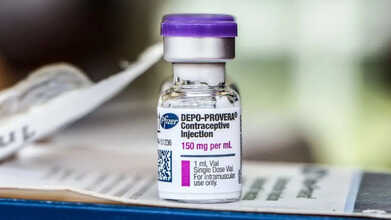
Depo Provera: The Food and Drug Administration approved a label change on Friday for Pfizer’s birth control injection, Depo-Provera, alerting patients to the risk of meningioma, a tumor that develops in the lining of the brain.
Pfizer is currently facing a lawsuit from over 1,000 women who allege that the company knew about the risk but failed to warn users.
How Depo-Provera Works
Depo-Provera is administered as a progestin injection every three months. The lawsuit highlights studies dating back to 1983 linking progesterone with meningioma, claiming that Pfizer had an “unassignable duty to investigate” and should have examined the potential risks of Depo-Provera much earlier. (Progestin is a synthetic form of progesterone.)
According to the Centers for Disease Control and Prevention, roughly one in four sexually active women in the U.S. has used Depo-Provera, with Black women using it at nearly twice the national rate.
Depo Provera: Understanding Meningiomas
Meningiomas are generally non-cancerous, meaning they do not spread to other areas of the body. However, depending on their size and location, they can still be dangerous. In the U.S., about 39,000 meningiomas are diagnosed annually, though the overall risk remains small, as per CDC.
Depo Provera: Pfizer’s Response and FDA Review
Earlier this year, Pfizer requested a judge dismiss the lawsuit, stating that it became aware of the meningioma risks linked to Depo-Provera in 2023. In February 2024, the company applied to the FDA to add a warning to the injection’s label, also requesting warnings for two lower-dose pills containing medroxyprogesterone acetate (MPA), the active ingredient in the shot, as per NBC News.
The FDA denied the request for the pills, explaining that “the findings of the available observational studies alone do not support the addition of a warning on Meningioma risk to medroxyprogesterone acetate (MPA)-containing products.”
Pfizer then amended and resubmitted the application in June 2025. In response, the FDA approved a label change this month for two injection versions — Depo-Provera CI and Depo-Subq Provera 104.
“We acknowledge receipt of your amendment dated June 12, 2025,” the FDA letter to Pfizer said. The approval “provides for the addition of information related to Meningioma risk” on the product label.
Depo Provera: Pfizer’s Statement
A Pfizer spokesperson told NBC News that “the label update reflects a recent decision by the FDA to approve the warning, which the agency had earlier denied.”
“Pfizer stands behind the safety and efficacy of Depo-Provera, which has been used by millions of women worldwide and remains an important treatment option for women seeking to manage their reproductive health,” the statement added.
Lawyers representing the women suing Pfizer said: “For years, Pfizer misled doctors, patients, and the FDA about Depo-Provera’s link to meningiomas, resulting in needless suffering for thousands of women who developed these serious brain tumors. … We applaud the FDA in finally requiring this label change to better inform and protect women.” The FDA did not immediately respond to requests for comment. Elsewhere, warnings about meningioma have already been added to Depo-Provera’s label.
In 2024, the European Medicines Agency listed meningioma as a “possible side effect” for drugs with high doses of MPA. That same year, Canada updated the drug’s label to include meningioma under “warnings and precautions,” noting that meningiomas have been reported following long-term use of progestins, including MPA.
As per NBC News, in January, South Africa’s regulatory agency recommended updating the MPA drug label to include meningioma risk as well. The judge has not yet issued a ruling in the ongoing lawsuit against Pfizer in the United States.
CDC Formally Ends Universal Hepatitis B Vaccination Guidance—What Does It Mean For Newborns?
Credits: Canva
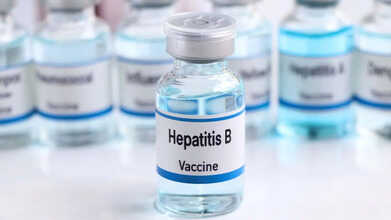
The U.S. Centers for Disease Control and Prevention on Tuesday withdrew its decades-old guidance that all newborns in the country should be vaccinated against hepatitis B at birth. Instead, the decision has now been shifted to parents, who are advised to consult a healthcare provider when deciding whether babies born to hepatitis B-negative mothers should receive the vaccine, including the birth dose.
The change follows a recommendation made by Health Secretary Robert F. Kennedy Jr.’s vaccine advisory panel, marking a significant shift in public health policy. Earlier this month, the panel suggested that the birth dose be limited to newborns whose mothers test positive for hepatitis B or whose infection status is unknown. The CDC approved this recommendation as official policy on Tuesday. Here is what this change means for newborns moving forward:
Also Read: Indoor Air In Delhi Is More Toxic Than Outdoor Smog, Pulmonologist Warns
CDC Ends Guidance That All Newborns Should Get Hepatitis B Vaccine
Under the updated guidance, if parents decide against vaccinating their baby at birth but later believe the shot is necessary, the CDC now advises waiting until the child is at least two months old before administering the first dose. Since 1991, U.S. health authorities have supported universal infant vaccination against hepatitis B, with the first of three doses typically given shortly after birth. CDC recommendations influence health insurance coverage decisions and serve as a key reference point for doctors when determining vaccine schedules.
Public health experts have raised concerns that the shift toward what the CDC calls “individual-based decision-making” may leave more children vulnerable to the virus and could encourage families to skip vaccination without a strong federal directive. Kennedy, who has long opposed vaccines, has already introduced sweeping changes to the country’s vaccination policies.
CDC New Guidance On Hepatitis B Vaccine: What Does This Mean For Newborns?
Rather than advising hepatitis B vaccination for every newborn, the CDC now formally recommends that women who test negative for the virus discuss with their healthcare providers whether their babies should receive the first dose within 24 hours of birth. According to NBC News, the agency is also evaluating another proposal from the advisory panel, which suggests parents consult doctors about testing children for hepatitis B antibodies before deciding on second doses of the vaccine. Typically, the hepatitis B vaccine is administered as a three-dose series during infancy.
Also Read: ‘Fix Your Handwriting’: Indian Doctors Told to Write Clear, Legible Prescriptions Under New Rules
This policy shift stands out as one of the clearest departures from established medical consensus reflected in current CDC guidance. During discussions, the advisory committee relied on selective data and misinformation, while overlooking decades of research showing that hepatitis B vaccines are both safe and highly effective when given soon after birth.
“Removing the recommendation for newborns increases the likelihood that case numbers will rise again. This makes America sicker,” Senator Bill Cassidy, R-La., a liver specialist who has treated hepatitis B patients, wrote on X earlier this month. Despite the change, pediatricians are still expected to encourage parents to vaccinate their newborns.
The Department of Health and Human Services has stated that the updated guidance will not change insurance coverage for the vaccine. The shots will also remain available to newborns through the Vaccines for Children Program, which provides vaccines at no cost to uninsured or underinsured families.
Last month, the CDC also revised a webpage that had previously stated clearly that vaccines do not cause autism. The updated language now says studies have not ruled out a link, despite decades of scientific evidence showing no connection between vaccines and autism.
- Follow Us :


© 2024 Bennett, Coleman & Company Limited