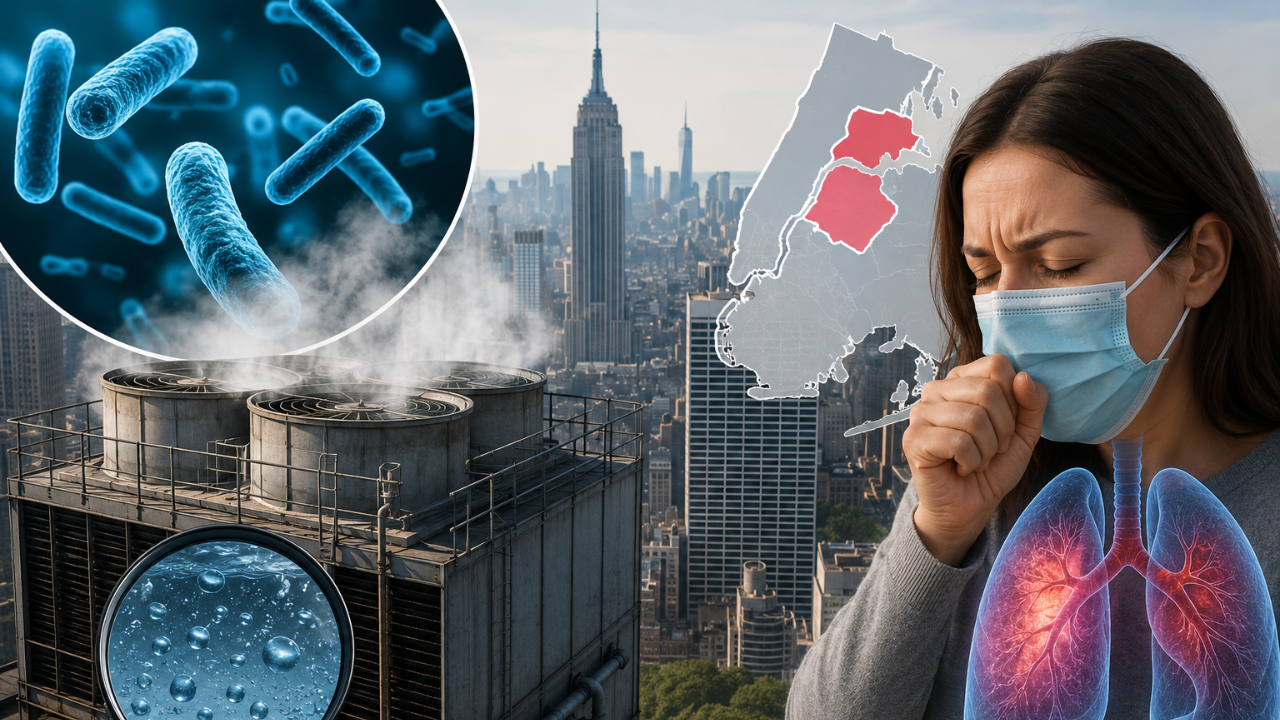
The health authorities in New York City are currently investigating an outbreak of Legionnaires' disease after at least 14 people were diagnosed with the potentially life-threatening respiratory illness across two neighborhoods in Manhattan. The recent outbreak prompted an urgent public health response. Legionnaires' Disease Outbreak IN NYC The outbreak, initially marked with just two cases earlier this week, has grown rapidly. Cases of infections were reported in Carnegie Hill and Yorkville on the Upper East Side. The New York City Department of Health has immediately launched an investigation to identify the source of the outbreak and is inspecting cooling towers and other water systems in the affected areas, where the Legionella bacteria commonly thrive. Authorities have urged residents and visitors who were in the neighborhoods in recent days to seek medical attention if they face symptoms like fever, cough or difficulty breathing. What is Legionnaires' Disease? Legionnaires' disease is a severe form of pneumonia caused by Legionella bacteria. Unlike many respiratory infections, it is not spread from person to person. Instead, people become infected after inhaling tiny water droplets or mist contaminated with the bacteria. The bacteria naturally occur in freshwater environments but can multiply in man-made water systems that are poorly maintained, including: Cooling towers used for large air-conditioning systems Hot tubs and spas Public fountains Large plumbing systems Water tanks and heatersRead more: New Blood Test May Predict Alzheimer's Symptoms At Least 4 Years In Advance: StudySymptoms: Symptoms of Legionnaire's disease appear 2 to 14 days after exposure, although they can sometimes take longer. The common symptoms of Legionnaires' disease include: High fever Persistent cough Shortness of breath Chills Muscle aches Headache Some patients, particularly older adults, may also develop nausea, vomiting, diarrhea or confusion. As the illness closely resembles other forms of pneumonia, laboratory testing is usually required to confirm the diagnosis. Read more: Donald Trump Posts AI Video of Himself Treating Critics for 'Derangement Syndrome'Treatment & Prevention Legionnaires' disease is treatable with antibiotics, and early diagnosis greatly improves recovery. However, delayed treatment can lead to severe complications such as respiratory failure, septic shock, or multi-organ failure. The disease can be fatal, especially among older adults and people with underlying health conditions. While the overall fatality rate is around 10% in otherwise healthy individuals, it can be considerably higher in vulnerable patients if treatment is delayed. Although most people are unlikely to be exposed, experts recommend: Seeking immediate medical care for pneumonia-like symptoms, particularly if you are in a high-risk group. Ensuring building water systems, cooling towers, and hot tubs are properly maintained. Avoiding smoking as it increases susceptibility to the severe disease. Following public health advisories during ongoing outbreak investigations. What Should You Do If You're Infected?If you feel ill and experience the symptoms of Legionnaire's, watch for signs, especially respiratory distress, fever, or extreme tiredness. Health officials recommend the following: Contact your healthcare provider immediately if symptoms appearInform them of your recent travel to potentially affected areasGet tested if symptoms suggest pneumonia or related complicationsHealth Officials Act On Outbreak Control New York City health officials are testing cooling towers and other potential environmental sources in the affected neighborhoods to identify where the bacteria may have originated. Property owners are immediately required to disinfect contaminated cooling towers if Legionella is detected. Officials have emphasized that residents can continue using home air conditioners and public cooling centers, as these systems do not typically spread the bacteria in the same way as large industrial cooling towers.