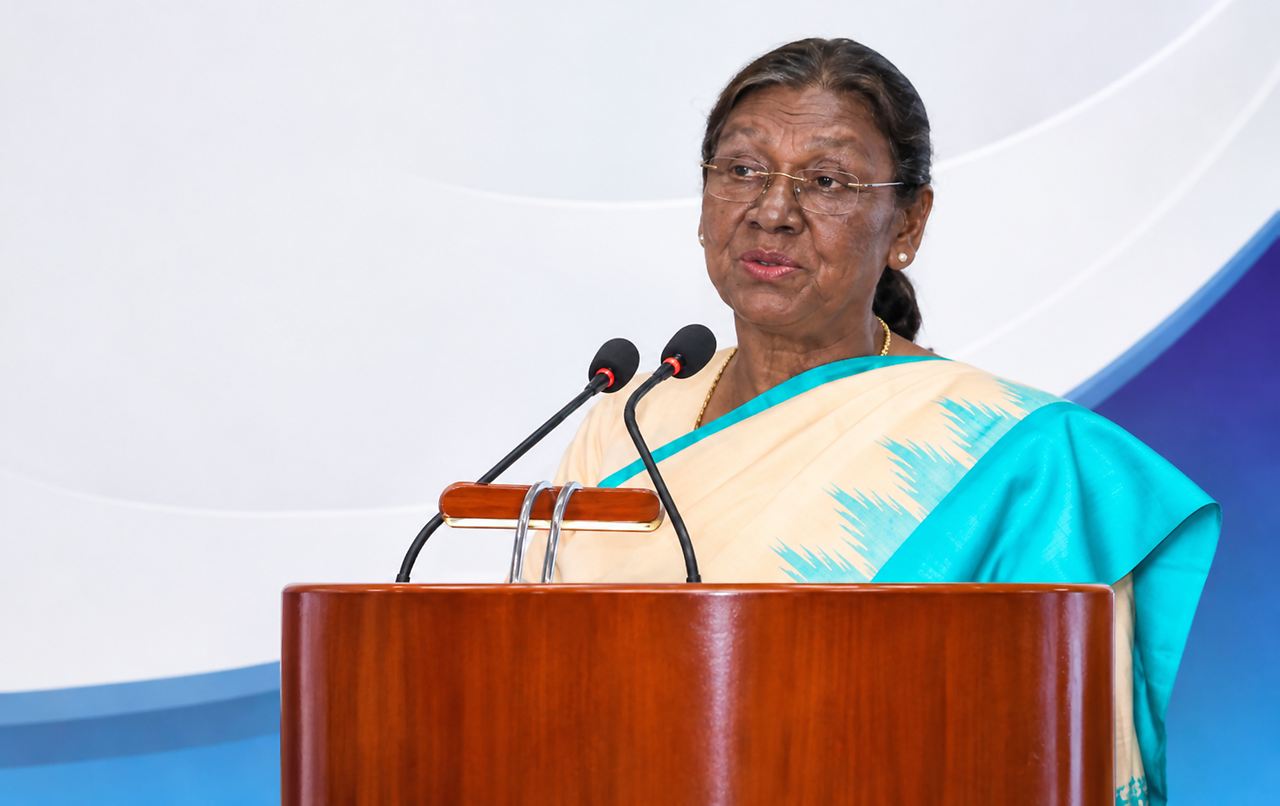
Malaria cases and deaths in India declined by nearly 80% between 2015 and 2025, President Droupadi Murmu said on Tuesday, while warning that climate change, unplanned urbanization and growing mosquito resistance could create new challenges for malaria elimination.Speaking at the inauguration of the Golden Jubilee celebrations of the Indian Council of Medical Research–National Institute of Malaria Research (ICMR–NIMR), the President called for sustained vigilance, stronger surveillance and greater community participation to achieve malaria elimination.India Makes Progress In Malaria ControlThe President noted that malaria remains a serious public health challenge in several countries, including India.Recalling the situation at the time of independence, she said the vector-borne disease was among the country's most critical public health challenges. She also shared her personal observations of how malaria affected people's lives."During the monsoon season, fever was often accepted as an inevitable hardship of life. Children were unable to attend school, while farmers and laborers were often left unable to work for days on end. For the people, malaria was not merely a health issue—it was deeply intertwined with their livelihoods, education, and future," she said.India has since made significant progress through sustained public health interventions. Between 2015 and 2025, malaria cases and deaths declined by nearly 80%, while the number of high-burden districts fell from 155 to 33.As many as 160 districts reported zero indigenous malaria cases between 2022 and 2025, reflecting progress in interrupting local transmission and implementing targeted malaria control and elimination measures.Calling the progress "remarkable", the President credited improved healthcare services, modern diagnostic techniques, effective medicines, mosquito-control campaigns and community participation for curbing the disease.Also read: El Niño Could Worsen Dengue, Malaria And Heat Illness: Why WHO Declared A Health EmergencyStronger Surveillance Needed To Eliminate MalariaDespite the progress, malaria remains a challenge in certain regions, the President said, stressing the need for "sustained vigilance and effective efforts" to eliminate the disease.She highlighted the importance of robust systems for malaria testing, treatment, surveillance and mosquito control.Research aimed at developing new drugs and vaccines, along with public awareness and community participation, will also be vital for malaria elimination, she said.Climate Change Could Pose New Challenges The President warned that climate change, unplanned urbanization and growing mosquito resistance to insecticides could create new obstacles to malaria elimination efforts.She also urged citizens to contribute to prevention efforts by avoiding water stagnation, eliminating mosquito breeding sites and maintaining a clean environment.Beyond malaria, she noted that rising global temperatures and shifting monsoon patterns are further intensifying the challenge posed by dengue.India Aims To Eliminate Malaria By 2030: Health MinisterRead More: Will India Be Malaria-Free By 2030? 160 Districts Report Zero Cases Over 3 Years; Burden Falls 80% In A DecadeAddressing the gathering, Union Minister of Health and Family Welfare Jagat Prakash Nadda said India's progress in malaria control over the past decade was the result of a comprehensive approach involving research on mosquito behaviour and malaria parasites, community participation, effective prevention, early diagnosis and appropriate treatment.Highlighting India's progress in malaria control, Nadda noted that the country, which accounts for approximately 16% of the global population, contributes around 0.7% of global malaria cases and 0.6% of malaria deaths.The Union Minister also appreciated India's exit from the WHO's High Burden to High Impact initiative and expressed confidence in achieving malaria elimination by 2030."We will eliminate malaria by 2030 by bringing about the necessary changes in our strategies and policies," he said, calling upon ICMR–NIMR to work with renewed commitment.The Minister also highlighted ICMR's contributions to medical innovation, including MedTech Mitra, Patent Mitra and ELISA-based molecular diagnostics for dengue, chikungunya, Japanese encephalitis and other infectious diseases.