
- Health Conditions A-Z
- Health & Wellness
- Nutrition
- Fitness
- Health News
- Ayurveda
- Videos
- Medicine A-Z
- Parenting
NATCO Pharma 1st To Launch Generic Semaglutide In India, Prices Start From Rs 1,290
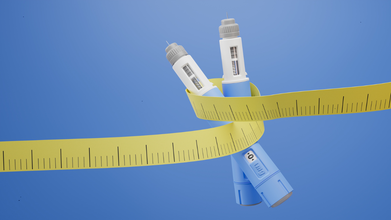
With the patent on semaglutide expiring today in India, NATCO Pharma has become the first drugmaker to launch the generic version of the weight-loss drug in the country.
NATCO Pharma’s generic semaglutide injection prices start at INR 1,290 per month.
“NATCO is the first company to offer generic semaglutide in multi-dose vials with customized syringes… It is the most affordable GLP-1 currently in the Indian market as it is approximately 70 percent cheaper in cost than the pen device and 90 percent cheaper than the price of the innovator’s brand,” the Hyderabad-based company said, in a statement.
The company had received approval from the Central Drugs Standard Control Organization (CDSCO) in February 2026 to manufacture and market the drug, after a clinical comparison study.
Semaglutide works by targeting key areas of the brain involved in appetite regulation and food intake. It reduces hunger, improves satiety, and cuts down food cravings, eventually inducing weight loss.
It also improves insulin resistance and has a beneficial effect on the reduction of cardiometabolic events and risk factors.
NATCO's Semaglutide Drugs
NATCO's semaglutide drugs will be sold under brand names SEMANAT and SEMAFULL in multi-dose vial formats. It will be priced:
- INR 1,290 per month for the 2 mg/1.5 ml and 4 mg/3 ml variants,
- INR 1,750 for the 8 mg/3 ml dose.
- INR 4,000 for 2 mg/1.5ml,
- INR 4,200 for 4 mg/3 ml,
- INR 4,500 per month for 8 mg/3 ml.
In comparison, Novo Nordisk's Ozempic and Wegovy in pen devices cost INR 8,800 and INR 10,850, respectively, per month for the starting doses.
NATCO has also signed a distribution partnership with Eris Lifesciences to co-market its therapy in India.
Other Generic Versions
Separately, Eris has also announced its plans to launch a multi-dose vial under the brand name "Sundae". The company's generics will be at the same price for the type-2 diabetes indication.Sun Pharmaceutical Industries, Dr. Reddy’s Laboratories, and Zydus Lifesciences are also expected to introduce their versions of semaglutide on Saturday.
Others in the pipeline include Alkem Laboratories, Torrent Pharmaceuticals, and MSN Laboratories.
With intense competition, analysts believe around 50 branded semaglutide generics will enter the Indian market within months, BBC reported.
Calling it a potential "magic-pill moment" for India, investment bank Jefferies predicted that the semaglutide market in the country could reach $1bn domestically.
Also read: CDSCO threatens action against pharma companies for promoting GLP-1 weight-loss drugs
End Of Novo Nordisk’s Patents
In January this year, Canada became the first country to lose patent protection for semaglutide. However, the country's health regulator hasn’t approved any generics so far.
Novo Nordisk is expected to lose the patent in 10 more countries, including Brazil, China, South Africa, Turkey, and Canada, by the end of 2026.
In view of losing patent, Novo Nordisk recently cut prices for Wegovy in India. The company also launched its blockbuster brand Ozempic in December.
Grey’s Anatomy Star Russell Andrews Opens Up About ALS Diagnosis

Credit: Instagram/CNN
After Eric Dane, another Grey’s Anatomy star, Russell Andrews has revealed that he has been diagnosed with amyotrophic lateral sclerosis (ALS).
The 64-year-old actor shared that he was diagnosed with the fatal disease in 2025, CNN reported.
“I am a person living with ALS,” said Andrews, known for his roles in Straight Outta Compton and Better Call Saul, alongside his fiancée, Erica Tazel.
“I was diagnosed in the late fall of last year,” he added.
ALS currently has no cure, and people diagnosed with the disease typically live three to five years after diagnosis, according to the Muscular Dystrophy Association.
However, some patients may survive for decades, like in the case of Stephen Hawking, who survived almost 40 years with a disease that usually kills people 14 months after diagnosis. Diagnosed at the age of 21, the noted astrophysicist and cosmologist lived until the age of 76.
Andrews’ co-star Eric Dane, who died earlier this year in February at the age of 53, also suffered from ALS. He died around 10 months after publicly revealing his ALS diagnosis.
Russell Andrews's Early Symptoms Of ALS
Also read: Grey’s Anatomy’ Star Eric Dane Reveals He Has ALS- What Are The Early Signs And Risks?Andrews shared that his initial symptoms included occasional “twitches,” which he first believed were caused by “pinched nerves” in his neck.
Soon after, “I was not able to do things that I normally do,” he said, adding, “I was dropping cups and glasses at night. It felt like things were running up and down my arm at different times, and it was the nerves.”
Andrews also revealed that he lost health insurance during the industry shutdown caused by the strikes, delaying his diagnosis because he was unable to undergo medical evaluations.
Once he regained insurance coverage, doctors quickly referred him to a neurologist, eventually leading to the ALS diagnosis. “Within 15 minutes, the primary care physician said she would like me to see a neurologist,” Andrews said.
What Is ALS?
Read More: Ebola Bundibugyo Strain: All You Should Know About The Rare Virus
Also known as Lou Gehrig's disease, ALS targets motor neurons, nerve cells in the brain and spinal cord responsible for voluntary muscle movement. When these neurons degenerate and die, the brain can no longer communicate with muscles, leading to muscle weakness, paralysis, and eventually respiratory failure.
Most individuals with ALS retain their cognitive function, but lose the ability to walk, speak, eat, and breathe without assistance. The disease progresses over time, with most patients surviving between two and five years following diagnosis.
ALS presents in unique ways from person to person. It can begin in the limbs (limb-onset) or in muscles related to speaking and swallowing (bulbar-onset). While no cure currently exists, treatment advancements have offered hope for improved quality of life and extended survival.
ALS can affect anyone, though it is most commonly diagnosed between the ages of 40 and 70. According to the CDC, around 5,000 new cases are diagnosed annually in the United States, with about 30,000 people living with the disease at any given time.
Key Symptoms Of ALS
Symptoms of ALS can vary widely but often begin with muscle weakness, cramps, twitching, or difficulty with speech or swallowing. As the disease progresses, individuals may experience:
- Spasticity and exaggerated reflexes
- Muscle atrophy, particularly in the hands and legs
- Bulbar symptoms like difficulty speaking (dysarthria) or swallowing (dysphagia)
- Emotional lability (pseudobulbar affect)
- Breathing difficulties
What Leads To ALS?
Though the exact cause of ALS remains unknown, genetic factors play a key role in some cases. Mutations in genes such as SOD1, C9orf72, FUS, and TARDBP are linked to the disease. Environmental triggers, like toxin exposure, viral infections, and intense physical activity, are also being studied.
ALS is diagnosed by ruling out other conditions through clinical evaluation, EMG tests, genetic screening, and imaging such as MRI. Early diagnosis is essential to access therapies and plan care.
There is no cure for ALS yet, but treatments like riluzole, edaravone, and tofersen (for those with SOD1 mutations) can slow progression.
Promising research areas include gene therapy, RNA-targeted treatments, biomarkers like Neurofilament Light Chain, and artificial intelligence for diagnosis and personalized care.
Ebola Bundibugyo Strain: All You Should Know About The Rare Virus
Credit: iStock
The 17th outbreak of Ebola virus in the Democratic Republic of Congo has been identified as the rare Bundibugyo strain.
Bundibugyo virus disease is a rare and deadly illness that has caused outbreaks in several African countries in the past. It is different from other known ebolaviruses such as the Zaire ebolavirus and the Sudan ebolavirus.
Also Read: Ebola Virus: 6 US Nationals Likely Exposed In Congo; How The Infection Spreads And Turns Deadly
Bundibugyo virus was first identified during an outbreak in 2007 in Uganda, which resulted in 131 cases and 42 deaths.
Another Bundibugyo outbreak was reported in 2012, killing 50 per cent of the people infected in Uganda and 34 per cent in DR Congo.
As per the US CDC, as of May 17, there are reports of 10 confirmed cases and 336 suspected cases, including 88 deaths, in DRC.
Uganda has reported 2 confirmed cases, including 1 death, among people who travelled from DRC. No further spread has been reported. These numbers are subject to change as the outbreak evolves.
How Does Ebola Bundibugyo Spread?
Also read: WHO Calls Ebola Outbreak In DR Congo And Uganda An International Public Health Emergency
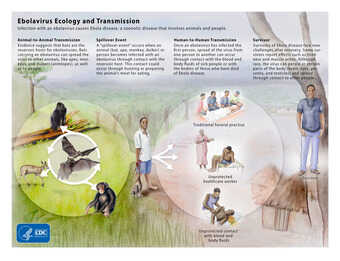
The Bundibugyo virus spreads through contact with the blood or bodily fluids of a person infected with or who has died from the rare Ebola strain.
It can also spread through contact with contaminated objects such as clothing, bedding, needles, and medical equipment, or through contact with infected animals such as bats and nonhuman primates.
Historically, Bundibugyo virus outbreaks have recorded fatality rates ranging from 25 per cent to 50 per cent.
Symptoms To Watch For
Symptoms of Bundibugyo virus disease are similar to other forms of Ebola and include:
- Fever
- Headache
- Muscle pain
- Weakness
- Diarrhea
- Vomiting
- Stomach pain
- Unexplained bleeding or bruising, usually in later stages of illness
The WHO has described the current outbreak as “extraordinary” because there are no approved Bundibugyo virus-specific therapeutics or vaccines, unlike the Ebola-Zaire strain. Most of the country’s previous outbreaks were caused by the Zaire strain.
Prof Trudie Lang from the University of Oxford also described dealing with Bundibugyo as “one of the most significant concerns” in the current outbreak, the BBC reported.
Symptoms are believed to appear between two and 21 days after infection.
With no approved drugs specifically targeting the Bundibugyo virus, treatment currently depends on supportive care, including managing pain, treating secondary infections, maintaining fluids, and ensuring adequate nutrition. Early medical care improves survival chances.
CDC Issues Travel Guidelines
The CDC advised people traveling to Uganda and the DR Congo to follow routine precautions. These include:
- Consider travel insurance, including medical evacuation coverage.
- Avoid contact with people showing symptoms such as fever, muscle pain, or rash.
- Avoid contact with blood, bodily fluids, or contaminated objects.
- Avoid contact with bats, forest antelopes, and nonhuman primates such as monkeys, chimpanzees, and gorillas.
- Avoid entering caves or mines where bats may live.
Travellers should monitor themselves for symptoms while in outbreak areas and for 21 days after leaving. If symptoms develop:
- Isolate immediately
- Do not travel
- Contact local health authorities or a healthcare facility before visiting in person
Ebola Virus: 6 US Nationals Likely Exposed In Congo; How The Infection Spreads And Turns Deadly
Credit: iStock
At least six Americans who are in the Democratic Republic of the Congo are believed to have been exposed to the Ebola virus, amid the latest outbreak in the African nation that has killed over 80 people and infected nearly 300, according to a media report.
Citing sources, STAT News said that one of the individuals may also have developed symptoms.
Although there are no test results yet for any of the individuals, the US government is reportedly trying to arrange for their transportation out of the DRC to a location where they can be safely quarantined and cared for, if they are found to have been infected.
Also Read: Ebola Bundibugyo Strain: All You Should Know About The Rare Virus
It is also not clear if that would be in the US. As per sources, it may be an American military base in Germany, the report said.
Meanwhile, the US CDC, in a statement said, it is supporting interagency partners "who are actively coordinating the safe withdrawal of a small number of Americans who are directly affected by this outbreak."
"At this time, the risk to the American public remains low," the CDC said. "CDC continues to closely monitor the situation and has systems in place to detect and respond rapidly to potential public health threats."
The health agency has also issued travel advisories for Americans traveling in Congo and Uganda, telling them to "practice enhanced precautions" and avoid people who have symptoms, which include fever, muscle pain, and rash.
The latest Ebola outbreak, the 17th in DR Congo, has also spread to Uganda. On May 17, the World Health Organization declared it a "public health emergency of international concern."
According to the Africa CDC, the outbreak is caused by a rare strain Bundibugyo virus, for which there is no vaccine available currently.
Also read: WHO Calls Ebola Outbreak In DR Congo And Uganda An International Public Health Emergency
What Is Ebola?
The US CDC explains that the Ebola disease is caused by a group of viruses, known as orthoebolaviruses (formerly ebolavirus).
These viruses can cause serious illness that, without treatment, can cause death. Orthoebolaviruses were discovered in 1976 in the Democratic Republic of the Congo and are found primarily in sub-Saharan Africa.
The four types of orthoebolaviruses cause illness in people are:
- The Ebola virus (species Orthoebolavirus zairense)
- Sudan virus (species Orthoebolavirus sudanense)
- Taï Forest virus (species Orthoebolavirus taiense)
- Bundibugyo virus (species Orthoebolavirus bundibugyoense)
The CDC notes that two other types of orthoebolaviruses have not affected people to date. They are:
- Reston virus (species Orthoebolavirus restonense) has caused disease in non-human primates like macaques.
- Bombali virus (species Orthoebolavirus bombaliense) was more recently identified in bats.
Read More: More Americans Exposed To Hantavirus; 41 Under Monitoring, Says CDC
How Ebola Infection Spreads and Turns Deadly
People sick with Ebola disease can spread the virus to others when they start having symptoms like fever, aches, pains, and fatigue. It can be spread through direct contact with infected bodily fluids.
As the person becomes sicker, the illness causes diarrhea, vomiting, and unexplained bleeding. In severe cases, the virus can damage blood vessels, weaken the immune system, and lead to organ failure, internal bleeding, and shock.
However, the virus can persist in certain bodily fluids, such as semen, even after recovery, meaning transmission may still be possible in rare cases despite the absence of symptoms.
"This happens when the virus remains in certain parts of the body that are shielded from the immune system. For example, the virus can remain in semen even after someone recovers. Whether the virus is present in these body parts, and for how long, varies by survivor," the CDC said.
- Follow Us :


© 2024 Bennett, Coleman & Company Limited