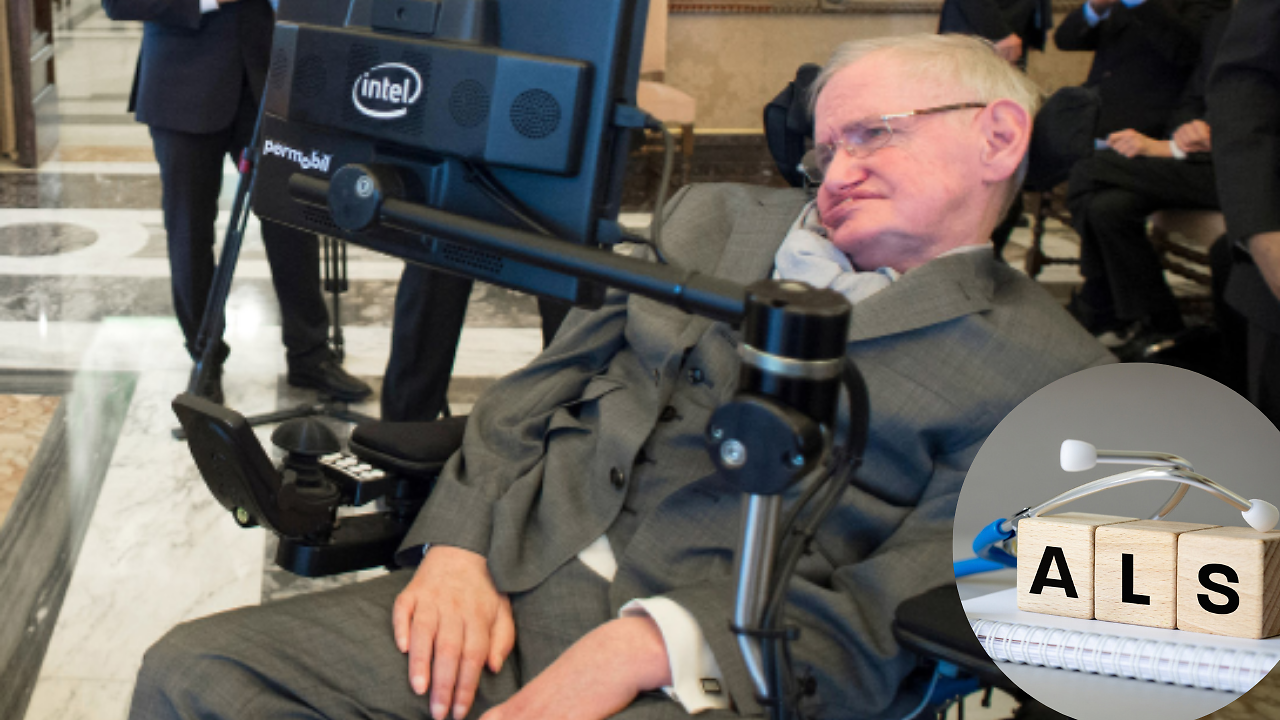
Physicist Stephen Hawking lived with amyotrophic lateral sclerosis (ALS) for more than five decades. Diagnosed at 21 in 1963, he was initially given just two years to live. However, his early-onset form of ALS progressed unusually slowly. Hawking died on March 14, 2018, aged 76.Now, US researchers have developed a personalized RNA therapy for a rare genetic form of ALS and administered it to a single patient. One year after treatment, the patient showed improvements in physical function and a key biomarker of nerve damage.ALS, also known as motor neuron disease (MND) or Lou Gehrig’s disease, affects nerve cells in the brain and spinal cord that control voluntary movement. As these neurons deteriorate, muscles become progressively weaker and can eventually lead to paralysis.What Was The New RNA Therapy?Researchers at the Mayo Clinic developed an antisense oligonucleotide (ASO) therapy, a personalized RNA-based treatment designed to target RNA produced by the mutated gene and reduce the production of specific proteins.Unlike conventional gene therapy, which aims to alter a person's genetic material, ASO therapy uses short strands of genetic material called “oligonucleotides,” to target RNA, according to the findings, published in the international journal Med. These oligonucleotides prevent the production of the proteins that cause ALS.It was administered on the male patient who had slowly progressive ALS, with onset in his right shoulder in 2020. In 2018, he underwent a spine surgery for radiating left neck and arm pain with mild weakness. It was in 2021 that he was diagnosed with ALS caused by a mutation in the CHCHD10 gene, found in fewer than 1% of people with hereditary ALS.Defects in CHCHD10 can damage mitochondria, which produce energy inside cells, ultimately contributing to nerve-cell death and ALS.Patient's ALS Symptoms ImprovedThe patient received six spinal injections between April 2024 and April 2025. The first three doses were 50 milligrams each, followed by three 75-milligram doses.One year after the first dose, the patient's blood levels of neurofilament light chain (NfL) had fallen by about 50% and returned to the normal reference range.NfL is a protein released when nerve cells are damaged and is used as a biomarker of neurodegeneration and ALS progression.The patient's score on the Revised ALS Functional Rating Scale (ALSFRS-R) also increased from 33 to 36 over the year. The scale measures physical function in people with ALS.Other measures of breathing and cognition remained stable, and the patient showed no signs of cognitive decline during the reported follow-up."To date, the ASO has been well tolerated, with a good safety profile, and has demonstrated early signs of efficacy. The patient reports subjective improvement, and our primary response biomarker, neurofilament light (NfL), has normalized," the research team wrote in the paper.The patient’s symptoms improved one year after receiving the drug, and he continues to work as a physician, Nature reported.“We have shown that it is possible to develop a personalized ASO therapy for CHCHD10-related ALS,” adding that this provides “evidence suggesting the potential for therapeutic benefit in the clinic,” the research team stated.Is This A Cure For ALS?The findings are an early step, and it is far too soon to know whether the treatment can stop ALS progression or provide a cure.The patient will need to be monitored for several more years, while the therapy must also be tested in additional patients to determine whether the improvements can be sustained and whether the treatment can slow disease progression.