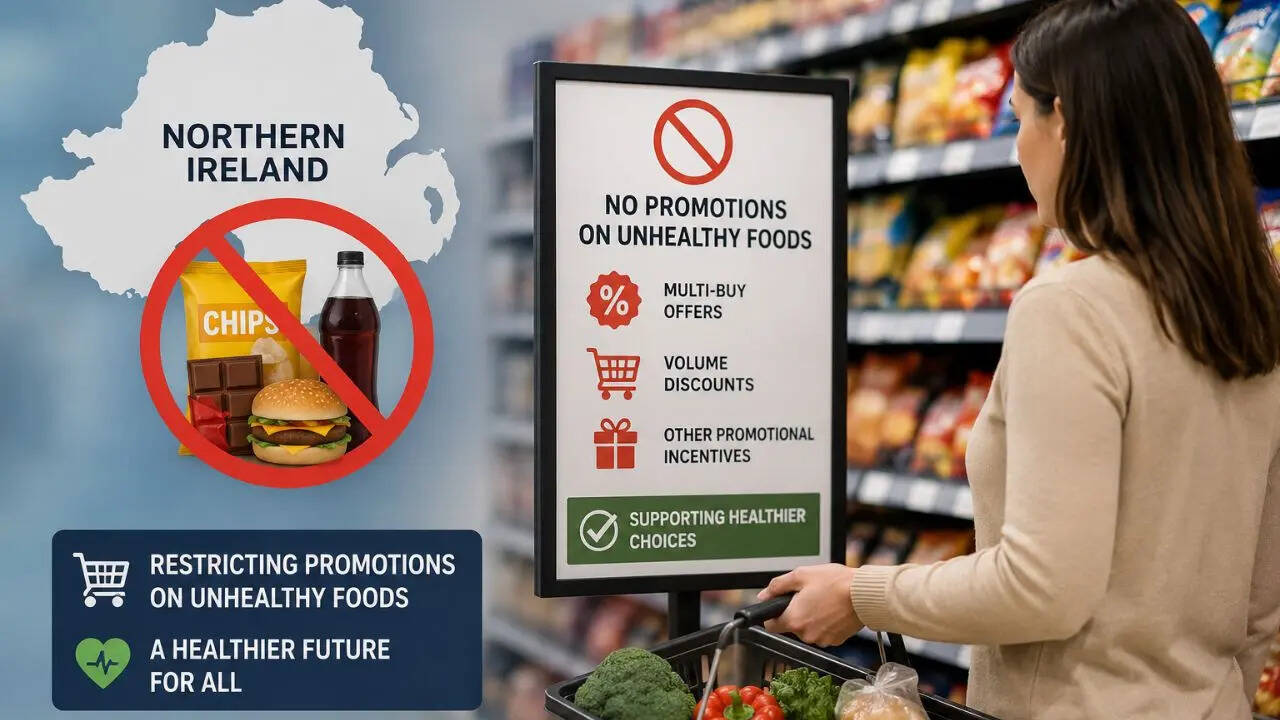
Northern Ireland is set to restrict price promotions on unhealthy foods as part of its long-term strategy to curb rising obesity rates, With this move, the country has joined the UK who has been making efforts to create healthier food environments. The proposed policy is expected to limit promotions like multi-buy offers and other incentives on foods high in fat, salt and sugar (HFSS). It could make healthier choices more accessible, reducing the influence of marketing on consumer behavior. The policy forms part of Northern Ireland's Healthy Futures: Tackling Obesity strategy, which emphasizes prevention alongside better treatment services. The Department of Health has recently announced the rollout of a Regional Obesity Management Service, but public health experts say clinical services alone will not reverse the obesity epidemic without stronger preventive policies. Can This Policy Help? Obesity remains one of Northern Ireland's biggest public health challenges. Around 65% of adults in Northern Ireland are overweight or living with obesity, while about one in four children are affected. Excess weight significantly increases the risk of type 2 diabetes, heart disease, stroke, certain cancers and other chronic illnesses. Policymakers and health advocates argue that supermarkets' rampant discounts and volume-based promotions on calorie-dense processed foods encourage unnecessary purchasing and higher consumption, particularly among families with constrained budgets.Also read: Not Just The Heart, Obesity In Midlife Could Be Just As Harmful To The Brain: Study Expectations From The Policy The proposed restrictions are expected to target promotions on HFSS foods, including multi-buy deals such as "buy one, get one free", volume-based discounts, and other promotional tactics that encourage purchasing larger quantities of unhealthy foods. The initiative complements broader UK policies that are already being implemented, including restrictions on junk food advertising before 9 p.m. on television and a ban on paid online advertising for unhealthy foods. These measures aim to reduce children's exposure to unhealthy food marketing and encourage healthier eating habits.Also read: Smoking, Diabetes, High Blood Pressure May Fuel the Most Dangerous Type of Artery Plaque, Study Finds Reactions Northern Ireland's plans have received strong backing from public health organizations and health advocates.Fearghal McKinney, Head of the British Heart Foundation Northern Ireland, said, "While we welcome the announcement of the first phase of the obesity programme as a significant step forward to support people living with obesity, this alone does not go far enough in providing a long-term and multi-department government solution." He added, "Obesity is a major risk factor for cardiovascular disease and a leading cause of the increasing number of deaths in Northern Ireland." McKinney also said, "This announcement must be accompanied by urgent delivery of actions within the Healthy Futures obesity strategy, including publishing a consultation to restrict price promotions on unhealthy foods." Across the UK, governments are increasingly focusing on reducing consumption of unhealthy food through marketing tactics rather than focusing on individual behavior change. Announcing England's advertising restrictions, Health Minister Ashley Dalton said, "By restricting adverts for junk food before 9pm and banning paid adverts online, we can remove excessive exposure to unhealthy foods, making the healthy choice the easy choice for parents and children." Northern Ireland's proposed promotion restrictions are still going through implementation stages, but health experts view them as positive step towards broader obesity prevention strategy. Combined with better medical services, education and healthier food environments, policymakers hope the measures will reduce obesity rates, lower the burden of chronic disease and ease pressure on the healthcare system.