
- Health Conditions A-Z
- Health & Wellness
- Nutrition
- Fitness
- Health News
- Ayurveda
- Videos
- Medicine A-Z
- Parenting
Noelia Castillo: 25-year-old Spanish Woman Dies By Euthanasia After Long Legal Battle

Credit: X.com
A 25-year-old Spanish woman has died by euthanasia after a long battle with her father over her right to die.
Noelia Castillo, a rape survivor who was left paralyzed in her lower half of the body after a suicide attempt in 2022, died on Thursday evening at a hospital in Barcelona.
While the Catalan regional government had granted her the right to assisted dying in 2024, her father, Geronimo Castillo, had raised legal objections. Her wish to ‘die in peace’ has also sparked debate around the country’s right-to-die law -- legalized in 2021.
Who Is Noelia Castillo?
Much of Castillo’s life during her childhood was spent in care homes. Her father's problems with alcohol had a significant impact on her mental health, and she underwent psychiatric treatment since her early teens.
Later, she was diagnosed with conditions including obsessive-compulsive disorder and Borderline Personality Disorder.
She was raped twice: first by an ex-boyfriend and later by three men in 2022 while at a state-supervised facility for vulnerable youth.
The assaults, which took a severe toll on her mental health, led her to make multiple suicide attempts.
In October 2022, she jumped from a fifth-floor window, which left her with a severe spinal cord injury and permanent paralysis in her lower body.
Also read: Harish Rana, India’s First Passive Euthanasia Case, Dies at AIIMS
Noelia Castillo’s Fight For Euthanasia
Castillo chose assisted dying to escape years of physical pain and emotional trauma.
In her final days, Castillo spoke openly about her suffering and her decision. In an interview with Spanish broadcaster Antena 3, she said: “I just cannot go on anymore… I want to go in peace now and stop suffering.”
Speaking earlier to Spanish TV programme Y Ahora Sonsoles, she added: “I am very clear… none of my family is in favour of euthanasia. But what about all the pain I’ve suffered during all these years?”
In 2024, the Catalan regional government granted her the right to assisted dying in 2024. But the process was suspended after legal objections raised by her father. According to her father, her mental health did not allow her to make better decisions about herself.
Noelia Castillo: 18-month-long Legal Battle
Christian Lawyers (Abogados Cristianos) had been attempting to block her death until the last moment. For 18 months, the case moved through multiple courts, eventually reaching Spain’s Constitutional Court, which ruled there was “no violation of fundamental rights” in allowing her euthanasia.
Finally, the European Court of Human Rights (ECHR) ruled this week in Noelia Castillo's favour, and her death was eventually confirmed late on Thursday.
In a TV interview this week, she said nobody in her family had supported her decision to die by euthanasia, and her father "hasn't respected my decision and never will".
"I want to go in peace now and stop suffering," she told Antena 3 TV the day before she died.
Critics Call Her Death A Failure Of The State
"For a girl who obviously has had a very tough life, which we all regret, the only thing that could be offered to her by the healthcare system is death," said José María Fernández, of Christian Lawyers.
The opposition conservative People's Party (PP), which voted against a 2021 euthanasia law, had a similar response.
Several senior Catholic leaders in Spain have sharply criticised the euthanasia of 25-year-old Noelia Castillo, calling it a reflection of societal failure and raising concerns over the country’s right-to-die law.“We have all failed as a society,” Jose Mazuelos Perez, Bishop of the Canary Islands, was quoted as saying by EuroNews.
In a joint statement, church leaders said the case reflected “an accumulation of personal suffering and institutional shortcomings”.
Cicada Variant: Will The Current COVID Vaccine Provide Protection?
Credit: Canva
The BA.3.2 COVID-19 variant, nicknamed Cicada, is evading capable antibodies gained from previous vaccinations. According to experts, it is less likely that the currently available COVID vaccines will provide protection.
As per the US Centers for Disease Control and Prevention (CDC), Cicada — a highly mutated variant of COVID — has already been reported in at least 23 countries, including 25 states in America. It has also been detected in 132 wastewater samples from Massachusetts.
What Is The Cicada COVID Variant?
Cicada was first identified in a respiratory sample in South Africa in November 2024.
It is a descendant of the Omicron BA.3 lineage, and is genetically distinct from the previously circulating JN.1 lineages (including LP.8.1 and XFG).
BA.3.2 comprises two major branches, BA.3.2.1 and BA.3.2.2. BA.3.2.2 also has substitutions like: K356T, A575S, R681H, and R1162P.
The World Health Organization (WHO) has designated BA.3.2 as a Variant Under Monitoring (VUM). It means the variant may not be that dangerous yet, but it may have concerning mutations.
The CDC’s latest Morbidity and Mortality Weekly Report explains that Cicada has “70 to 75 substitutions and deletions in the gene sequence of its spike protein”.
Will Current COVID Vaccines Work?
The variant is particularly concerning as it provides no immune protection to people with previous infection or even vaccination.
“The number of mutations from JN.1 viruses makes it less likely that the current vaccines will be highly effective against Cicada, but we need more data to better answer this question,” Dr. Robert H. Hopkins Jr., medical director of the National Foundation for Infectious Diseases, told USA TODAY.
However, according to the WHO, current COVID vaccines are expected to continue protecting against severe disease. Moreover, the WHO said BA.3.2 doesn’t seem to be making people sicker so far and hasn’t resulted in increased hospitalizations and deaths.
“Overall, available evidence suggests that BA.3.2 poses low additional public health risk compared with other circulating Omicron descendant lineages,” WHO said.
And unlike previous strains, BA.3.2 hasn’t rapidly overtaken other variants; in fact, it hasn’t fueled enough cases nationally to land on the CDC’s variant tracker.
“If it had really special advantages, we’d probably have seen it take off and dominate globally relatively quickly,” Andrew Pekosz, a virologist at the Johns Hopkins Bloomberg School of Public Health, told TODAY.com. “We didn’t see that, but it’s not going away, so it’s something to keep an eye on.”
Also read: Unique Symptoms Of 'Cicada' The Highly Mutated New COVID Variant Of 2026
Will Cicada Become The Dominant COVID Strain
Hopkins Jr. expressed the possibility that "Cicada can become the dominant strain in the US”. While it is not certain, it can also "drive a US summer surge.”
The CDC has also warned that a new variant "with substantial capacity to evade immunity from previous infections or vaccines could be associated with seasonal increases in COVID-19 activity.”
Also read: COVID Variant BA.3.2 Spreads To 23 Countries: Is The Variant Under Monitoring A Cause Of Worry?
What Makes Cicada So Unique?
T Ryan Gregory, a professor of evolutionary biology at the University of Guelph stated that Cicada is emerging as a contender for the next major lineage.
He wrote on social media platform X: "Well, it's that time again. Meet "Cicada", BA.3.2* (including descendant RE.*). This one has been underground for years (its ancestor BA.3 hasn't been circulating since early 2022, and didn't do much then either) but is now emerging as a contender for the next major lineage."
While most of the symptoms of this new variant remain the same as those of the other variants, one thing that stands out here is the gastrointestinal symptoms that cicada could cause.
However, experts note that this variant will not make anyone sicker. Other symptoms include:
- Cough
- Fever or chills
- Sore throat
- Congestion
- Shortness of breath
- Loss of smell or taste
- Fatigue
- Headache.
Top Indian Medical Body Declares Stem Cell Therapy For Autism Illegal
After a recent Supreme Court of India order banning the use of stem cell therapy to treat autism -- a neurodevelopmental condition affecting communication, social interaction, and behavior -- the country's National Medical Commission has issued a clear warning to doctors and hospitals not to use the therapy to treat autism in routine medical practice.
The National Medical Commission, in a new advisory, asked all medical colleges, hospitals, and doctors to strictly follow the rules.
In a letter sent to the regulator, Indian Council of Medical Research Director-General Dr. Rajiv Bahl stated that the stem cell treatment can now be used in regular medical practice only for 32 diseases that are officially approved by the government. These include blood cancers and serious blood disorders such as:
Acute myeloid leukemia
Thalassemia
Multiple myeloma
Aplastic anemia
Myelofibrosis
Germ cell tumors.
The letter asked doctors not to offer stem cell therapy for any other disease outside this list.
Notably, the Ethics and Medical Registration Board (EMRB), under the National Medical Commission (NMC), had, in December 2022, constituted the Committee on Stem Cell Use in Autism Spectrum Disorder (ASD).
It had stated that none of the current international guidelines recommend stem cell therapy as a treatment for ASD and added that the therapy is not recommended as a treatment for ASD in clinical practice.
Also read: Japan Approves First-Ever Stem Cell Therapies For Parkinson’s And Heart Failure
What Was The Supreme Court Ruling On Stem Cells?
Earlier this year, in January, a bench comprising Justice JB Pardiwala and Justice R Mahadevan noted that stem cell therapy lacks “scientific support and has not been recognized as a sound medical practice backed by empirical evidence”.
The Bench ruled that “every use of stem cells in patients outside an approved clinical trial is unethical and shall be considered as malpractice.”
The apex Court, however, added that the advanced therapy, which holds promise in several medical fields, can still be approved for monitored clinical research trials. It added that the patients have the liberty to participate in approved and regulated clinical trials.
What Is Stem Cell Therapy
Stem cell therapy, also called regenerative medicine, is a medical treatment that uses stem cells to repair or replace damaged tissues.
While the therapy is useful and effective for blood cancers and autoimmune diseases, for the treatment of autism, there is no proof or scientific evidence of its utility.
As stem cell therapy is vastly unregulated in India, many private labs have been minting money over the promise of treatment for autism.
“Most stem cell therapies are unregulated in India and are promoted based on no evidence, and fake advertisements. While these disorders have no cure, many people are falsely lured by these companies,” Dr. Manjari Tripathi, Head of Department, Neurology, AIIMS Delhi, had told IANS, after the SC verdict.
Also read: New Stem Cell Transplant Breakthrough Could Replace Chemo In Cancer Treatment
Stem Cells Permissible Only For Research
The NMC warned that any doctor or institution offering stem cell therapy for autism will face regulatory and legal action.
The top medical regulator, however, stated that stem cell therapy is permissible only for research purposes.
Such studies must follow strict rules set by the government and must be approved by ethics committees and national regulatory bodies.
Researchers must also ensure that patients give written consent, that treatment is provided free during the trial, and compensation is offered if injury or death occurs during research.
Florida Restores H.I.V. Drug Access With 31 Million Emergency Funding
Credits: Canva and Wikimedia Commons
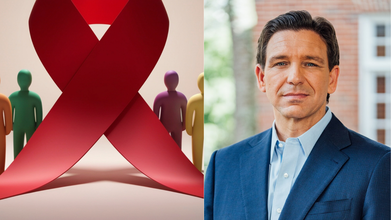
Florida on Tuesday approved nearly $31 million in short-term funding for H.I.V. medication for residents This is a reverse course after the state health officials restricted the access to a program that helps only those who could afford costly medications.
What Happened In The Past?
The Florida Department of Health had imposed tougher eligibility rules on March 1 that left 12,000 residents with H.I.V. without the access to medication covered by the state's AIDS Drug Assistance Program. This deprived them of life saving drugs, noted a nonprofit advocacy group - AIDS Healthcare Foundation.
The foundation also sued the department over these changes with protestors rallying in opposition at the State Capitol in Tallahassee. The department cited a projected $120 million state budget that restricted eligibility for the program.
Read: HIV vs. AIDS: What You Should Know About These Commonly Confused Terms
Yet, the Florida House of Representatives and State Senate, both led by Republicans, unanimously approved legislation that provides $30.9 million to fund the program through June 30 and restore the eligibility rules. Gov. Ron DeSantis, a Republican, signed the bill into law on Tuesday.
“Lawmakers on both sides understood the urgency of the crisis,” State Senator Carlos Guillermo Smith, a Democrat from Orlando who spoke out in support of the bill on the floor, said in an interview on Wednesday. “It is a matter of life and death. People had already lost access to their medications.”
Restriction On AIDS Drug Assistance Programs
As per an analysis by KFF - a health research group, Florida was one of the nearly 20 states, led both by Republicans and Democrats that imposed restrictions on AIDS Drug Assistance Programs.
The programs cover the cost of H.I.V. medications, which can run into thousands of dollars each month. They provide drugs free to some individuals and help others by paying their insurance premiums. Overall, they support about a quarter of the 1.2 million people living with H.I.V. in the United States.
However, these programs are under growing pressure. The cost of H.I.V. medications continues to rise, and the expiration of health care subsidies has led to a sharp increase in insurance premiums. Despite this, federal funding for these programs has remained largely unchanged for more than a decade.
In Florida, the Department of Health had reduced eligibility for the state’s AIDS Drug Assistance Program to 130 percent of the federal poverty level, which is about $20,748 a year for an individual, down from 400 percent or $63,840. A new law has now reversed this change, restoring eligibility back to the 400 percent threshold.
“For 10 weeks, 12,000 Floridians living with H.I.V. did not know if they could fill their next prescription,” Esteban Wood, the director of advocacy and legislative affairs at the AIDS Healthcare Foundation, said in a statement on Tuesday. “Today, they can.”
- Follow Us :


© 2024 Bennett, Coleman & Company Limited