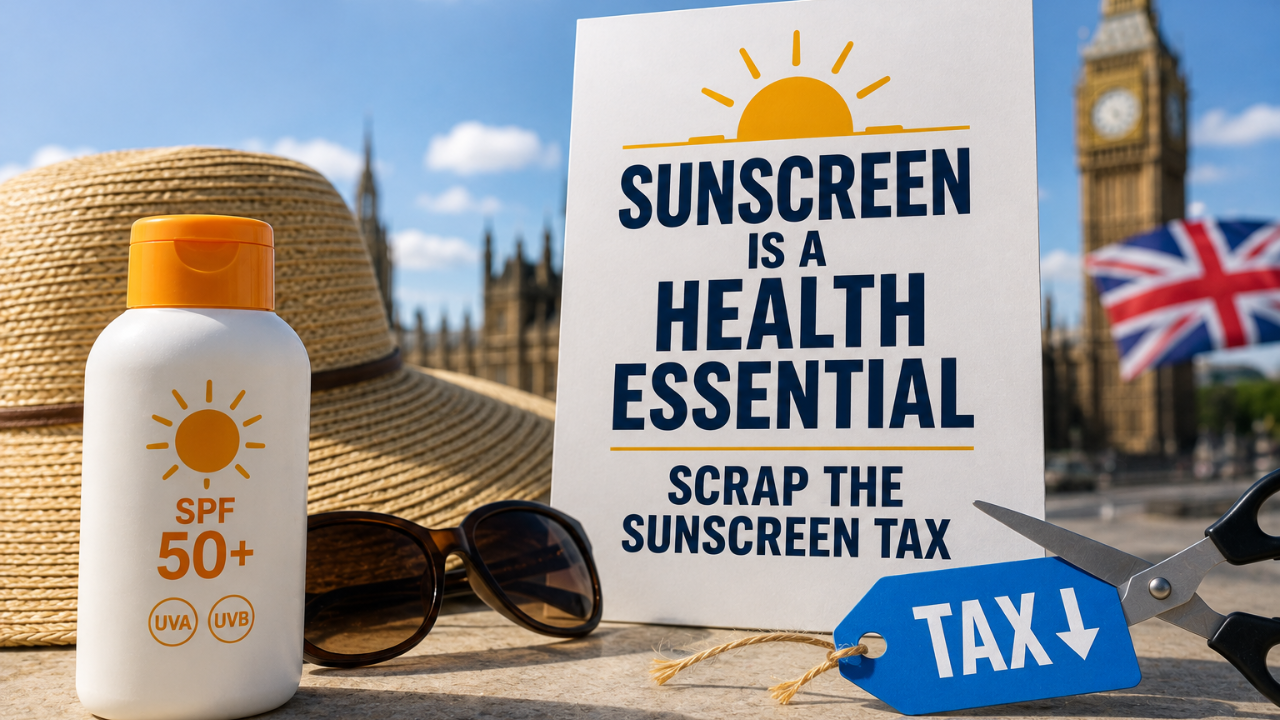
A UK skin cancer survivor is urging the government to remove VAT from sunscreen, arguing that products used to protect against skin cancer should not be treated as luxury cosmetics.Jessica Zbinden-Webster, who was diagnosed with skin cancer at just 26, has renewed her campaign to scrap the 20% VAT charged on sunscreen. She said that sunscreen should be considered a health essential rather than a cosmetic product. Zbinden-Webster's campaign comes as skin cancer remains a growing public health concern in the UK.UV Radiation Can Damage The SkinUV radiation can damage the DNA inside skin cells. Repeated or excessive exposure can cause mutations that increase the risk of skin cancer.Melanoma, the most serious form of skin cancer, can develop when pigment-producing cells become cancerous. Non-melanoma skin cancers, including basal cell carcinoma and squamous cell carcinoma, are also strongly influenced by UV exposure. Cancer Research UK says up to nine in 10 melanoma cases could be prevented by staying safe in the sun and avoiding sunbeds. It recommends using sunscreen alongside shade and protective clothing.Also read: Why Flight Attendants, Pilots Face Higher Risk Of Radiation-Linked Cancer Deaths Than Other Occupations? Sunscreen Is An Essential To Prevent Skin CancerThe campaign argues that the way sunscreen is taxed sends the wrong message about its role in disease prevention.Experts agree that removing VAT from SPF 30+ sunscreen could potentially prevent thousands of melanoma cases and save the NHS more than £128 million a year in treatment costs. Experts also stress that sunscreen should not be viewed as a license to spend long hours in the sun. Cancer Research UK recommends using SPF 30 or higher with good UVA protection, applying it generously and reapplying regularly. It also advises seeking shade, particularly around the middle of the day, and covering exposed skin with clothing and a hat.The organisation also points out that UV radiation can damage skin even when the weather feels cool or cloudy, because temperature does not determine UV intensity. Also read: Does Sunscreen Really Raise Skin Cancer Risk? What The 470,000-Person Study FoundAbout The Campaign Zbinden-Webster's own experience has made the issue personal. After her cancer diagnosis, she underwent surgery that removed part of her lower eyelid, followed by a skin graft and further procedures. She has since made daily sunscreen use part of her routine and argues that cost should not become a barrier to prevention.The campaign is now calling on the UK government to reconsider the VAT classification of sunscreen, particularly products with SPF 30 or higher. She said that sunscreen is only one part of sun protection, but making preventive products more affordable could potentially encourage more people to use them consistently. Sunscreen Rules To Reduce Skin Cancer Risk Sunscreen can help reduce UV exposure, but it should not be the only line of defence. Cancer Research UK recommends combining sunscreen with shade and protective clothing.Choose SPF 30 or higher: Look for at least SPF 30 for UVB protection and 4 or 5-star UVA protection.Apply generously: Using too little sunscreen can significantly reduce the protection indicated on the label.Reapply regularly: Reapply at least every two hours, and after swimming, sweating or towelling. Even products marketed as “once-a-day” should be reapplied.Don't forget commonly overlooked areas: Cover the ears, neck, hairline, tops of the feet and backs of the hands.Don't rely on sunscreen alone: Seek shade and wear protective clothing, a hat and UV-protective sunglasses when UV levels are high.Check the UV index: Protection becomes particularly important when the UV index is 3 or higher. Cloudy does not mean you can skip sunscreen: UV radiation can still damage skin when the weather is overcast.Don't use sunscreen as a reason to stay longer in the sun: No sunscreen provides 100% protection, and avoiding sunburn remains important.Protect children: Young skin is particularly vulnerable to UV damage, so children should be protected with shade, clothing and sunscreen.Avoid sunbeds: Artificial UV exposure can also damage skin cells and increase skin cancer risk.